

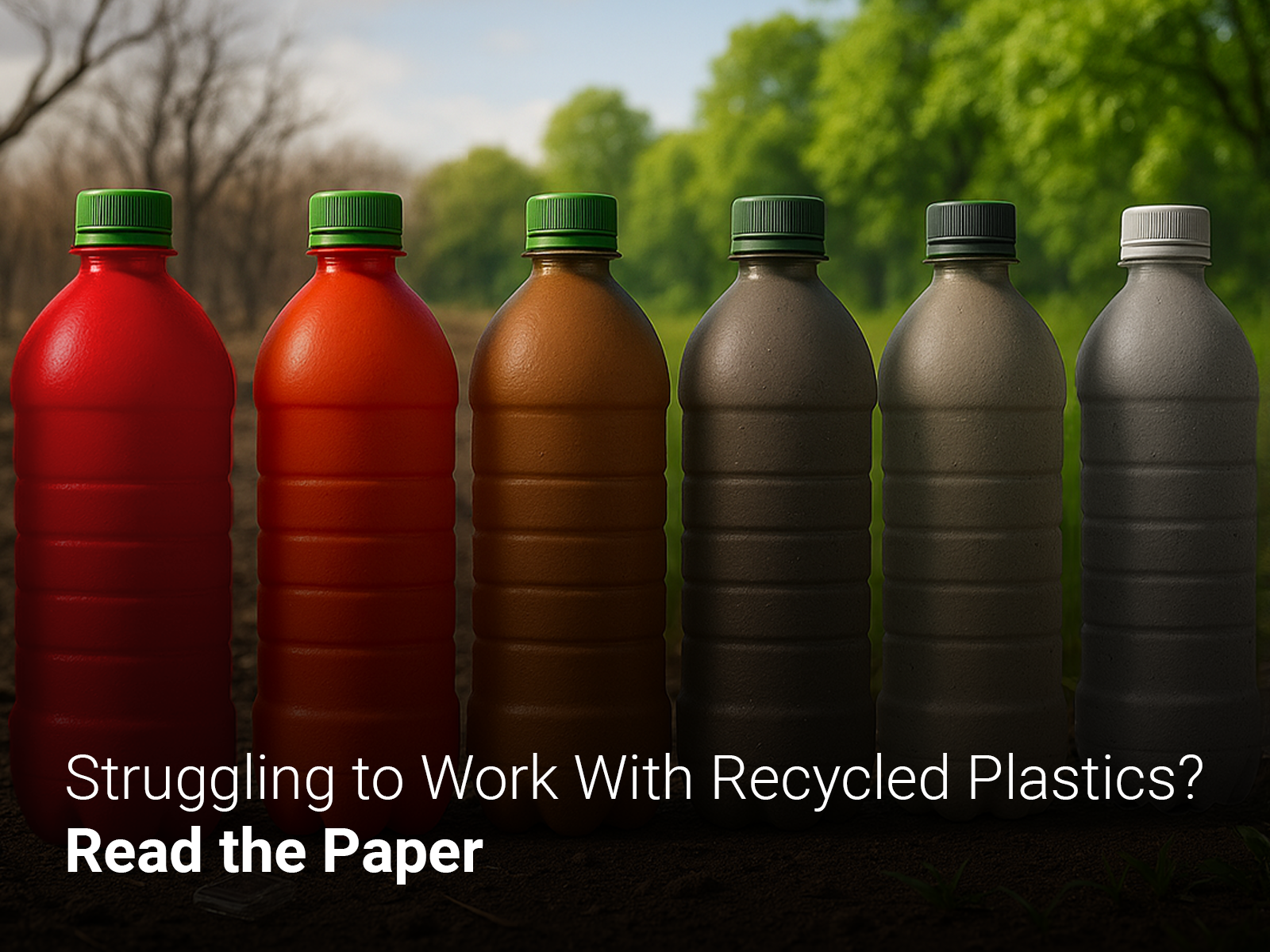
Is color variability quietly smothering your efficiency when working with recycled plastics? Download our paper to understand why this material behaves differently, and what it takes to get color right anyway.
As recycled content mandates accelerate across Europe and North America, color is the problem that shows up first, and most persistently, on the production floor. Recycled feedstock carries a color history of its own, residual pigments, UV exposure, heat, and reprocessing, that shifts from lot to lot and eliminates more than half the available color gamut compared to virgin material. The result: redeveloped formulas, repeated approval cycles, scrap, rework, and timelines that stretch with no guaranteed outcome.
This paper breaks down why color behaves differently in recycled substrates and how the best operations in masterbatching, compounding, and converting are managing it. Recycled feedstock is no longer the future; it is the present. If you don’t want to get left behind, it’s time to learn.
Key takeaways:

Subscribe to our monthly Datacolor newsletter and stay up to date with the latest news, trends, and industry events.