Get Color Right

Color Sustainability

What is Connected Color Intelligence?

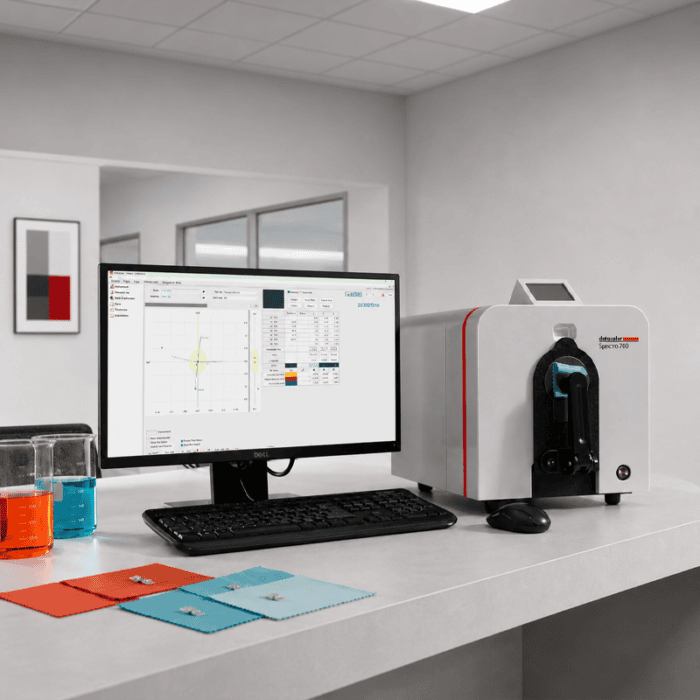
Most textile labs already have the tools they need: spectrophotometers, formulation software, quality control systems, etc. But tools alone do not make a lab efficient: when each instrument and system works on its own, people become the connection. They retype recipes, chase approvals by email and keep decisions in memory, and every manual step adds time and a chance for error.

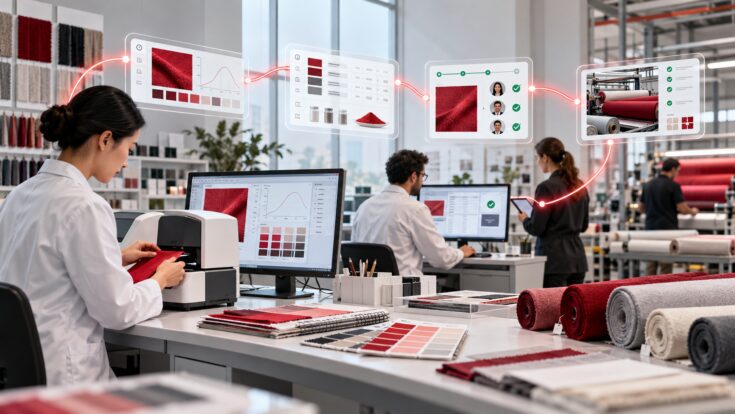
Connected color intelligence closes these gaps. It links measurement, formulation, approval and production, so color data moves smoothly between steps and people, and the whole team works from the same information.

The same connection also protects your team’s expertise. Every correction, measurement and approval is recorded, so everyone can use what your best colorists know. In a textile lab, that can mean fewer re-dyes, faster approvals and less dependence on a few experienced colorists.

The path is clear. Getting there, however, raises many practical questions and trigger many decision-making moments.  Let’s start our journey by approaching the most common ones.

Visit our FAQ

What Is Connected Color Intelligence?
Bridging the Skills Gap with Automation

The Human Factor in Color Management

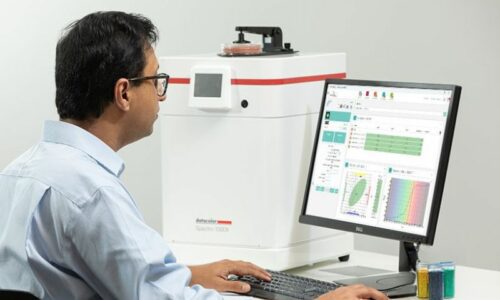
Color management is often described in terms of instruments, software and data. In a textile lab, though, it still runs on people. Colorists judge shades, solve problems no recipe predicted and decide what is ready to ship. Their experience is what turns a measurement into an approved color.

That experience is hard to find and hard to pass on. When a senior colorist leaves, or demand grows faster than the team, labs feel it in extra re-dyes and slower approvals. The real question is how to support people, so every colorist can deliver good results.

In the webinar on the left, we show how labs are doing exactly that, and what changed for the ones that did.

How to Create Real Connectivity

Real connectivity does not start with new software. It starts with a clear picture of how color moves through your lab today: where it is measured, where it is retyped, and where decisions wait for someone to act. Those gaps show you where a connection will pay off first.

From there, the work follows the flow itself. Standardize how color is measured and approved, so everyone speaks the same language. Link the systems that hold that data, so it travels without manual handoffs. Then automate the routine steps and leave the judgment calls to your experts. Each step makes the next one easier.

Our whitepaper covers each of these steps in depth, with everything you need to know to get there.

Download the Whitepaper

“After Dongjin New Materials adopted Datacolor Textile Lab Manager, 70-80% of colors can basically be matched in 1-3 trials.”

Linhong Ye, R&D Assistant at Dongjing New Materials
30%

shorter development cycle

LIANFA TEXTILE

1 to 2

attempts to hit target color

YANGZI

15%

more on-time completion

LIANFA TEXTILE

<1wk

to get yarn out the door

YANGZI

Please accept statistics, marketing cookies to watch this video.

Take Digital Color Management Further

Talk to Datacolor about where connected color can make the biggest difference in your lab.

More