| What is Color Sustainability? | Waste in the Color Process |
| How Color Accuracy Reduces Waste? | Building a Sustainable Color Workflow |
| How to Keep Color Quality With Recycled Material? |
Color sustainability refers to the practice of managing color processes in a way that reduces waste, minimizes resource consumption, and improves efficiency throughout production. It is not a separate discipline. It is what happens when color is managed well.
When color is measured accurately and consistently, production teams spend less time correcting errors, less material is discarded, and fewer resources are consumed reaching an approved result.
Datacolor does not manufacture dyes, chemicals, or raw materials. What Datacolor provides are the measurement instruments and software that help companies use those inputs more precisely and waste less of them.


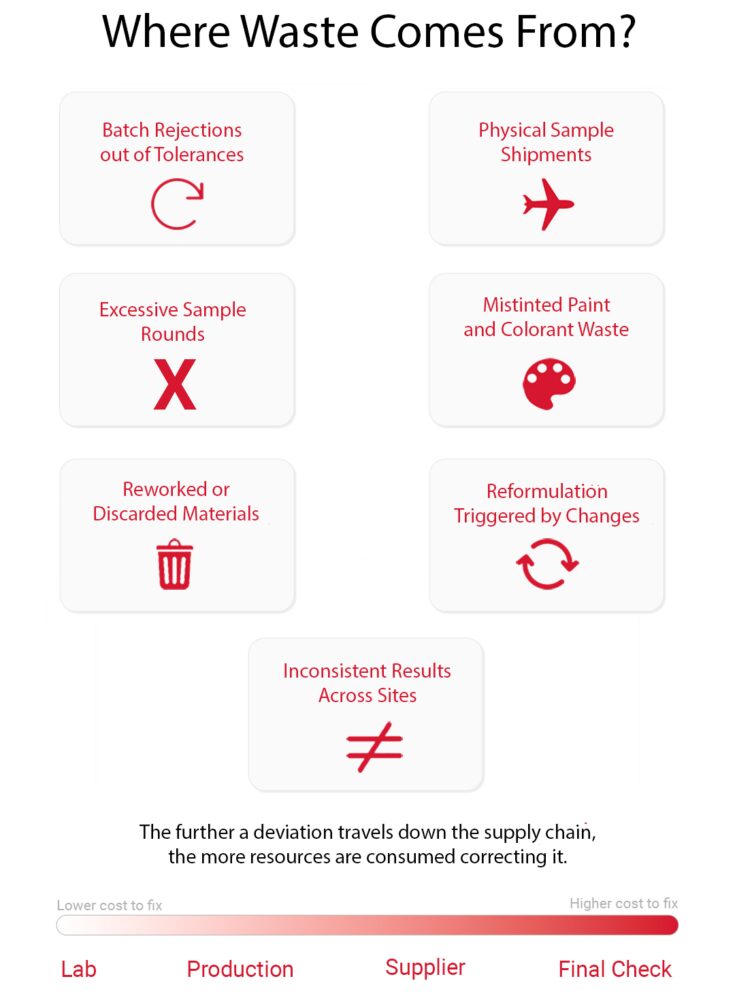
Color-related waste is a significant and often underestimated cost in production and, of course, a huge setback for color sustainability efforts. When a color does not match, the consequences extend well beyond the sample itself.
A rejected dye lot means the batch must be reworked or discarded. A mis-tinted paint means the can is returned or remade. A fabric shipment that fails approval at the destination requires re-dyeing, re-shipping, or write-off. Each of these failures consumes additional time, energy, water, chemicals, and labor on top of what was already spent on the first attempt.
The further along the supply chain a color deviation is caught, the more costly it becomes in resources, time, and business relationships.
To understand the full financial impact of color errors in your own workflow, check out our calculator here:
When color is measured accurately and consistently, production teams spend less time correcting errors, less material is discarded, and fewer resources are consumed reaching an approved result. This is key to achieve real Color Sustainability.
Getting color right the first time: Color formulation software that improves first-shot match rates directly reduces lab dips, trial batches, and correction cycles and the dye, chemical, and water consumption that come with them.
Catching deviations early: Spectrophotometers and quality control software give teams the ability to measure color at each production stage. Issues caught early cost less to fix than those discovered at the end of the supply chain.
Reducing rejections across the supply chain: When color standards and tolerances are shared consistently across suppliers and facilities, there is less ambiguity about what constitutes an acceptable result. Fewer disagreements mean fewer rejected shipments and less rework.
Optimizing formulas intentionally: Color formulation software optimizes recipes against the criteria the user defines, including sustainability-related parameters such as reducing dye concentration, reducing water usage, or avoiding restricted substances. The software does not make that choice for the user. It gives teams the data to make it with precision.
Replacing physical samples with digital data: In traditional workflows, physical samples travel repeatedly between brands, suppliers, and facilities, often internationally and across multiple rounds. When color data is shared digitally instead, approval decisions are made on spectral measurements rather than physical samples. Fewer shipments, fewer logistics cycles, and a faster path from approval to market.


Colibri® Cloud Platform
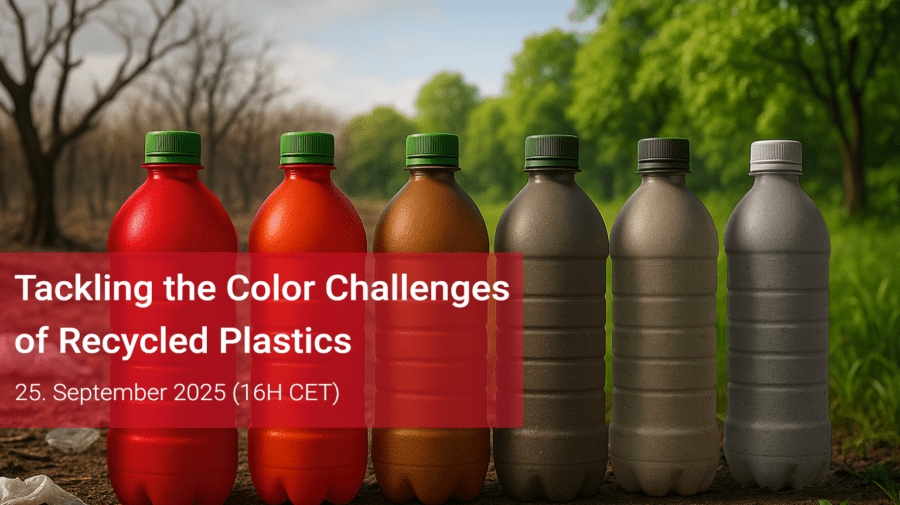
Recycled materials can help reduce environmental impact, but they also make color more challenging to control. Unlike virgin materials, recycled inputs can vary from batch to batch depending on their source, processing history, contamination level, and existing pigment or additive content.
These variations can affect how a material responds to colorants, even when the same formulation is used. Without a controlled color workflow, teams may need more trials, more corrections, and more production time to reach an approved result.
Accurate measurement, clear standards, and consistent verification help companies manage this variability earlier in the process. With the right color workflow, teams can use recycled materials with greater confidence while reducing waste, avoiding unnecessary reformulation, and maintaining quality.
Download our White Paper on Color Quality With Recycled Plastic
Understanding why color accuracy reduces waste is one thing. Building a workflow that consistently delivers it is another. These are the areas where better color data makes the most measurable difference.
Build your formulation on accurate data: When your ingredients are measured precisely and that data is used to build your colorant database, your formulation software can predict reliable recipes from the start. Fewer correction cycles means less dye, fewer chemicals, and less water consumed reaching an approved color.
Formulate against your sustainability criteria: Color formulation software can optimize recipes against the parameters you define, including compliance with your restricted substance lists. When regulations change or ingredients become unavailable, you can reformulate quickly and accurately, reducing the trial cycles that consume lab resources and harm color sustainability by generating waste.
Measure and control quality at every stage: When color is measured objectively at each point in production, deviations are caught before they compound. Fewer late-stage rejections means less rework, less discarded material, and less resource consumption correcting problems that could have been identified earlier.
Connect your color data to your business systems: When color data flows automatically between your formulation, production, and quality systems, the manual handoffs where errors occur are removed. Fewer data errors mean fewer production mistakes, less wasted material, and a more efficient process from lab to delivery.

Whether you are looking to improve first-shot match rates, reduce late-stage rejections, or build a more consistent color workflow across your supply chain, Datacolor can help you identify where accuracy improvements will have the most impact and how Color Sustainability can be finally achieved through it.

Subscribe to our monthly Datacolor newsletter and stay up to date with the latest news, trends, and industry events.