Color Basics: 8 Things You Need to Know if You Work with Color
Choosing the right solution
Share
Want to Get Color Right?
Get on the Right Color Management Wavelength with Monthly Insights from 10,000+ Color Professionals Around the World.
Color influences nearly every purchasing decision we make. Whether selecting clothing, automotive finishes, packaging, cosmetics or consumer electronics, people often judge product quality based on color consistency.
Yet achieving consistent color throughout product development and manufacturing is far more complex than simply matching two samples by eye.
Color depends on three interconnected elements:
The light source.
The object.
The observer.
Changes in any one of these variables can dramatically alter how a color appears. That’s why organizations working in textiles, apparel, plastics, paints and coatings, automotive, packaging, cosmetics, paper and other color-critical industries rely on standardized color management workflows rather than visual judgment alone.
Successful color management combines an understanding of human color perception, standardized measurement techniques, objective color data and consistent quality control procedures.
Whether you’re new to color management or looking to strengthen an existing workflow, these eight fundamental concepts provide the foundation for achieving more accurate color communication, faster approvals and improved product consistency.
For a deeper understanding of each topic, download our free five-part color management eBook series.
1. Color and Appearance Aren’t the Same
Although the terms color and appearance are often used interchangeably, they describe different concepts.
Color refers specifically to how our visual system interprets different wavelengths of visible light.
Appearance includes many additional characteristics that influence how an object looks, including:
Gloss
Texture
Opacity
Translucency
Luminosity
Surface finish
This means two products manufactured using identical pigments can still appear noticeably different if one has a glossy finish while the other is matte.
For example:
A glossy automotive panel often appears darker than a matte panel.
A smooth plastic component reflects light differently than a textured one.
Coated paper may appear brighter than uncoated paper using the exact same ink.
Because appearance includes much more than color alone, manufacturers often evaluate both visual appearance and instrumental color measurements during quality control.
Consumers rarely separate color from appearance. Instead, they perceive the complete visual impression of a product.
Even if two products produce identical spectrophotometer readings, differences in gloss, texture or transparency may cause customers to perceive them as different colors.
This explains why appearance control has become an important part of modern color quality management.
2. Color Is a Function of Our Eyes and Brain
Contrary to popular belief, color does not exist inside an object.
Instead, color is created when light strikes an object, reflects toward the eye and is interpreted by the human brain.
Every color we see depends on the interaction between:
The light source.
The object.
The observer.
Inside the retina are two types of photoreceptors:
Rods, which help us see in low-light conditions.
Cones, which enable color vision.
Three different cone types are primarily sensitive to red, green and blue wavelengths. Together they allow us to perceive millions of different colors.
Why People See Colors Differently
Because color perception occurs in the brain, it is inherently subjective.
Several factors influence how individuals perceive color:
Lighting conditions.
Age.
Fatigue.
Surrounding colors.
Previous visual experiences.
Color vision deficiencies.
Environmental conditions.
This explains why two experienced quality inspectors can occasionally disagree when visually evaluating the same sample.
Objective measurement instruments help eliminate much of this subjectivity.
The Importance of Standardized Lighting
Human vision continuously adapts to different lighting environments.
A product viewed under warm indoor lighting may appear significantly different when moved outdoors into daylight or into a retail store illuminated with LED lighting.
This phenomenon highlights the importance of evaluating colors under standardized lighting conditions using a calibrated light booth.
3. We Classify Colors According to Common Characteristics
Most people can easily identify colors such as red, blue or green. However, communicating an exact shade is much more difficult.
How do you distinguish between:
Crimson red
Scarlet red
Cherry red
Fire engine red
Describing colors using everyday language quickly becomes subjective. One person’s “deep blue” may be another person’s “navy.” To solve this challenge, color scientists developed standardized color classification systems that provide a common language for describing color.
Most modern color systems describe colors using three fundamental properties.
Hue
Hue describes the dominant color family, such as red, orange, yellow, green, blue or violet.
Hue answers the question:
“What color is it?”
Changing hue shifts a color around the visible spectrum without necessarily affecting its brightness or saturation.
Chroma
Chroma describes the intensity or purity of a color.
Highly saturated colors appear vivid and vibrant, while low-chroma colors appear dull, muted or grayish.
For example:
A bright sports car red has high chroma.
A faded brick red has much lower chroma.
Lightness
Lightness describes how light or dark a color appears.
A color may have the same hue and chroma while appearing lighter or darker because its lightness has changed.
Together, these three properties form the basis of many modern color spaces used throughout industry.
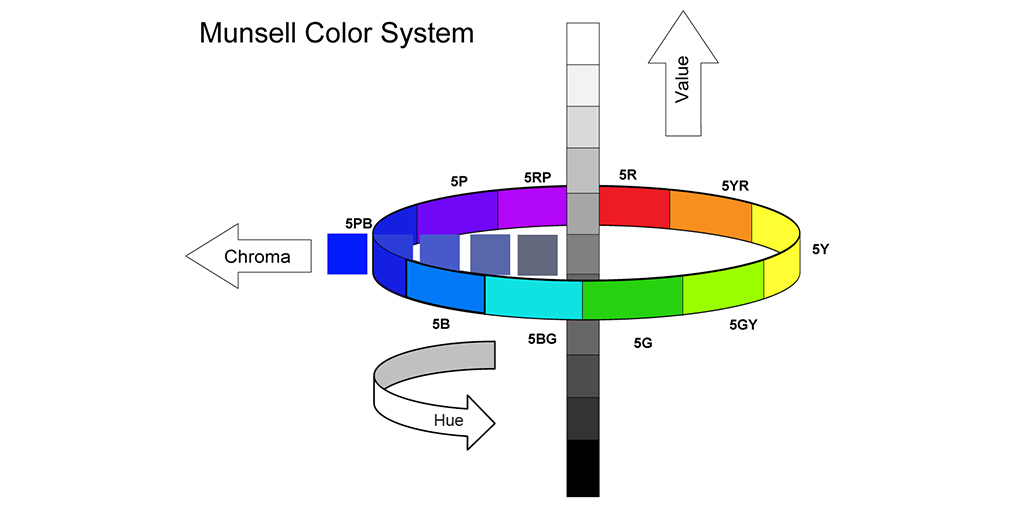
The Munsell Color System
One of the earliest standardized color classification systems is the Munsell Color System, first introduced in 1915.
Albert H. Munsell developed the system to organize colors according to three perceptual dimensions:
Hue
Value (lightness)
Chroma
Although many digital color spaces are now used, Munsell remains an important educational foundation and is still applied in industries such as agriculture, geology, archaeology and color science.
From Munsell to CIELAB
Modern digital color management relies primarily on the CIELAB color space, developed by the International Commission on Illumination (CIE).
CIELAB builds upon the same concepts but provides numerical coordinates that can be used by spectrophotometers and color management software.
While people can visually compare colors, objective color communication requires numbers rather than opinions. This is where colorimetry plays a central role.
Colorimetry is the science of measuring and describing color numerically. Instead of relying on subjective visual assessments, colorimetry provides standardized values that can be shared consistently between designers, laboratories, manufacturers and suppliers around the world.
Every color measurement is based on the interaction between three components:
A standardized light source.
An object that reflects or transmits light.
A standardized observer.
Together, these elements create repeatable measurements that can be reproduced regardless of who performs the evaluation.
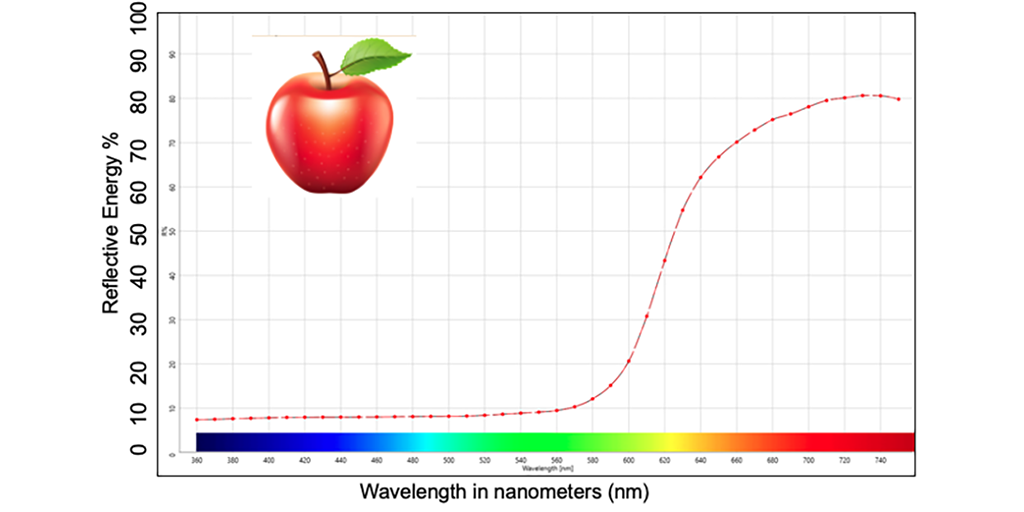
Reflectance Curves
Rather than simply identifying a color as “red” or “blue,” a spectrophotometer measures how much light an object reflects at every wavelength across the visible spectrum.
The resulting reflectance curve acts as a unique fingerprint for that material.
This data allows manufacturers to:
Compare production batches objectively.
Communicate colors digitally.
Create accurate color formulations.
Monitor production consistency.
Detect small color deviations before they become visible.
Why Colorimetry Matters
Without standardized color measurements, suppliers would need to exchange physical samples for every approval.
Colorimetry enables organizations to communicate precise color information digitally, reducing shipping costs, shortening approval cycles and improving global consistency.
6. Delta E Helps Define Acceptable Color Differences
Not every color difference is noticeable, and not every noticeable difference is unacceptable.
Manufacturers therefore need an objective way to determine whether two colors match closely enough for production approval.
This is where Delta E (ΔE) becomes essential.
Delta E is a numerical value that represents the difference between two colors within a color space such as CIELAB.
How Delta E Works
In simple terms:
A low Delta E indicates two colors are very similar.
A high Delta E indicates a larger visual difference.
Different formulas—including ΔE76, ΔE94 and the more advanced CIEDE2000—calculate color differences with increasing accuracy based on human visual perception.
Typical Uses of Delta E
Organizations use Delta E to:
Define pass/fail tolerances.
Evaluate production batches.
Approve supplier shipments.
Monitor manufacturing consistency.
Support digital color communication.
The acceptable Delta E depends entirely on the application.
Industry
Typical Tolerance Expectations
Automotive
Very strict
Luxury goods
Very strict
Textiles
Application dependent
Paint & Coatings
Customer specification dependent
Packaging
Brand dependent
Rather than aiming for “perfect” color matches, organizations establish tolerances that balance quality expectations with manufacturing capabilities.
7. Two Types of Instruments Are Used to Measure Color
Organizations typically rely on one of two categories of color measurement instruments.
Instrument
Primary Application
Best For
Tristimulus Colorimeter
Basic color verification
Routine quality control
Spectrophotometer
Complete spectral measurement
Color matching, formulation and digital color communication
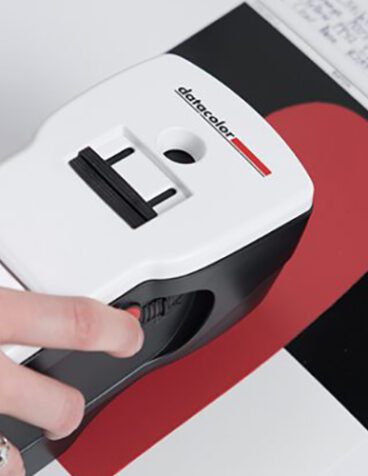
Tristimulus Colorimeters
Colorimeters measure color using filters that approximate human vision.
They are generally:
Easy to operate.
Cost-effective.
Suitable for routine quality control.
Limited in their analytical capabilities.
Because they measure only one observer and illuminant combination, colorimeters cannot generate the detailed spectral information required for color formulation.
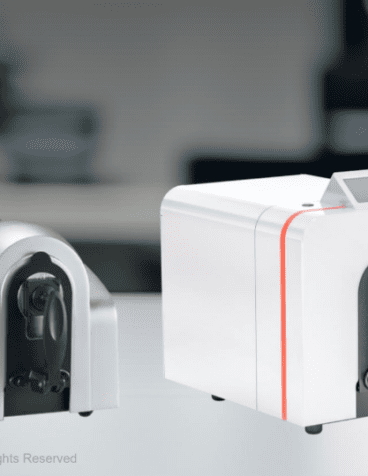
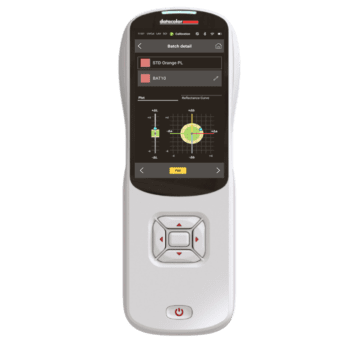
Spectrophotometers
Spectrophotometers measure reflected or transmitted light across the entire visible spectrum.
This provides significantly more information than a colorimeter and allows organizations to:
Create color formulations.
Calculate Delta E.
Generate CIELAB values.
Share digital color standards.
Compare measurements under multiple illuminants.
Improve supplier communication.
Which Instrument Should You Choose?
The answer depends on your workflow.
If your primary objective is routine pass/fail inspection, a colorimeter may be sufficient.
If your organization develops colors, communicates digitally with suppliers or manages color-critical manufacturing, a spectrophotometer offers far greater flexibility and accuracy.
Even the most advanced color measurement instrument cannot compensate for poor sample preparation.
Accurate color data begins long before a measurement is taken. Every variable that influences the sample should be controlled to ensure results are accurate, repeatable and reproducible.
Without standardized sample preparation, organizations risk inconsistent measurements, unnecessary production adjustments and disagreements between suppliers and customers.
Variables That Influence Color Measurement
Several factors can affect how a sample is measured, including:
Temperature.
Humidity.
Lighting conditions.
Sample thickness.
Opacity or transparency.
Surface texture.
Gloss level.
Sample orientation.
Conditioning time before measurement.
Even small variations in one of these factors can produce measurable differences in color values.
Best Practices for Sample Preparation
Organizations that consistently achieve reliable color measurements typically follow standardized procedures throughout their production process.
Recommended best practices include:
Develop documented measurement procedures.
Ensure samples are representative of production.
Clean samples before measurement.
Condition samples under consistent environmental conditions.
Use the same measurement location whenever possible.
Train operators using standardized workflows.
Regularly verify measurement instruments.
These procedures improve both repeatability (the same operator achieving consistent results) and reproducibility (different operators or facilities achieving comparable results).
Why Standardization Matters
Global supply chains often involve multiple laboratories, production sites and external suppliers.
Without standardized sample preparation, identical products measured at different locations may produce different results simply because the measurement procedures were inconsistent.
Standardized workflows reduce this variability and improve confidence throughout the color approval process.
Each of the eight concepts discussed in this article contributes to a comprehensive color management program.
Together they help organizations move beyond subjective visual evaluations toward objective, repeatable color quality control.
Fundamental
Business Benefit
Color perception
Better understanding of visual variation
Color classification
Improved communication
Color consistency
Higher perceived product quality
Colorimetry
Objective color measurement
Delta E
Standardized pass/fail decisions
Measurement instruments
Reliable digital color communication
Sample preparation
Repeatable and reproducible measurements
Organizations that integrate these principles into their workflows can reduce rework, shorten approval cycles and improve collaboration across global supply chains.
Frequently Asked Questions
What is color management?
Color management is the process of controlling how color is measured, communicated and reproduced throughout product development, manufacturing and quality control to ensure consistent results.
Why is color consistency important?
Consistent color improves product quality, strengthens brand recognition, reduces customer complaints and minimizes costly production rework.
What is the difference between color and appearance?
Color refers to the perception of visible light, while appearance also includes gloss, texture, opacity, translucency and other surface characteristics.
What is colorimetry?
Colorimetry is the science of measuring and describing color using standardized numerical values, enabling objective color communication across organizations.
What is Delta E?
Delta E (ΔE) is a numerical value that quantifies the difference between two colors and is commonly used to establish acceptable color tolerances.
What is the difference between a colorimeter and a spectrophotometer?
Colorimeters provide basic color measurements for routine quality control, while spectrophotometers measure the full visible spectrum and support color matching, formulation and digital color communication.
Why do colors look different under different lighting?
Different light sources contain different spectral distributions. Materials reflect these wavelengths differently, causing colors to appear different under daylight, LED, fluorescent or incandescent lighting.
Why is sample preparation important?
Controlling variables such as temperature, humidity, thickness and sample orientation ensures accurate, repeatable and reproducible color measurements.
Which industries use digital color management?
Industries including textiles, apparel, plastics, paints and coatings, automotive, cosmetics, packaging, paper, printing and consumer goods all rely on digital color management to improve quality and efficiency.
How can Datacolor help?
Datacolor provides spectrophotometers, colorimeters, light booths and color management software that help organizations achieve accurate color measurement, faster approvals and consistent color quality throughout the supply chain.
Improve Color Accuracy with Datacolor Color Management Solutions
Understanding the science of color is the foundation of better product quality, faster approvals and more efficient manufacturing. Datacolor’s complete portfolio of color measurement instruments, visual evaluation tools and software solutions helps organizations standardize color workflows and achieve consistent results across every stage of production.


 Want to Get Color Right?