Spectrometer vs Spectrophotometer: What’s the Difference?
The terms spectrometer and spectrophotometer are often used interchangeably, but they are not exactly the same. Both instruments are used to analyze light, and both play an important role in color measurement and analytical testing. The difference is that a spectrometer is a broader category of instrument, while a spectrophotometer is a specific type of instrument used to measure how much light a sample reflects, transmits, or absorbs across wavelengths.
What Is a Spectrometer?
A spectrometer is an instrument that measures properties of light across a spectrum, typically by separating light into its component wavelengths and measuring intensity. In practice, the term can refer to different types of instruments depending on the field, including optical spectrometers, mass spectrometers, and NMR spectrometers. In color and materials applications, the most relevant type is the optical spectrometer, which measures light over part of the electromagnetic spectrum.
Common Spectrometer Uses
Spectrometers are used in many scientific and industrial applications, including:
- Identifying materials.
- Analyzing light intensity across wavelengths.
- Measuring sample properties.
- Supporting research in chemistry, physics, and manufacturing.
- Enabling spectral analysis in color and appearance control.
What Is a Spectrophotometer?
A spectrophotometer is a specialized instrument that measures how a sample interacts with light across a range of wavelengths. In color measurement, a spectrophotometer is used to measure reflectance or transmittance, then generate spectral color data that can be used for objective color evaluation, formulation, and quality control. In other words, it does not just detect light—it measures how the sample affects that light.
What Does a Spectrophotometer Measure?
A spectrophotometer can be used for:
- Color measurement.
- Color formulation.
- Color quality control.
- Measuring reflectance or transmission.
- Detecting metamerism.
- Measuring opacity and haze.
- Identifying inconsistencies or impurities.
Because it delivers objective, repeatable data, a spectrophotometer is widely used in industries such as textiles, plastics, paint and coatings, pharmaceuticals, food, chemicals, and other manufacturing environments where color accuracy matters.
Spectrometer vs Spectrophotometer: Key Difference
The simplest way to explain spectrometer vs spectrophotometer is this:
- A spectrometer measures and analyzes light across wavelengths.
- A spectrophotometer is a more complete measurement system that uses a spectrometer as one of its internal components to measure how a sample reflects, transmits, or absorbs light.
That is why people often say that all spectrophotometers contain a spectrometer, but not all spectrometers are spectrophotometers. This is a useful rule of thumb for color measurement contexts.
Spectroscopy vs Spectrometry: Are They the Same?
Not exactly. Spectroscopy is the broader study of how electromagnetic radiation interacts with matter, while spectrometry is the measurement of those interactions. The terms are closely related and are sometimes used interchangeably in everyday language, but they are not identical. Spectroscopy is the scientific method or field of study; spectrometry is the quantitative measurement process.
Spectroscope, Spectrograph, and Spectrometer: What’s the Difference?
These terms are related, but they are not perfect synonyms:
- A spectroscope is traditionally used to observe the spectrum of light.
- A spectrograph separates light and records the resulting spectrum.
- A spectrometer measures spectral properties such as wavelength and intensity.
Including these terms can help readers who are also searching for spectroscope, spectrograph, or what is a spectrograph, but for color measurement buyers the most relevant distinction is still spectrometer vs spectrophotometer.
When Do You Need a Spectrophotometer Instead of a Spectrometer?
If your goal is accurate color measurement, color quality control, color formulation, or consistent communication of color data, a spectrophotometer is usually the more relevant tool. It is designed to deliver repeatable, objective measurements that support production decisions, batch approvals, and specification control.
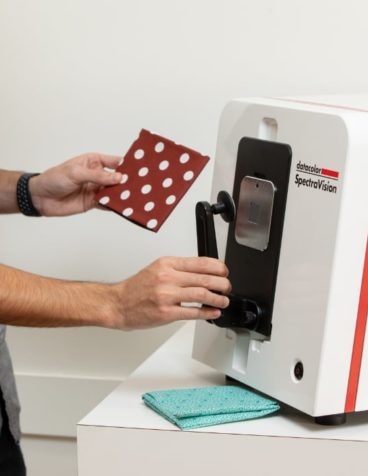
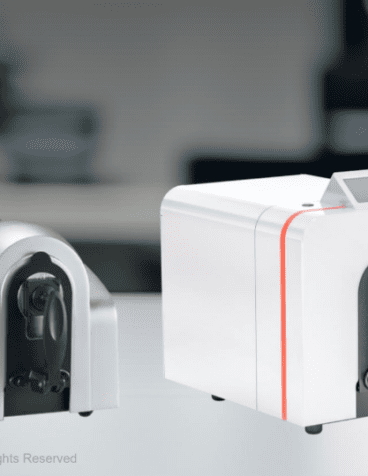
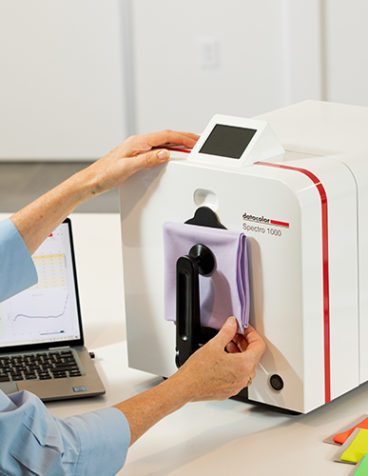
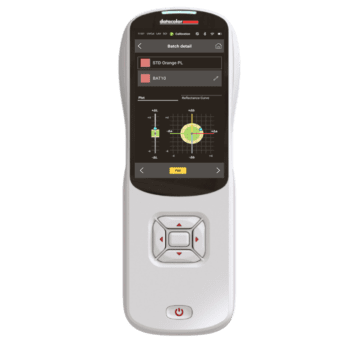
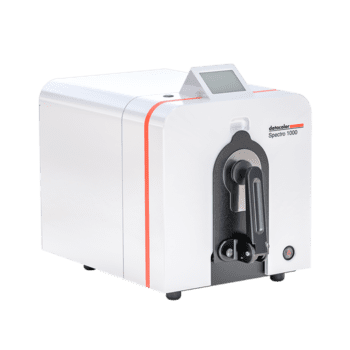
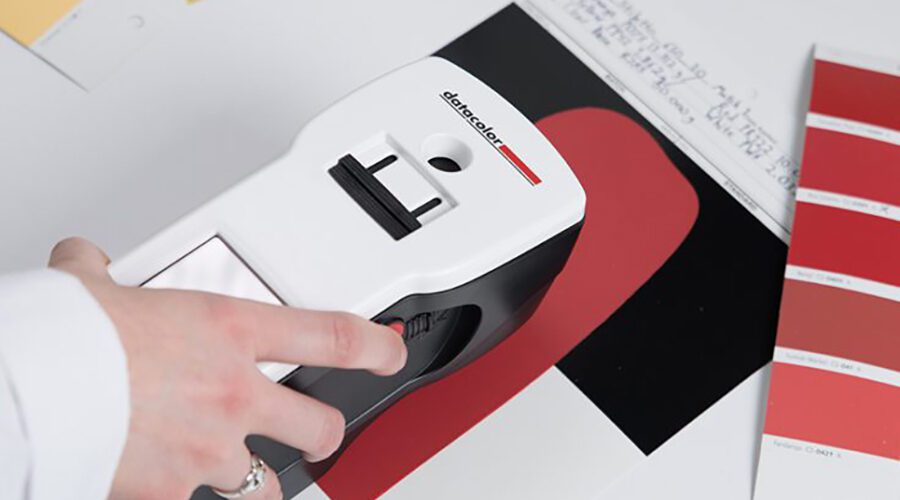
For example, manufacturers often use a portable spectrophotometer for on-site color checks or a benchtop spectrophotometer for tighter laboratory control. A more general spectrometer may be useful in broader analytical or research applications, but it is not automatically the best fit for industrial color workflows.
Final Answer: Spectrophotometer vs Spectrometer
A spectrometer is a broad class of instrument used to measure light across a spectrum. A spectrophotometer is a specialized type of spectrometer designed to measure how light interacts with a sample, especially for reflectance, transmittance, absorbance, and color analysis. For color management applications, the spectrophotometer is typically the more practical and decision-ready tool.
Talk to Our Color Experts
Need help choosing the right instrument for your application? Datacolor’s global team can help you determine whether a portable spectrophotometer, benchtop spectrophotometer, or another color measurement solution is the best fit for your workflow, materials, and budget.
Talk to a Color Expert

 Want to Get Color Right?