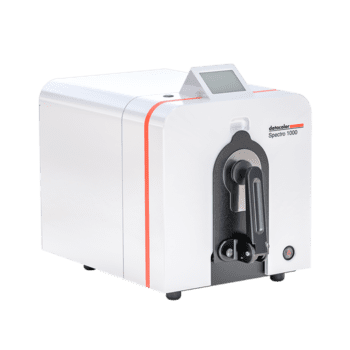
Color accuracy is critical in industries such as plastics, textiles, coatings, paint, cosmetics, printing, and packaging. Whether you’re developing a new product, matching an existing color, or maintaining consistency across a global supply chain, reliable color measurement is essential.
Two instruments are commonly used for this purpose: colorimeters and spectrophotometers. Although both measure color objectively, they work in fundamentally different ways and are designed for different applications.
Understanding the difference between a colorimeter vs. spectrophotometer helps you choose the right solution for your color management process and avoid costly production errors.
What Is a Colorimeter?
A colorimeter is a tristimulus color measurement instrument designed to simulate the way the human eye perceives color. Instead of measuring the complete visible spectrum, it measures reflected light through red, green, and blue filters and converts these signals into standardized color values such as CIE L*a*b*.
Because it measures only three broad regions of the visible spectrum, a colorimeter is well suited for basic color comparisons but has limitations when higher precision is required.
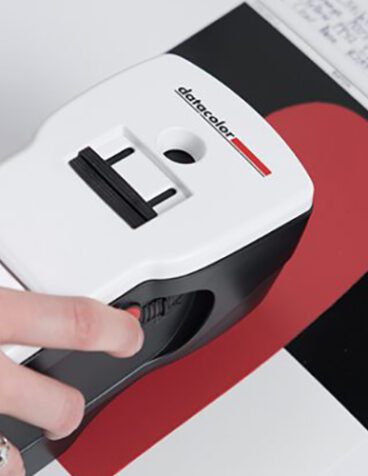
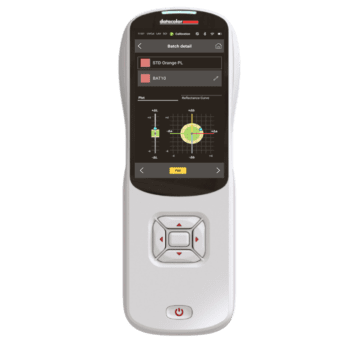
Datacolor ColorReader
How Does a Colorimeter Work?
A colorimeter follows a relatively simple measurement process:
- The sample is illuminated using an internal light source.
- Reflected light passes through red, green, and blue filters.
- Sensors measure the intensity of each channel.
- The instrument converts these measurements into standardized color coordinates.
Because a colorimeter approximates human vision instead of measuring every wavelength individually, it cannot capture the complete spectral fingerprint of a color.
Advantages of Colorimeters
Colorimeters are commonly used because they are:
- Compact and portable.
- Easy to operate.
- Cost-effective.
- Suitable for quick pass/fail quality checks.
- Ideal for comparing similar colors.
These instruments are frequently used for retail paint matching, incoming inspections, and simple production quality control where advanced color analysis is not required.
Limitations of Colorimeters
Although colorimeters are useful for many everyday applications, they also have important limitations.
Because they do not measure the complete visible spectrum, colorimeters cannot reliably:
When suppliers, brands, and manufacturers need to communicate color digitally, a spectrophotometer becomes the preferred solution.
What Is a Spectrophotometer?
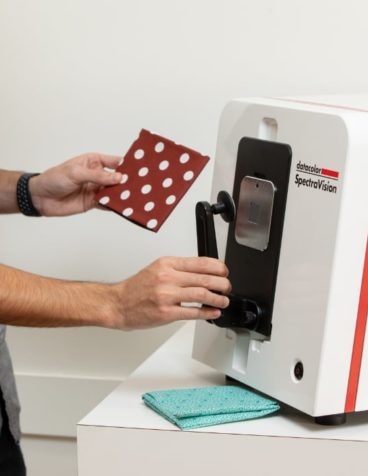
A spectrophotometer is a full-spectrum color measurement instrument that objectively measures how a material reflects or transmits light across the entire visible spectrum, approximately 400–700 nm.
Unlike a colorimeter, it records the spectral reflectance of every wavelength. This creates a unique fingerprint for each color, enabling highly accurate color communication regardless of material, lighting conditions, or observer.
Because of this capability, spectrophotometers form the foundation of modern digital color management and objective digital color communication.
How Does a Spectrophotometer Work?
Rather than using RGB filters, a spectrophotometer separates light into hundreds of individual wavelengths.
The measurement process typically consists of four steps:
- An internal light source illuminates the sample.
- A diffraction grating separates the reflected light into individual wavelengths.
- Sensors measure the intensity of each wavelength.
- The software converts the spectral data into objective color values and reflectance curves.
Because every wavelength is measured independently, spectrophotometers provide far more information than colorimeters.
Key Advantages of Spectrophotometers
Spectrophotometers provide significantly greater functionality for industrial color management.
They can be used for:
Because they generate complete spectral data, spectrophotometers enable manufacturers worldwide to communicate color objectively instead of relying on visual assessments.
Why Full-Spectrum Measurement Matters
Every material interacts with light differently.
Gloss, texture, transparency, fluorescence, and even temperature can influence the way a color appears.
A spectrophotometer measures these differences objectively, allowing manufacturers to:
- Reduce subjectivity.
- Improve first-shot color accuracy.
- Reduce waste.
- Speed up product approvals.
- Maintain consistent color across suppliers and production sites.
This becomes especially important in industries such as plastics, textiles, paint, and automotive manufacturing, where small color differences can result in rejected batches and costly rework.
Colorimeter vs. Spectrophotometer: Which Is Better?
The answer depends on your application.
If your workflow only requires simple color verification, a colorimeter may be sufficient. However, if color consistency directly affects product quality, customer satisfaction, or manufacturing efficiency, a spectrophotometer offers significantly more capability.
The table below summarizes the main differences.
| Feature |
Colorimeter |
Spectrophotometer |
| Measurement method |
RGB filters |
Full visible spectrum |
| Precision |
Good |
Excellent |
| Measures spectral reflectance |
No |
Yes |
| Detects metamerism |
No |
Yes |
| Supports color formulation |
No |
Yes |
| Digital color communication |
Limited |
Excellent |
| Global supply chain consistency |
Limited |
Excellent |
| Color quality control |
Basic |
Advanced |
| Suitable for research and development |
Limited |
Yes |
| Typical industries |
Retail and simple quality control |
Manufacturing, laboratories, and global brands |
Because colorimeters are affordable and easy to operate, they provide an excellent entry point for organizations with straightforward color measurement needs.
When Should You Choose a Spectrophotometer?
For manufacturers, suppliers, and brands, a spectrophotometer is almost always the preferred solution.
It enables objective color measurement throughout the entire production process, from product development to final quality control.
A spectrophotometer is especially valuable when you need to:
Modern spectrophotometers also allow manufacturers to monitor production trends, identify process deviations early, and improve consistency across multiple facilities.
Industries That Benefit Most from Spectrophotometers
Although spectrophotometers are used across many industries, they are particularly valuable where color consistency directly impacts product quality.
Plastics
Plastic products vary in gloss, transparency, and texture, making objective measurement essential.
Learn more about plastic color management.
Paint and Coatings
Paint manufacturers depend on accurate formulations, fast color correction, and consistent production batches.
Read more about color formulation software.
Textiles
Textile manufacturers must achieve consistent color across different fibers, fabrics, and suppliers.
Related resources:
Cosmetics
Small color differences can dramatically affect customer perception. Spectrophotometers provide the repeatability required for accurate product development and quality control.
Automotive
Matching color across plastic, leather, fabric, and painted components requires objective measurement and tight production tolerances.
Why Spectral Data Matters
One of the biggest advantages of a spectrophotometer is that it records the complete spectral fingerprint of a color.
This allows manufacturers to:
- Compare colors objectively.
- Share digital standards globally.
- Predict formulation performance.
- Detect metamerism before production.
- Improve reproducibility over time.
Without spectral data, color communication becomes increasingly dependent on human observation, which introduces unnecessary variability into the manufacturing process.
This is one of the key reasons why digital color management has become the industry standard for companies producing color-critical products.
Color Accuracy Starts with Proper Measurement
Even the most advanced spectrophotometer depends on correct measurement procedures.
To maximize accuracy:
These best practices help ensure consistent, repeatable measurements throughout your production process.
Frequently Asked Questions
Is a spectrophotometer more accurate than a colorimeter?
Yes. A spectrophotometer measures the full visible spectrum rather than just three color channels. This produces more detailed, repeatable color data and enables advanced applications such as color formulation, digital color communication, and quality control.
Can a colorimeter detect metamerism?
No. Because a colorimeter does not measure the complete spectral reflectance curve, it cannot reliably identify metamerism, where two colors appear identical under one light source but different under another.
Spectrophotometers capture the spectral data needed to detect these differences before products reach the customer.
Why do manufacturers use spectrophotometers?
Manufacturers rely on spectrophotometers because they provide objective, repeatable color measurements throughout the production process.
This helps companies:
- Improve first-shot color accuracy.
- Reduce waste and rework.
- Maintain consistent color across suppliers.
- Accelerate product approvals.
- Reduce production costs.
- Improve customer satisfaction.
Spectrophotometers also support digital color management, allowing color data to be shared instantly across global manufacturing locations.
Can spectrophotometers measure more than color?
Yes. Depending on the model, spectrophotometers can also evaluate:
- Opacity.
- Haze.
- Transparency.
- Fluorescence.
- Whiteness.
- Light blocking.
- Sheerness.
Related articles:
What industries typically use spectrophotometers?
Spectrophotometers are widely used in industries where color consistency is critical, including:
- Plastics.
- Paint and coatings.
- Textiles and apparel.
- Cosmetics.
- Printing and packaging.
- Automotive.
- Consumer products.
- Building materials.
Any manufacturer that needs objective, repeatable color measurements across multiple facilities can benefit from spectrophotometer-based color management.
Choosing the Right Color Measurement Solution
Both colorimeters and spectrophotometers play an important role in color measurement, but they serve different needs.
A colorimeter is ideal when you need:
- Basic color verification.
- Simple pass/fail inspections.
- Portable color measurement.
- Cost-effective operation.
A spectrophotometer is the better choice when your organization requires:
- Precise color matching.
- Digital color communication.
- Color formulation.
- Objective quality control.
- Global supplier collaboration.
- Long-term measurement consistency.
- Advanced color analysis.
For companies operating in demanding manufacturing environments, the additional precision and functionality of a spectrophotometer typically deliver significant savings by reducing waste, minimizing rework, and improving production efficiency.
Why Datacolor Spectrophotometers?
Datacolor spectrophotometers are designed for manufacturers who require reliable, objective color measurement across the entire product lifecycle.
Key capabilities include:
Whether you’re replacing an older instrument or building a fully digital color management workflow, Datacolor offers scalable solutions that improve color accuracy from product development through final production.
Talk to a Color Management Expert
Selecting the right color measurement instrument depends on your materials, production process, quality requirements, and supply chain.
Whether you’re looking for a portable device for routine inspections or a high-precision benchtop spectrophotometer for global manufacturing, our color experts can help you identify the right solution.
Contact a Datacolor expert today to discuss your color measurement challenges and discover how digital color management can improve consistency, reduce waste, and accelerate production.
Talk to a Color Management Expert


 Want to Get Color Right?