Get on the Right Color Management Wavelength with Monthly Insights from 10,000+ Color Professionals Around the World.
Understanding how humans perceive color starts with understanding the eye itself. In color science, we often discuss the interaction between the light source, object and observer, commonly known as the color triplet. Together, these three elements determine the colors we see.
But what actually happens inside the eye when we perceive color?
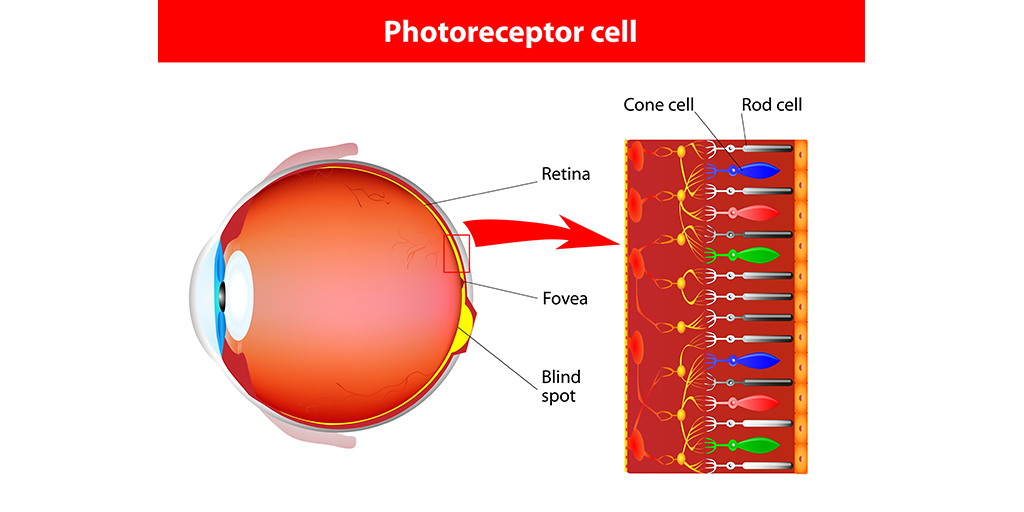
The answer lies in two specialized types of photoreceptor cells located in the retina: rods and cones. These cells convert incoming light into signals that the brain interprets as images, brightness and color.
For manufacturers and color professionals, understanding the role of rods and cones helps explain why color perception varies from person to person and why objective color measurement tools are essential for consistent color communication.
When light enters the eye, it passes through several structures before reaching the retina.
The process follows these steps:
Light enters through the cornea.
The pupil controls how much light enters.
The lens focuses the light.
The retina converts light into biochemical signals.
The brain interprets those signals as visual information.
The retina contains two primary types of photoreceptors:
Rods
Cones
Together, they allow us to see across a wide range of lighting conditions.
What Are Cones?
Cones are the photoreceptors responsible for color vision.
The average human eye contains approximately six million cone cells, concentrated primarily in the fovea, the central region of the retina responsible for detailed vision.
There are three types of cones:
Cone Type
Most Sensitive To
Associated Color
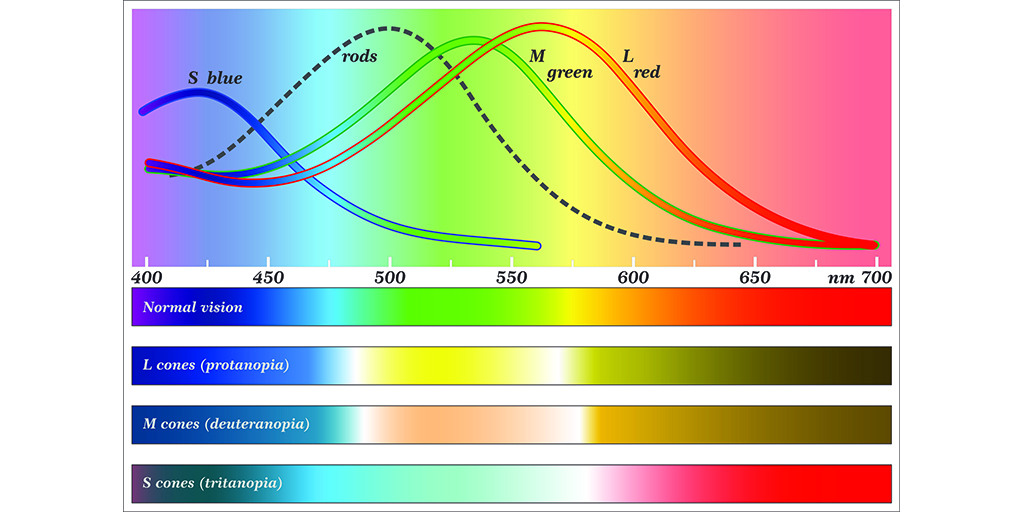
S-cones
Short wavelengths
Blue
M-cones
Medium wavelengths
Green
L-cones
Long wavelengths
Red
The brain combines signals from these three cone types to create the rich spectrum of colors humans can perceive.
This process forms the basis of the trichromatic theory of color vision, which explains how humans can distinguish millions of colors using only three types of cone receptors.
Without cone cells, humans would not perceive color.
Cones allow us to:
Distinguish different hues
Recognize subtle color differences
Evaluate saturation and chroma
Perceive detailed visual information
Because cones require relatively bright lighting conditions to function effectively, they are most active during daylight or in well-lit indoor environments.
This type of vision is known as photopic vision.
For industries where color accuracy is critical, such as textiles, plastics, paint and coatings, cosmetics and automotive manufacturing, understanding the limitations of human color vision is essential.
This is one reason organizations rely on spectrophotometers rather than visual evaluation alone.
While cones help us see color, rods help us see in low-light conditions.
The human eye contains approximately 120 million rods, making them far more numerous than cones.
Unlike cones, rods do not detect color. Instead, they are highly sensitive to differences in light intensity.
Rods allow us to:
Navigate dark environments
Detect movement
Recognize shapes
Maintain peripheral vision
Adapt to nighttime conditions
Because rods do not distinguish color, vision under very low-light conditions appears largely monochromatic.
This type of vision is known as scotopic vision.
Rods and Cones Work Together
Human vision relies on continuous cooperation between rods and cones.
Depending on the lighting conditions, the balance between these two types of photoreceptors changes automatically.
In Bright Conditions
Cones dominate visual processing, allowing us to perceive:
Accurate colors
Fine details
Subtle color differences
High levels of visual sharpness
In Low-Light Conditions
Rods become dominant, allowing us to:
Detect movement
Navigate dark environments
Maintain peripheral vision
Recognize shapes and contrast
However, our ability to distinguish colors decreases significantly in these conditions.
This seamless transition between rod-dominated and cone-dominated vision enables humans to function effectively across a wide range of lighting environments.
What Causes Color Vision Deficiencies?
Not everyone experiences color in the same way.
Color vision deficiencies occur when one or more cone types are absent, reduced or function differently than expected. Depending on which cones are affected, people may have difficulty distinguishing specific color ranges.
Color vision deficiencies can affect:
S-cones (blue-sensitive)
M-cones (green-sensitive)
L-cones (red-sensitive)
The most common types include:
Condition
Primary Color Deficiency
Protanopia
Red perception
Deuteranopia
Green perception
Tritanopia
Blue perception
These conditions are commonly grouped under the term color blindness, although complete color blindness is relatively rare.
Why Color Perception Differs Between People
Even among people with normal vision, color perception is never completely identical.
A variety of biological, environmental and physiological factors influence how each individual experiences color.
Biological Factors
Age
Genetics
Eye health
Color vision deficiencies
Distribution of rods and cones
Environmental Factors
Lighting conditions
Background colors
Viewing angle
Visual adaptation
Physiological Factors
Medication
Fatigue
Neurological differences
Overall health
Because of these variables, two people can legitimately describe the same object as slightly different colors.
This natural variation is one of the main reasons visual color evaluation alone cannot guarantee consistent color decisions across organizations.
The natural variability of human vision creates a significant challenge for manufacturers that depend on accurate color communication.
When suppliers, brands, laboratories and production facilities evaluate color visually, differences in human perception can lead to:
Approval delays
Rejected samples
Production waste
Inconsistent product quality
Supplier disagreements
Additional correction cycles
Because no two people perceive color exactly the same way, modern color management relies on objective measurement technologies rather than visual assessment alone.
These technologies include:
Spectrophotometers
Color quality control software
Standardized light booths
Digital color communication systems
Together, these solutions reduce the subjectivity introduced by differences in rods, cones, lighting conditions and individual color perception. They enable brands, suppliers and manufacturers to evaluate color using the same objective standards, regardless of location.
Understanding Human Vision Improves Color Communication
Rods and cones form the biological foundation of human vision.
Cones allow us to perceive color, while rods enable us to navigate low-light environments and detect movement. Together, these specialized photoreceptors make it possible to interpret the visual world around us.
Yet human color perception is never completely objective. Every person experiences color slightly differently due to natural biological variation, environmental conditions and physiological factors.
For organizations that depend on accurate color communication, understanding these differences reinforces the importance of objective color measurement, standardized viewing conditions and digital color management.
The more companies understand how humans perceive color, the better equipped they are to create consistent color standards across products, production facilities and global supply chains.
Frequently Asked Questions
What are rods and cones?
Rods and cones are specialized photoreceptor cells located in the retina. Cones are responsible for color vision and fine detail, while rods enable vision in low-light conditions and support peripheral vision.
What is the difference between rods and cones?
Cones detect color and operate best in bright environments (photopic vision). Rods are much more sensitive to light but cannot distinguish color, making them essential for night vision (scotopic vision).
How many rods and cones does the human eye have?
The average human eye contains approximately six million cones and around 120 million rods.
Why are there three types of cones?
The three cone types—S-cones, M-cones and L-cones—are each sensitive to different wavelengths of light. The brain combines signals from all three to create the wide range of colors humans can perceive.
What causes color blindness?
Color vision deficiencies occur when one or more cone types are missing or function differently than expected. The most common forms affect red, green or blue color perception.
Can two people see the same color differently?
Yes. Age, genetics, lighting conditions, eye health, medications and many other biological and environmental factors can influence how individuals perceive color.
Why do manufacturers use spectrophotometers instead of visual inspection alone?
Because human vision naturally varies from person to person, visual evaluation alone cannot provide fully consistent color decisions. Spectrophotometers measure color objectively, allowing organizations to communicate and evaluate color using standardized numerical data.
How do rods and cones affect industrial color management?
Understanding the limitations of human vision explains why objective color measurement, controlled lighting conditions and digital color communication are essential for maintaining consistent color across products, suppliers and manufacturing locations.
Improve Color Consistency with Objective Color Measurement
Human color perception naturally varies from person to person. Datacolor’s color measurement instruments and digital color management solutions help eliminate subjectivity, improve communication and deliver consistent color throughout the supply chain.

 Want to Get Color Right?