Have you ever disagreed with a friend, family member or colleague about the color of an object? If so, you’ve experienced one of the most fascinating aspects of human vision: color perception is subjective.
One of the best-known examples is the infamous dress that went viral in 2015. Millions of people looked at the exact same photograph, yet some saw a blue and black dress while others were convinced it was white and gold.
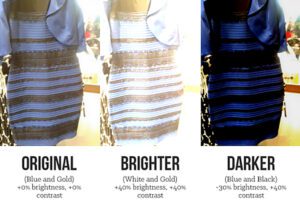
Although this sparked countless online debates, it also highlighted an important scientific reality: two people can observe the same object under identical conditions and still perceive color differently.
For most people, these differences are harmless. However, for manufacturers, brands, laboratories and suppliers that rely on accurate color communication, subjective color perception can result in:
- Production delays
- Rejected color approvals
- Supplier disagreements
- Material waste
- Higher production costs
- Inconsistent product quality
Understanding how humans perceive color is therefore fundamental to building reliable color management workflows.
Why Do People See Colors Differently?
People see colors differently because color perception depends on both the physical properties of light and the way the human visual system processes that light.
Numerous variables influence the way we perceive color, including:
- Lighting conditions
- Age
- Memory and expectations
- Background colors
- Viewing environment
- Individual differences in visual perception
Although humans typically perceive color using three different types of cone cells, our brains ultimately interpret the information received from our eyes. That means color is never purely objective.
This explains why two experienced professionals can occasionally disagree when visually evaluating the same textile sample, painted surface or plastic component.
For a deeper explanation of these influences, read our guide on factors that impact color perception.
How We See Color
Color vision begins in the retina, where specialized photoreceptor cells convert incoming light into electrical signals that are processed by the brain.
Two different types of photoreceptors work together:
- Rods, which allow us to see in very low-light conditions but only in shades of gray.
- Cones, which enable us to perceive color when sufficient light is available.
To better understand this process, you may also find these articles helpful:
The cone cells within our eyes respond primarily to three regions of the visible spectrum.
| Cone Type |
Primary Sensitivity |
Approximate Peak Absorption |
| S Cones |
Blue wavelengths |
~445 nm |
| M Cones |
Green wavelengths |
~535 nm |
| L Cones |
Red wavelengths |
~565 nm |
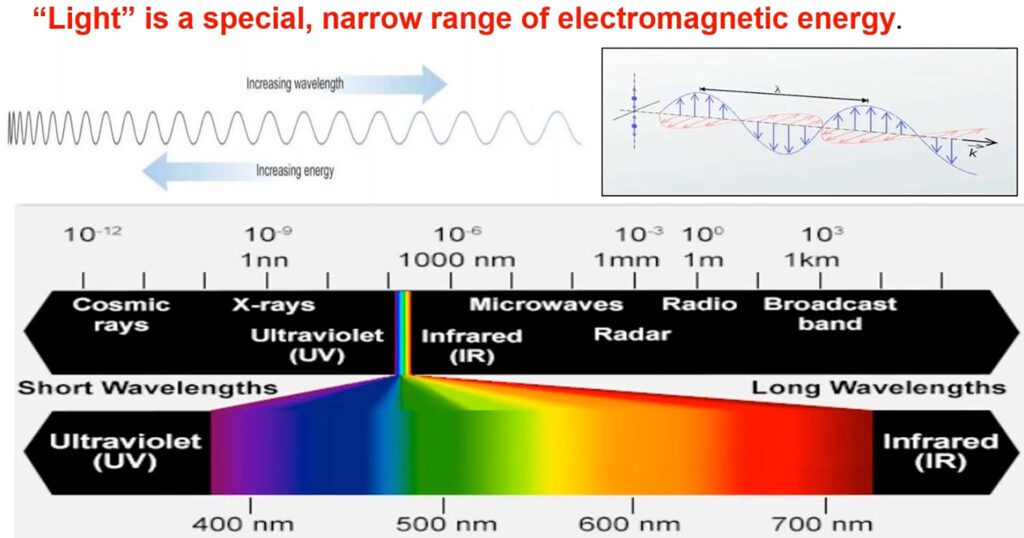
Human beings can only perceive a small portion of the electromagnetic spectrum—approximately 400 to 700 nanometers. Despite this relatively narrow range, the human visual system is capable of distinguishing millions of different colors.
When light strikes an object, certain wavelengths are absorbed while others are reflected. The reflected wavelengths enter our eyes, where they stimulate the cone cells before being interpreted by the brain as color.
How Many Colors Can Humans See?
Scientists estimate that the average human eye can distinguish millions of different colors.
This remarkable capability comes from approximately six to seven million cone cells working together to detect subtle differences in wavelength and light intensity.
Although researchers still debate the exact number of colors humans can perceive, one fact remains clear: our ability to distinguish color depends on both the biology of our eyes and the processing power of our brains.
This also explains why questions such as:
- How many colors can humans see?
- How many colors exist?
- How many colors can the human eye distinguish?
are much more complicated than they initially appear.
The Science Behind Human Color Vision
Modern color science is largely based on two complementary theories that explain how humans perceive color.
Trichromatic Theory
Trichromatic theory, also known as the Young-Helmholtz theory, proposes that color vision is based on the combined response of three different cone cells that are sensitive to red, green and blue regions of the visible spectrum.
Although this theory was developed during the nineteenth century, it wasn’t experimentally confirmed until the 1960s.
Opponent Process Theory
Opponent process theory suggests that our visual system organizes color into opposing channels:
- Black versus white
- Red versus green
- Blue versus yellow
Together, these two theories provide the foundation of modern color science and help explain why human color perception is both incredibly accurate and inherently subjective.
For a broader introduction, read Fundamentals of Working with Color.
Color Perception: A Real-World Example
One of the best real-world examples of color perception is the iconic yellow school bus used throughout the United States.

When “School Bus Yellow” was selected as the national standard in 1939, scientists understood far less about human color vision than they do today. Yet the choice turned out to be remarkably effective.
According to vision experts, the color sits near the middle of the wavelengths that stimulate both the red-sensitive and green-sensitive cone cells in our eyes.
Because both types of cone cells are activated strongly, school bus yellow remains highly visible—even in our peripheral vision.
This makes it one of the safest colors for vehicles that need to attract immediate attention.
The school bus example illustrates an important principle:
The color of an object is determined not by the object itself, but by the wavelengths of light it reflects.
When light strikes an object:
- Some wavelengths are absorbed.
- Some wavelengths are reflected.
- The reflected wavelengths enter our eyes.
- Our brain interprets those wavelengths as color.
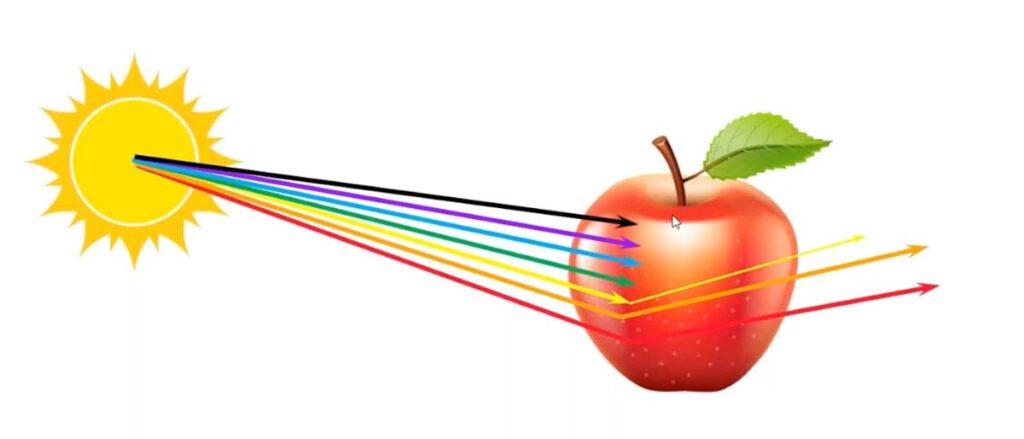
This also explains why the exact same object can appear different under different lighting conditions.
A textile sample evaluated under daylight may look slightly different under LED lighting. Likewise, a coating approved in one laboratory may appear different in another if the viewing conditions are not standardized.
For organizations managing color across multiple locations, this creates significant challenges.
That is why companies increasingly rely on digital color communication and objective color measurement instead of visual judgement alone.
Spectrophotometers, color management software and standardized workflows help ensure that color decisions remain consistent regardless of location or observer.
You may also be interested in:
Why Understanding Color Perception Matters
For most people, differences in color perception are little more than an interesting curiosity.
For manufacturers, brands, suppliers and quality control laboratories, however, they can create serious operational challenges.
A color that appears acceptable to one reviewer may be rejected by another.
A sample approved in one country may fail approval in another.
The consequences often include:
- Longer approval cycles
- Supplier disagreements
- Production delays
- Repeated sample submissions
- Material waste
- Inconsistent product quality
Understanding how humans perceive color is therefore the first step toward creating objective, repeatable color workflows.
How Our Surroundings Impact Color Perception
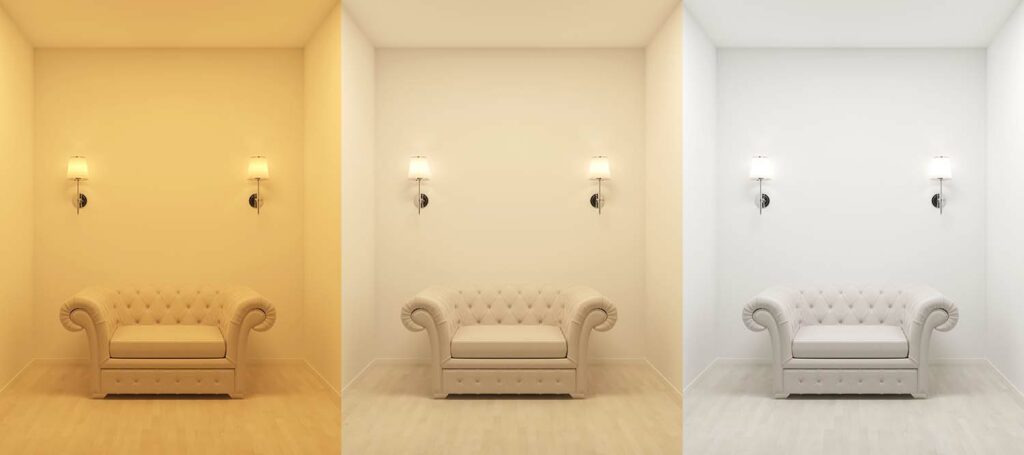
Most people can recognize familiar objects even when lighting conditions change.
A yellow school bus still appears yellow whether it’s viewed on a sunny afternoon or during an overcast morning.
This remarkable ability is known as color constancy.
Color constancy allows the brain to compensate for changes in illumination so familiar objects appear relatively stable in color.
However, this ability has important limitations.
It works well for broad color categories, but becomes much less reliable when evaluating subtle differences between production samples, fabrics, plastics or coatings.
This limitation becomes especially important in color-critical industries where tiny color differences determine whether a product passes or fails quality control.
Does Everyone See Colors the Same?
The simple answer is no.
Although most people perceive colors similarly, our visual systems are not identical.
Research has shown that the number of cone cells can vary significantly from person to person. Yet despite these biological differences, people generally agree remarkably well on basic colors.
One famous study conducted at the University of Rochester found that participants consistently selected nearly identical wavelengths when asked to identify “pure yellow,” even though their retinas contained different numbers of cone cells.
This suggests that color perception depends not only on the eye itself, but also on how the brain processes visual information.
However, once we move beyond basic colors and begin comparing product samples or production standards, perception becomes much more variable.
This explains why questions such as:
- Do people see colors differently?
- Does everyone see the same colors?
- Why do people disagree about color?
continue to be important topics in both color science and industrial color management.
For more information, see Why We Can’t Agree on Color Perception.
What Factors Influence Color Perception?
When people visually compare colors, they often assume they are seeing exactly the same thing. In reality, both environmental and personal factors can influence how color is perceived.
These influences are usually insignificant in everyday life, but they become critical in industries where precise color matching determines product quality.
Physical Factors
Environmental conditions can significantly affect the appearance of a color. Important physical influences include:
- Light source
- Background color
- Viewing environment
- Altitude
- Ambient noise and distractions
Among these, lighting is by far the most influential factor because it directly affects the wavelengths reaching the eye.
Learn more in What You Need to Know About Light Sources and Color Evaluation.
Personal Factors
Color perception can also vary because of individual differences between observers.
Examples include:
- Age
- Medication
- Fatigue
- Memory
- Mood
- Visual sensitivity
Even two experienced color professionals evaluating the same sample under similar conditions may not perceive identical colors.
This is one of the primary reasons why organizations increasingly rely on objective color measurement instead of visual evaluation alone.

These challenges become even greater when suppliers, laboratories and manufacturing facilities are located around the world.
Small perception differences can quickly lead to:
- Repeated sample submissions
- Longer approval cycles
- Supplier disagreements
- Production delays
- Material waste
- Additional shipping costs
Objective measurement using spectrophotometers helps eliminate much of this subjectivity by replacing visual opinions with measurable color data.
Impossible Colors and Other Visual Phenomena
Color perception becomes even more fascinating when considering visual phenomena such as:
- Impossible colors
- Chimerical colors
- Afterimages
- Simultaneous contrast
- Metamerism
These effects demonstrate that color is not simply a property of light—it is also a product of how the brain interprets visual information.
Although these phenomena are fascinating from a scientific perspective, they reinforce an important lesson for manufacturers:
Human perception is not a measurement system.
Whenever accurate color decisions are required, objective measurement remains essential.
The Importance of Color in Our Everyday Lives

Color influences nearly every aspect of our daily lives.
Without realizing it, we constantly use color to interpret information, make decisions and recognize important objects.
Examples include:
- Red stop signs
- Green traffic lights
- Emergency warning colors
- Healthcare labeling systems
- Safety equipment
- Industrial warning markings
Color also plays a powerful emotional and cultural role.
We associate colors with:
- National identity
- Sports teams
- Corporate branding
- Traditions
- Emotions
For manufacturers, consistent color is therefore much more than a quality issue—it is an essential part of maintaining brand identity and customer trust.
Color Has Been Important for Thousands of Years
Long before spectrophotometers, color spaces or digital workflows existed, humans relied on pigments and dyes to communicate, decorate and identify objects.
Ancient civilizations used natural minerals and plant-based dyes to create:
- Textiles
- Ceramics
- Artwork
- Ceremonial objects
- Architectural decorations
Although today’s technology has advanced dramatically, the importance of accurate color remains just as relevant.
Modern brands still depend on consistent color to communicate quality, reinforce brand recognition and meet customer expectations.
The Mathematics Behind Color Perception
Because human vision varies from person to person, visual evaluation alone cannot guarantee accurate color matching.
This creates significant challenges for manufacturers that need to reproduce identical colors across multiple production runs, factories and suppliers.
To overcome these limitations, the color industry relies on mathematical color models and objective measurement systems.
These systems provide standardized methods for defining, communicating and comparing color numerically instead of visually.
As a result, brands can make color decisions based on measurable data rather than subjective perception.
Understanding the CIE Color Model
One of the most important developments in modern color science was the creation of the CIE XYZ color space in 1931.
The model provides a mathematical framework for describing color based on human visual response.
Instead of using subjective descriptions such as “bright red” or “deep blue,” colors can be communicated using standardized numerical values.
Several additional color spaces have since been developed from the original CIE model.
| Color Space |
Purpose |
Key Components |
| CIE XYZ |
Foundation of modern color science |
X, Y and Z tristimulus values |
| CIELAB |
Industry-standard color comparison |
L*, a*, b* |
| CIE L*C*h |
Alternative representation of CIELAB |
Lightness, Chroma and Hue |
For a more detailed explanation, see What Is CIELAB? and Color Systems: CIELAB and CIE2000.
Why Spectrophotometers Matter
Mathematical color models are only useful when colors can be measured accurately and consistently.
That is where spectrophotometers play a critical role.
Unlike human observers, spectrophotometers provide objective, repeatable color measurements that are not influenced by:
- Age
- Fatigue
- Mood
- Memory
- Lighting adaptation
- Personal interpretation
Instead of relying on subjective visual assessments, spectrophotometers measure the light reflected from a sample and convert it into standardized numerical color values.
These measurements can then be shared throughout a global supply chain, allowing brands, laboratories and suppliers to work from the same objective color standard.
This dramatically reduces disagreements during color approvals while improving repeatability and reproducibility.
Learn more in:
Organizations managing color across multiple facilities should also understand the importance of inter-instrument agreement, which ensures measurements remain consistent regardless of which instrument is used.
The First Step to Overcoming Color Perception Differences
Human vision is remarkable, but it was never designed to function as a precision measurement system.
Lighting conditions, surroundings, biology and psychology all influence how we perceive color.
For organizations that depend on consistent product color, understanding these limitations is the first step toward improving quality control.
The next step is implementing objective color management tools and standardized workflows.
This typically includes:
- Spectrophotometers
- Digital color communication software
- Standardized viewing conditions
- Color quality control software
- Supplier alignment and certification programs
Together, these solutions help organizations improve:
- Color accuracy
- Repeatability
- Reproducibility
- Quality control
- Supplier collaboration
- Production efficiency
Frequently Asked Questions About Color Perception
How do humans see color?
Humans perceive color through cone photoreceptor cells located in the retina. These cells respond to different wavelengths of visible light, while the brain processes these signals into the colors we experience.
What part of the eye detects color?
Color is detected by cone cells in the retina. Rod cells support vision in low-light environments but do not perceive color.
How many color receptors do humans have?
Most people have three types of cone cells that respond primarily to blue, green and red regions of the visible spectrum.
Do people really see colors differently?
Yes. Lighting conditions, age, surrounding colors, fatigue, memory and individual biological differences all influence how colors are perceived.
How many colors can the human eye distinguish?
Although the exact number is debated, researchers estimate that humans can distinguish millions of different colors thanks to the combined response of millions of cone cells and complex brain processing.
Why can’t we rely on visual color evaluation alone?
Human perception is subjective and easily influenced by environmental and personal factors. Objective color measurement instruments such as spectrophotometers eliminate much of this variability by providing standardized numerical color data.
Why is color perception important for manufacturers?
Differences in color perception can lead to rejected samples, inconsistent production, supplier disagreements and increased manufacturing costs. Objective color management helps organizations improve consistency and reduce production delays.
What is the difference between color perception and color measurement?
Color perception refers to how humans experience color through the eyes and brain. Color measurement uses scientific instruments to quantify color objectively, allowing accurate communication throughout the supply chain.
What industries rely on objective color measurement?
Industries including textiles, plastics, paints and coatings, automotive, packaging, printing, consumer electronics and retail paint all rely on objective color measurement to maintain product consistency.
How can Datacolor help improve color consistency?
Datacolor provides spectrophotometers, color management software and quality control solutions that help manufacturers objectively measure, communicate and manage color throughout the entire product lifecycle.
Improve Color Accuracy with Objective Color Measurement
Understanding how humans perceive color is the first step toward better color quality. Datacolor’s spectrophotometers, software and color management solutions help manufacturers replace subjective visual evaluations with objective, repeatable color data.
Explore Datacolor Color Management Solutions


 Want to Get Color Right?