The textile and apparel industry has undergone significant transformation in recent years.
The COVID-19 pandemic exposed vulnerabilities that many brands and manufacturers had overlooked for decades. Long production lead times, shipping delays, labor shortages, congested ports and inventory shortages revealed the risks associated with highly dispersed global supply chains.
For textile and apparel companies, the lesson became clear: relying exclusively on low-cost offshore production is no longer enough.
Today, brands are rethinking how products move from concept to consumer. Two complementary strategies are emerging as critical drivers of future success:
- Near-shoring production
- Digitalizing color management processes
Together, these approaches help organizations improve supply chain resilience, reduce lead times, accelerate speed to market and respond more effectively to rapidly changing consumer demand.
Why the Textile Industry Is Embracing Near-Shoring
Near-shoring refers to relocating production closer to the end market.
Instead of manufacturing products on the opposite side of the world, companies move production to neighboring countries or regions that offer shorter transportation times, stronger communication and improved supply chain visibility.
For North American apparel brands, near-shoring often means working with suppliers located in:
- Mexico
- Guatemala
- Honduras
- El Salvador
- Nicaragua
- Costa Rica
- The Dominican Republic
The objective extends far beyond reducing transportation distance. Near-shoring helps organizations create faster, more flexible and more resilient supply chains.
Benefits of Near-Shoring for Apparel Brands
Companies that relocate production closer to their primary markets can benefit from:
- Faster product launches
- Shorter production lead times
- Greater supply chain flexibility
- Improved communication with suppliers
- Reduced inventory risk
- Lower exposure to global shipping disruptions
- Better responsiveness to consumer trends
- Lower transportation emissions
According to Mike Todaro, Managing Director of the Americas Apparel Producers’ Network (AAPN), today’s retail environment requires manufacturers to fundamentally rethink how supply chains operate.
“We can’t keep doing what we did before the pandemic and expect different results.”
Retailers now face increasing pressure to:
- Sell inventory faster
- Reduce markdowns
- Improve demand forecasting
- Avoid stockouts
- Increase profitability
Near-shoring has become an important strategy for achieving these objectives.

The Hidden Cost of Long Global Supply Chains
For many years, sourcing decisions focused primarily on manufacturing costs.
The underlying assumption was simple:
Lower production costs equal higher profits.
The pandemic challenged that assumption.
When factories closed, containers became unavailable and ports experienced severe congestion, many organizations discovered that supply chain speed and reliability often create more value than labor cost savings alone.
Long global supply chains introduce risks such as:
- Shipping delays
- Inventory shortages
- Communication challenges across time zones
- Slower response to fashion trends
- Higher transportation costs
- Greater environmental impact
- Reduced production flexibility
As a result, brands increasingly evaluate the total performance of the supply chain rather than focusing exclusively on manufacturing cost.
Two Strategies Driving the Future of Textile Manufacturing
Although today’s supply chain challenges are complex, many organizations are finding success by combining two complementary initiatives.
1. Near-Shoring Production
Moving production closer to consumers shortens transportation times, improves communication and increases operational agility.
2. Digitalizing Color Management
Replacing traditional physical color approvals with digital color workflows reduces delays, improves collaboration and accelerates product development.
When implemented together, these strategies significantly improve operational efficiency throughout the textile supply chain.
How Digital Color Management Supports Near-Shoring
Color approval remains one of the most common causes of delays during textile product development.
Traditional workflows often depend on:
- Physical lab dips
- Sample shipments
- Manual visual evaluations
- Multiple approval rounds
- Extended development timelines
These processes become even more challenging when design teams, suppliers and manufacturers operate from different countries or work remotely.
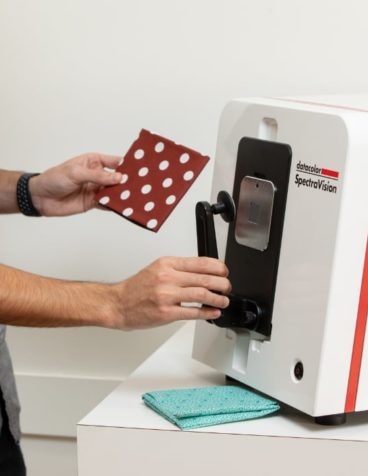
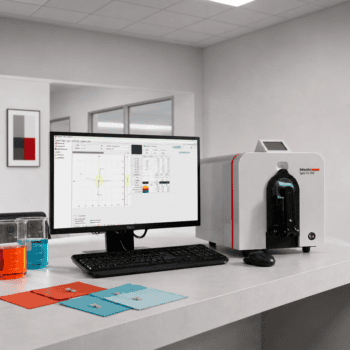
Digital color management addresses many of these challenges by enabling brands to measure, communicate, evaluate and approve color electronically using spectrophotometers and color management software.
Benefits include:
- Fewer physical sample shipments
- Faster color approvals
- Improved supplier communication
- Reduced subjectivity
- Greater color consistency
- Lower transportation costs
Related reading: Digital Color Communication Explained.
Traditional vs. Digital Color Management
| Traditional Process |
Digital Process |
| Physical sample shipping |
Digital color communication |
| Subjective visual evaluation |
Objective spectrophotometer measurement |
| Multiple approval rounds |
Higher first-pass approval rates |
| Long development cycles |
Accelerated product development |
| Higher logistics costs |
Lower operational costs |
Digital color workflows also enable efficient collaboration in remote and hybrid working environments, allowing brands, suppliers and retailers to approve color from virtually anywhere.

Why Near-Shoring Is Accelerating Across the Americas
Near-shoring is no longer viewed as a temporary response to pandemic-related disruptions. It has become a long-term strategy for improving supply chain resilience.
Although the concept is especially prominent in North America, manufacturers worldwide are relocating production closer to major consumer markets.
One notable example is China. Rather than shipping every product across the Pacific Ocean, many Chinese manufacturers have invested heavily in production facilities in Mexico to improve access to the U.S. market.
This approach provides several advantages:
- Reduced transportation times
- Lower logistics costs
- Fewer port-related delays
- Access to regional free-trade agreements
- Greater supply chain stability
However, moving production geographically is only part of the equation.
Successful near-shoring also depends on selecting suppliers capable of delivering consistent quality, fast turnaround times and reliable color management.
Central America Has Become a Color-Capable Manufacturing Hub
Many apparel brands are surprised by how advanced textile manufacturing has become throughout Central America.
Historically, many facilities specialized primarily in garment assembly. Today, numerous manufacturers provide complete product development services throughout the apparel lifecycle.
Many suppliers now offer:
- Product development
- Fabric sourcing
- Dyeing expertise
- Digital color management
- Trend forecasting
- Full-package manufacturing
According to Mike Todaro:
“When AAPN went into Central America for the first time in 2001, the factories were just sewing.”
Today, many manufacturers actively participate in:
- Seasonal color direction
- Trend forecasting
- Material innovation
- Product development
- Collection planning
Instead of simply executing specifications provided by brands, suppliers increasingly help shape future collections by contributing their own expertise in color and design.

Why Color Capability Matters in Near-Shoring
One of the biggest factors influencing speed to market is the efficiency of the color approval process.
A poorly managed color workflow can easily add days—or even weeks—to product development.
Conversely, organizations with mature digital color management programs can:
- Reduce approval cycles
- Increase first-pass approval rates
- Minimize costly rework
- Accelerate product launches
- Improve collaboration between suppliers and brands
- Create more predictable production schedules
For brands evaluating potential near-shoring partners, color capability should therefore be considered alongside manufacturing capacity, pricing and logistics.
Related reading: How to Improve Your Measurement of Textile Samples.
How Digital Color Management Reduces Lead Times
Traditional color approval processes often involve multiple physical shipments between mills, dye houses, garment manufacturers and brand headquarters.
Each additional sample shipment introduces:
- Transportation time
- Approval delays
- Additional costs
- Risk of communication errors
Digital color management replaces much of this manual process with objective color data that can be shared instantly across the supply chain.
| Traditional Workflow |
Digital Workflow |
| Ship physical lab dip |
Share digital color data instantly |
| Wait for delivery |
Immediate supplier review |
| Visual evaluation |
Objective spectrophotometer measurement |
| Repeat approval cycle |
Higher first-pass acceptance |
| Long development timeline |
Faster speed to market |
The result is a more efficient development process that allows brands to react faster to seasonal trends and changing consumer demand.
Why Faster Color Decisions Matter
Fashion trends move faster than ever.
Consumers increasingly expect brands to introduce new collections quickly while maintaining consistent quality.
Brands that can approve colors days or weeks earlier gain significant competitive advantages, including:
- Earlier production starts
- Faster retail launches
- Improved inventory planning
- Lower inventory carrying costs
- Reduced risk of missing seasonal demand
Near-shoring and digital color management complement one another because both remove unnecessary delays from the product development process.
Building Trust Through Color Accuracy
Trust is one of the most valuable assets within a modern textile supply chain.
When brands trust their suppliers to consistently reproduce color accurately, approval cycles become shorter, communication improves and production moves more efficiently.
Without confidence in color quality, brands often request additional samples, perform more visual inspections and repeat approval rounds—all of which add unnecessary time and cost.
Programs such as Datacolor Certify help demonstrate that suppliers have the people, processes and technology required to consistently meet brand color standards.
This provides measurable benefits for both brands and suppliers.
| Benefits for Brands |
Benefits for Suppliers |
| Reduced supplier risk |
Increased market credibility |
| Greater confidence in approvals |
Competitive differentiation |
| Faster supplier onboarding |
Improved customer relationships |
| More consistent color quality |
Access to new business opportunities |
As Mike Todaro explains:
“You’ll never have speed until you have trust.”
That trust begins with objective color measurement and standardized digital color workflows.
Why Trust Accelerates Product Development
Every additional color correction introduces delays throughout the development process.
If brands repeatedly question supplier color data, production slows as additional lab dips, approvals and discussions become necessary.
When suppliers consistently produce accurate color, organizations can:
- Approve color earlier
- Reduce communication cycles
- Decrease the number of physical samples
- Improve production planning
- Launch collections more quickly
Objective measurement using spectrophotometers removes much of the subjectivity that traditionally exists in visual color evaluation.
Redefining Cost in the Modern Textile Supply Chain
The textile industry is increasingly moving away from evaluating suppliers based solely on manufacturing cost.
Instead, leading organizations now assess the total value delivered throughout the supply chain.
Important evaluation criteria include:
- Speed to market
- Supply chain reliability
- Operational flexibility
- Sustainability
- Product quality
- Supplier collaboration
- Color consistency
A lower manufacturing cost provides little value if products arrive late, inventory accumulates or consumer demand changes before products reach retail shelves.
Near-shoring enables organizations to create more balanced supply chains that prioritize responsiveness as well as production efficiency.
The Sustainability Benefits of Near-Shoring and Digital Color Management
Near-shoring and digital color management also contribute to more sustainable manufacturing operations.
Although sustainability is not the primary motivation for every organization, reducing unnecessary transportation and physical sampling naturally lowers environmental impact.
Potential sustainability benefits include:
- Fewer international shipments
- Lower transportation-related emissions
- Reduced paper documentation
- Fewer physical color samples
- Less production waste caused by color corrections
- Improved resource utilization
As environmental reporting becomes increasingly important throughout the apparel industry, these operational improvements can support broader sustainability initiatives.

The Future of Near-Shoring in the Textile Industry
Near-shoring is no longer viewed as a temporary response to pandemic-related disruption.
For many textile and apparel brands, it has become a long-term strategic initiative designed to build stronger, more resilient supply chains.
Combined with digital color management, near-shoring enables organizations to:
- Improve speed to market
- Reduce supply chain risk
- Increase operational flexibility
- Enhance collaboration across suppliers
- Improve color consistency
- Reduce logistics costs
- Lower environmental impact
- Increase profitability
Organizations such as the Americas Apparel Producers’ Network (AAPN) continue to support investments that strengthen textile manufacturing throughout the Americas.
These initiatives help create a more responsive regional manufacturing ecosystem that is better equipped to meet today’s rapidly changing consumer expectations.
Preparing for the Next Generation of Textile Manufacturing
The future of textile manufacturing will belong to organizations that combine supply chain agility with digital innovation.
Near-shoring provides geographic flexibility, while digital color management creates the standardized communication required to support modern product development.
Together, these strategies enable brands, suppliers and manufacturers to reduce delays, improve collaboration and deliver products to market faster than ever before.
Frequently Asked Questions About Near-Shoring and Digital Color Management
What is near-shoring in the textile industry?
Near-shoring is the practice of relocating manufacturing closer to the end market. For North American apparel brands, this often means working with suppliers in Mexico, Central America or the Caribbean to reduce transportation times, improve supply chain visibility and respond faster to consumer demand.
Why has near-shoring become more popular?
The COVID-19 pandemic exposed the risks of long global supply chains, including shipping delays, labor shortages, congested ports and inventory disruptions. Near-shoring helps brands build more resilient and agile supply chains while reducing dependence on distant manufacturing locations.
How does digital color management support near-shoring?
Digital color management replaces traditional physical color approvals with objective digital measurements. Using spectrophotometers and color management software, brands and suppliers can evaluate and approve color remotely, reducing lead times and minimizing the need to ship physical samples.
What are the benefits of digital color management?
Digital color management helps organizations:
- Reduce physical sample shipments
- Accelerate color approvals
- Improve communication between brands and suppliers
- Increase first-pass approval rates
- Reduce operational costs
- Improve color consistency across the supply chain
Why is color management important for apparel manufacturers?
Color approval is often one of the longest stages in textile product development. Efficient color management reduces approval cycles, minimizes rework and helps brands bring products to market more quickly while maintaining consistent quality.
What should brands look for when selecting a near-shoring supplier?
In addition to manufacturing capacity and pricing, brands should evaluate a supplier’s color management capabilities, quality control processes, technical expertise and ability to support digital collaboration throughout product development.
How does digital color management improve sustainability?
Digital workflows reduce the number of physical color samples, lower transportation requirements and minimize unnecessary production waste. These improvements help organizations reduce their environmental impact while improving operational efficiency.
What is Datacolor Certify?
Datacolor Certify is an assessment program that verifies whether suppliers have the equipment, processes and expertise required to consistently meet brand color quality standards. Certification helps build trust between brands and suppliers while supporting faster product approvals.
Can near-shoring replace offshore manufacturing completely?
Not necessarily. Many organizations adopt a hybrid sourcing strategy that combines regional suppliers with global manufacturing partners. The optimal approach depends on product complexity, production capacity, cost considerations and market requirements.
How can Datacolor help improve textile supply chains?
Datacolor provides spectrophotometers, digital color management software and quality control solutions that enable brands, suppliers and manufacturers to measure, communicate and manage color consistently across global supply chains.
Build a Faster, More Resilient Textile Supply Chain
Near-shoring and digital color management work best when implemented together. Datacolor helps textile and apparel brands improve color consistency, accelerate product development and strengthen supplier collaboration through objective color measurement and digital workflows.
Explore Datacolor Textile Color Management Solutions


 Want to Get Color Right?