In textile production, color decisions can make or break a collection. From initial design to final delivery, even a minor color mismatch can cause approval delays, rework, higher costs, excess waste and missed launch windows.
With tight deadlines, global supply chains and rising sustainability expectations, getting color right the first time is no longer optional. It is a strategic requirement for brands, mills, dye houses, suppliers and manufacturers that need to deliver consistent color at production speed.
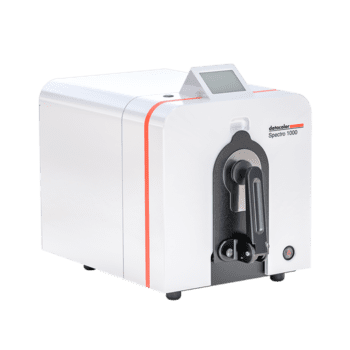
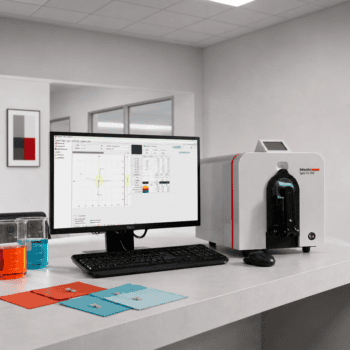
Digital color management in textiles helps teams define, measure, communicate and approve color using objective data instead of subjective interpretation. By combining spectrophotometers, formulation software, lab automation, quality control tools and digital communication, textile teams can improve first-shot accuracy, reduce physical sampling and keep suppliers aligned across locations.
For a broader foundation, see Digital Color Management and Color Management Solutions for Textile & Apparel.

Why Textile Color Management Is Challenging
Textile color workflows are complex because color decisions move across many teams, materials and production stages.
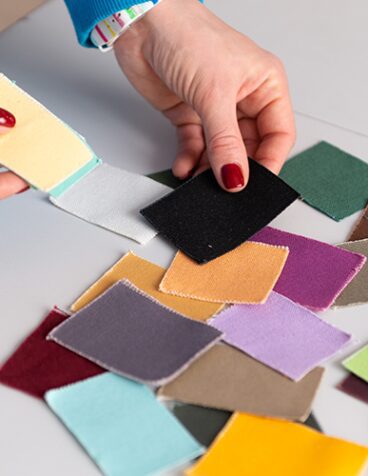
Designers often start with seasonal inspiration, trend palettes or physical references. Product teams then refine the palette, select materials and define color standards. Mills and dye houses translate those standards into dyed fabric, while suppliers submit lab dips for review. Finally, quality teams approve or reject samples using both visual assessment and measurement data.
At every stage, variation can enter the process.
Common causes of textile color variation include:
- Differences in fiber content and fabric construction
- Dye class and formulation limitations
- Inconsistent sample preparation
- Lighting and viewing condition differences
- Subjective visual evaluation
- Inaccurate or incomplete color standards
- Supplier-to-supplier process variation
- Poor communication of color corrections
- Delayed physical sample shipments
Physical lab dips are often shipped multiple times between suppliers, mills, brands and regional offices. Every approval cycle adds time, transportation costs and environmental impact. When color standards are unclear or measurement procedures are inconsistent, teams can spend weeks correcting issues that could have been prevented much earlier in the workflow.
For more practical guidance, see Best Practices for Textile Sample Measurement and Sample Measurement Technique for Digital Color Communication.
What Digital Color Management Changes in Textiles
Digital color management transforms textile workflows by replacing subjective color communication with measurable, shareable color data.
Instead of relying only on physical samples and visual descriptions, brands, suppliers and laboratories can work from digital standards, spectrophotometer measurements, agreed tolerances and shared quality control data. This creates a consistent basis for color decisions across design, laboratory development, production and quality control.
A modern digital textile color workflow typically includes:
- Digital color standards
- Controlled sample measurement procedures
- Spectrophotometer color data
- Dye formulation software
- Defined Delta E tolerances
- Controlled visual evaluation
- Digital lab dip submission and approval
- Supplier communication based on measurable color differences
- Quality records for traceability and future production
Digital workflows do not replace experienced colorists—they give them better data, more accurate correction guidance and a more reliable way to align decisions across global teams.
Learn more about objective color measurement in Using a Spectrophotometer for Color Measurement and Digital Color Communication with Color Measurement Instruments.
Streamlined Design and Color Selection
Digital color management helps designers and product teams move faster from inspiration to approved color standards.
Design teams can select colors from global standard libraries, internal digital archives or measured inspiration samples. Once a color direction has been chosen, it can be captured as measurable color data and connected to a digital standard before development begins.
This significantly reduces ambiguity. Instead of communicating color through physical swatches, photos or subjective descriptions, everyone works from the same objective target.
Digital color selection supports:
- Faster palette creation
- Better alignment between design and technical teams
- Fewer misunderstandings during product development
- Easier reuse of proven color standards
- Greater consistency across collections and seasons
For organizations building a fully connected workflow, see Fully Digital Color Management Workflow and Color Matching in Design and Industry.
Faster Dye Development and Better First-Shot Matches
Dye development is one of the greatest opportunities for improving both speed and cost efficiency in textile production.
Traditional dye matching often requires multiple trial-and-error corrections. Every additional lab dip consumes dyes, chemicals, water, energy, laboratory time and fabric. These repeated corrections increase production costs while delaying approvals and product launches.
Digital formulation software uses measured color data, substrate information and dye databases to calculate optimized dye recipes. This helps colorists achieve accurate first-shot matches while reducing unnecessary correction cycles.
Benefits include:
- Fewer re-dyes and correction cycles
- Faster lab dip development
- Lower consumption of dyes, chemicals and fabric
- More predictable recipe performance
- Better use of available colorants
- Improved batch-to-batch reproducibility
Learn more about Datacolor Match Textile and Textile Color Formulation & Correction Software.
Objective Color Evaluation with Spectrophotometers
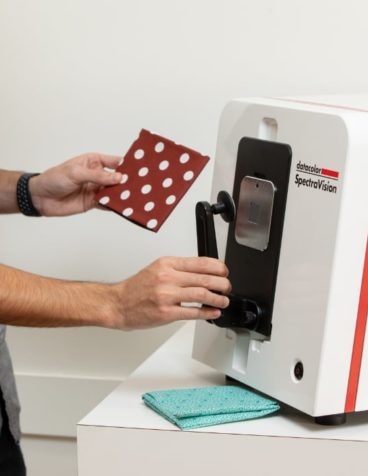
Spectrophotometers remove much of the subjectivity from textile color evaluation by providing objective measurement data.
While visual assessment remains an important part of the approval process, human perception can be influenced by lighting conditions, fatigue, background colors and individual experience. Spectrophotometers measure how textiles reflect light across different wavelengths, creating consistent numerical color data that can be compared directly with approved standards.
This allows quality teams to evaluate:
- Color differences (Delta E)
- Lightness variations
- Hue shifts
- Chroma differences
- Compliance with production tolerances
Spectrophotometers are particularly valuable for measuring:
- Woven and knitted fabrics
- Yarns and sewing threads
- Printed textiles
- Buttons, lace, zippers and trims
- Heathered or textured materials
- Fluorescent and high-chroma colors
- Multi-material textile products
For more information, see Patterns, Lace, Trim, Yarn & Zippers and Fluorescent Color Matching.
Controlled Visual Assessment Still Matters
Although digital measurement provides objective color data, visual assessment remains an essential part of textile color approval.
Fabric texture, weave, gloss, pile direction, transparency and fiber composition all influence how color appears to the human eye. Two fabrics can produce nearly identical measurement values while still appearing different under certain lighting conditions.
Using standardized light booths allows teams to evaluate samples under controlled lighting conditions and identify issues such as metamerism before production begins.
Controlled visual assessment helps teams:
- Validate instrumental measurements
- Evaluate appearance under multiple illuminants
- Reduce disagreements during approvals
- Identify metamerism before production
- Create more consistent quality decisions
Related articles include Light Booths for Color Assessment, Light Sources and Color Evaluation and What Is Metamerism?.
Lab Automation Improves Speed and Repeatability
Automation helps textile laboratories improve consistency while reducing manual work.
Manual dye dispensing can introduce small weighing errors that affect final color accuracy. Automated dispensing systems improve repeatability by precisely controlling dye and chemical delivery, allowing laboratories to create more consistent dye recipes with fewer corrections.
Lab automation supports:
- More accurate recipe preparation
- Reduced weighing and dispensing errors
- Greater repeatability between laboratory trials
- Faster sample development
- Improved batch consistency
- Better process documentation
Datacolor Ahiba and Autolab help textile laboratories increase efficiency while maintaining reliable color development workflows.
Supply Chain Alignment Reduces Approval Delays
Modern textile production depends on global collaboration between brands, mills, dye houses, suppliers, sourcing teams and quality departments.
Digital color communication ensures every stakeholder works from the same approved standard, measurement settings, tolerances and evaluation criteria. Instead of subjective feedback such as “too dull” or “slightly off,” teams can communicate precise measurement results that suppliers can immediately act upon.
Benefits of digital supplier alignment include:
- Fewer approval cycles
- Less supplier confusion
- More actionable correction feedback
- Reduced shipping of physical lab dips
- Faster product launches
- Greater consistency across global production sites
For more information, see Keys to Reliable Digital Color Communication and Vendor Empowerment.
Digital Color Management Supports Sustainability
Digital color management can directly support textile sustainability by reducing unnecessary sampling, re-dyeing, shipping and off-color production.
Textile dyeing is resource-intensive. Every failed lab dip, rejected batch or repeated correction can consume additional water, energy, chemicals, dyes and fabric. Digital systems help teams prevent waste earlier in the workflow by improving first-shot accuracy and identifying color issues before they reach bulk production.
Digital textile color management can help manufacturers:
- Reduce the number of physical lab dips
- Avoid unnecessary re-dyeing and correction cycles
- Optimize dye recipes
- Use dyes and chemicals more efficiently
- Correct or reassign off-color batches more effectively
- Reduce international sample shipping
- Make approvals faster and more data-driven
- Prevent avoidable off-color bulk production
These improvements support both operational efficiency and environmental goals. Textile teams can maintain color quality and production speed while reducing the material and environmental cost of repeated corrections.
For more on the relationship between color accuracy and environmental performance, see Sustainability in Manufacturing and Color Consistency and How Digital Color Management Supports Sustainability.
Business Benefits of Digital Textile Color Management
A connected digital color workflow creates measurable benefits across design, development, sourcing, production and quality control.
| Benefit |
Impact on Textile Production |
| Faster color development |
More accurate formulation and clearer correction data reduce the number of lab dip cycles. |
| Improved first-shot accuracy |
Measured standards and optimized dye recipes improve the likelihood of reaching the target earlier. |
| More consistent approvals |
Defined tolerances and controlled evaluation reduce subjective differences between teams and locations. |
| Lower development costs |
Fewer samples, corrections, shipments and rejected batches reduce operational expenses. |
| Better supplier alignment |
Shared standards and measurable feedback give mills and dye houses clearer production targets. |
| Reduced environmental impact |
Lower material use, fewer re-dyes and less sample shipping reduce waste, water and energy consumption. |
| Greater traceability |
Digital measurement and approval records support audits, repeat orders and future color development. |
Textile Color Management Success Stories
Digital color management becomes most valuable when it improves real operational decisions across textile supply chains.
For global thread manufacturers such as Amann Group, color consistency must be maintained across different materials, product lines, factories and customer requirements. Standardized measurement procedures and advanced spectrophotometers can help improve reproducibility, reduce rework and support faster, more confident decision-making.
Apparel companies and sourcing teams face similar challenges. When different global locations work with inconsistent physical standards or evaluation procedures, the result can be repeated sample shipments, conflicting feedback and delayed approvals.
By moving to a digital workflow, organizations can reduce their dependence on physical lab dips and align suppliers earlier in the development process. In practice, this can shorten approval timelines, reduce shipping costs and help products reach the market faster.
The strategic lesson is clear: textile color management is not only a laboratory function. It is a cross-functional process that influences:
- Design and palette development
- Material selection
- Sourcing and supplier management
- Dye formulation
- Production planning
- Quality control
- Sustainability performance
- Product delivery and time to market
A Complete Solution for Textile Color Control
Datacolor offers an end-to-end suite of tools for textile color management, helping organizations move from subjective approval cycles to objective, connected digital workflows.
Depending on the production environment, textile teams may use:
- Color formulation software to create accurate and optimized dye recipes
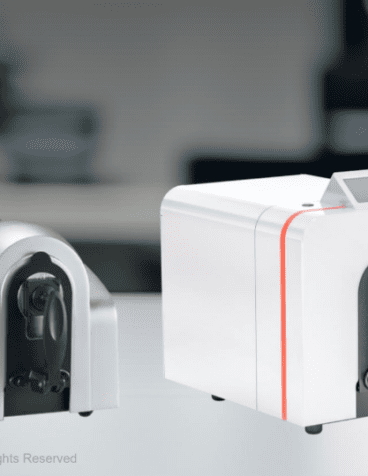
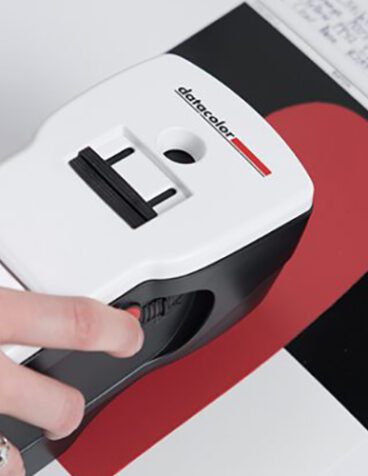
- Spectrophotometers to objectively measure fabrics, yarns, trims and production samples
- Lab dispensing systems to improve speed, accuracy and repeatability
- Quality control software to compare samples against standards and tolerances
- Digital communication tools to align brands, mills, dye houses and suppliers
- Controlled visual assessment equipment to evaluate color under standardized lighting conditions
Relevant Datacolor solutions include:
With the right digital color workflow, textile teams can reduce guesswork, improve product quality, accelerate approvals and lower both the operational and environmental impact of color development.
Frequently Asked Questions About Textile Color Management
What is textile color management?
Textile color management is the process of defining, measuring, communicating and controlling color throughout textile design, dye development, production and quality approval. It helps ensure that fabrics, yarns, trims and finished products consistently match the approved color standard.
Why is color management important in textile production?
Effective color management helps reduce lab dip cycles, approval delays, off-color production, rework, waste and inconsistent product quality. It also supports faster product development, more reliable production and stronger alignment between brands, mills, dye houses and suppliers.
How does digital color management improve textile workflows?
Digital color management uses objective measurement data, digital standards, formulation software, defined tolerances and shared quality control information. This helps teams make faster, more consistent color decisions across different departments, suppliers and production locations.
What role does a spectrophotometer play in textile color management?
A spectrophotometer measures how a textile sample reflects light across different wavelengths. It creates objective color data that teams can use to compare fabrics, yarns and trims against approved standards and determine whether they meet defined tolerances.
What is a digital color standard?
A digital color standard is a measurable numerical representation of an approved color target. It is typically created by measuring a physical standard with a spectrophotometer and storing its spectral reflectance data for communication and evaluation throughout the supply chain.
Why are textile lab dips often delayed?
Lab dip approvals may be delayed when color standards are unclear, suppliers use inconsistent measurement procedures, samples are evaluated subjectively or physical samples must be shipped repeatedly between global locations. Digital standards and measurable correction feedback can reduce these delays.
How does formulation software improve dye development?
Textile formulation software uses measured color data, substrate information and dye databases to calculate optimized dye recipes. This improves first-shot accuracy, reduces trial-and-error corrections and helps lower the use of dyes, chemicals, water, energy and fabric.
Can digital color management reduce textile waste?
Yes. Digital color management can reduce repeated lab dips, unnecessary re-dyeing, rejected batches, physical sample shipments and excess material use. Better first-shot accuracy helps identify and prevent color problems before they reach bulk production.
Is visual assessment still needed in textile color approval?
Yes. Visual assessment remains important because texture, weave, pile direction, transparency, gloss, fiber composition and lighting conditions can affect how textile color appears. The most reliable workflows combine objective instrumental measurement with controlled visual evaluation.
What is metamerism in textile color evaluation?
Metamerism occurs when two textile samples appear to match under one light source but look different under another. Evaluating samples under multiple standardized illuminants helps teams identify these differences before production or final product assembly.
How does digital color management help textile suppliers?
It gives suppliers clearer standards, measurable targets, defined tolerances and more actionable correction feedback. Instead of receiving subjective comments, suppliers can see whether a sample is too light, too dark, too red, too yellow, too strong or outside the approved tolerance.
What is Delta E in textile color control?
Delta E is a numerical value used to describe the difference between a measured textile sample and an approved color standard. Lower Delta E values generally indicate a closer match, although acceptable tolerances depend on the material, application and customer requirements.
How can textile companies get started with digital color management?
Start by defining approved physical and digital standards, selecting suitable spectrophotometers and software, standardizing sample preparation and measurement procedures, setting tolerances and training internal teams and suppliers. Many organizations begin with one product category or supplier group before expanding the workflow.
Ready to Improve Textile Color Accuracy and Speed?
If your team is dealing with slow lab dip approvals, inconsistent color standards, supplier misalignment or avoidable rework, Datacolor can help you build a faster and more reliable digital textile color workflow.
Connect with a Datacolor Expert


 Want to Get Color Right?