This article by Datacolor Product Manager Danielle Thome originally appeared in Quality Magazine.
Digital color management is the process of defining, measuring, communicating and controlling color with objective data throughout product development, production and quality control. It helps companies move beyond subjective visual judgment and make color decisions that are repeatable, measurable and easier to align across teams, materials and suppliers.
For color-critical industries, color is not only a design choice. It affects perceived quality, brand consistency, production efficiency and customer confidence. A product can meet its functional requirements and still appear defective if the color looks inconsistent on the shelf, across components or after normal use.
Digital color tools, including spectrophotometers, quality control software and digital color standards, help teams capture accurate color data, set realistic tolerances, improve formulations and reduce delays caused by unclear approvals or subjective color communication. For teams evaluating where to start, Datacolor’s guide to digital color communication with color measurement instruments provides useful context on how objective data improves workflow alignment.
What Is Digital Color Management?
Digital color management uses measurable color data to guide decisions from design inspiration to final production approval.
Instead of relying only on physical samples, personal judgment or descriptive language, digital color management creates a shared technical reference. A color can be measured, stored, compared, communicated and approved using defined data and agreed procedures.
A strong digital color workflow typically includes:
- a defined color standard;
- controlled sample measurement;
- spectrophotometer data;
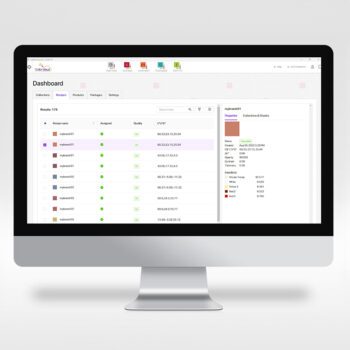
- quality control software;
- agreed Delta E tolerances;
- visual evaluation under controlled lighting;
- supplier communication based on measurable differences;
- digital records for auditability and future production.
The goal is not to remove human expertise. The goal is to give designers, colorists, lab teams, quality managers and suppliers a more reliable basis for making the same color decision. If your team is building this foundation, it also helps to understand the different types of color measurement instruments and where each instrument fits in the workflow.
Why Color Consistency Signals Product Quality
Color consistency strongly influences how customers judge product quality, even when they do not consciously analyze the difference.
If several shirts of the same style hang next to each other and one looks slightly different, shoppers may question quality. If a plastic component does not match the rest of an assembly, the product may appear poorly manufactured. If packaging color varies from batch to batch, brand trust can weaken.
This matters across industries:
- in textiles and apparel, color variation can lead to rejected lab dips, delayed approvals or inconsistent retail presentation;
- in plastics, visible mismatch between components can suggest process instability;
- in coatings and paints, color consistency affects customer satisfaction and repeat purchase confidence;
- in cosmetics, slight color differences can change perceived shade, finish or premium quality;
- in automotive and interior applications, color harmony across materials is essential for perceived craftsmanship.
Color consistency is therefore both a technical and commercial requirement. It protects quality perception while helping teams reduce rework, waste and approval delays. For textile and apparel teams, this is especially relevant in color management in textiles, where speed, accuracy and supplier coordination directly affect production timelines.
Why Color Performance Must Be Planned Across the Product Lifecycle
A color that looks correct at approval must also perform under real-world conditions.
Color quality is influenced by the material, formulation, manufacturing process and end-use environment. A product may look accurate when it leaves production, but change after exposure to washing, heat, sunlight, chemicals, abrasion, moisture or handling.
For example, a neon pink swimsuit faces demanding conditions. Sunlight, salt water, chlorine, washing and wear can all affect the final appearance. Fluorescent or high-chroma colors may also present additional fastness challenges compared with more stable colorants. For more detail on the complexity of bright and fluorescent shades, see Datacolor’s guidance on bright ideas for fluorescent color matching.
In plastics, the production process can also affect final color. Pigments may respond differently to high temperatures, pressure, chemical interactions or mechanical stress. Teams may need to consider thermochromism, stress whitening, brittleness, pigment stability and the way a finished part will be used. Plastics manufacturers can find more application-specific guidance in mastering color management in plastics manufacturing.
Opacity is another important performance factor. Paints often require high opacity to cover a substrate efficiently. Wood stains usually require lower opacity to preserve visible grain. Translucent plastics, backlit signage and sheer materials require careful control of light transmission and visual appearance. For textile applications where transparency or sheerness matters, Datacolor explains related measurement challenges in how to measure lightblocking and sheerness in textiles.
Digital color management helps teams evaluate these variables earlier. By measuring color, strength, opacity and change over time, teams can make better decisions before production problems become expensive.
Why Visual Evaluation Alone Is Not Enough
Visual color evaluation remains important, but it is not fully objective.
Trained evaluators can detect meaningful differences, especially in complex materials or textured samples. However, visual judgment can be influenced by lighting, surrounding colors, viewing angle, observer experience, fatigue and even mood.
A controlled viewing environment reduces these variables. Light booths help evaluators assess samples under standardized light sources and compare how colors behave in different viewing conditions. This is critical because two samples can match under one light source and look different under another. That effect is especially important when different materials, dyes or pigments are used to achieve the same target color. For more detail, see Datacolor’s guide to light booths for color assessment and what you need to know about light sources and color evaluation.
For example, two components may appear to match under warm retail lighting but look noticeably different in daylight. Without controlled evaluation, this issue may not appear until late in the approval process or after production. This issue is closely related to metamerism, where colors match under one light source but differ under another.
Visual assessment should therefore be used together with digital measurement. The visual review confirms practical acceptability. The instrument data provides repeatability, reproducibility and documentation.
How Digital Color Measurement Creates Objective Color Data
Digital color measurement turns color into data that can be compared, stored and communicated.
A spectrophotometer measures how a sample reflects light across wavelengths. This creates a reflectance curve, which acts like a technical fingerprint for the color. Instead of describing a sample as “too dull” or “a little off,” teams can compare measured data against a standard and identify the direction and size of the difference. For a practical explanation of instrument use, read using a spectrophotometer for color measurement.
This data can be used in quality control and formulation software to:
- compare samples against approved standards;
- calculate color differences;
- evaluate lightness, chroma and hue shifts;
- set and manage tolerances;
- support batch correction;
- document approvals and rejections;
- share digital color information across the supply chain.
Reflectance data can also be exchanged in digital formats such as QTX, making it easier for brands, suppliers and production sites to work from the same color reference.
Benchtop Spectrophotometers
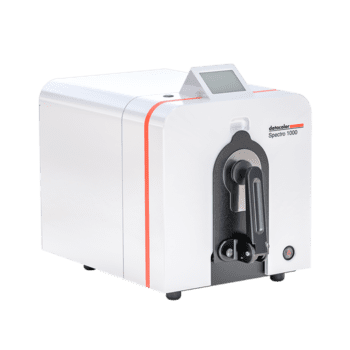
Benchtop instruments are typically used in labs and other controlled environments where high measurement precision is required. They are often central to standard creation, formulation, quality control and supplier approval workflows. Teams that require high-precision lab measurement can explore Datacolor’s benchtop spectrophotometers.
Portable Spectrophotometers
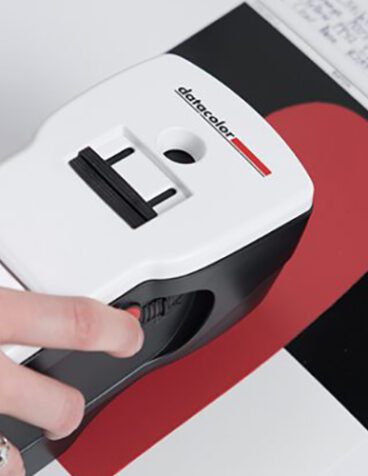
Portable instruments can be used around a plant, on production lines or in the field. They support faster checks where samples cannot easily be moved to a lab or where color decisions need to happen closer to production. For these use cases, portable spectrophotometers can support more flexible color measurement.
Color Lookup Tools
Smaller color lookup devices are often used where fast, practical color identification is needed. They are useful in retail or lower-complexity applications but are not a replacement for higher-precision instruments when tight quality control is required.
The more critical the color decision, the more important instrument accuracy, repeatability and inter-instrument agreement become. If your suppliers, labs and production sites use instruments that do not align, digital color data can still lead to inconsistent decisions. Datacolor explains this in more detail in why inter-instrument agreement matters.
How to Communicate Color Accurately Across the Supply Chain
Digital color management improves communication by replacing vague feedback with measurable, actionable language.
When a supplier sample does not match the approved standard, saying the color is “wrong,” “dirty” or “not premium enough” does not give a colorist or production team enough information to correct it. Technical color communication should describe the type of difference.
Color professionals commonly use three core descriptors:
Hue
Hue describes the color direction. Is the sample too red, too yellow, too blue or too green compared with the standard?
Chroma
Chroma describes saturation. Is the sample too vivid, too dull, too strong or too weak?
Value or Lightness
Value describes how light or dark the sample appears. Does it need to be lighter or darker to match the standard?
Quality control software can help translate measured differences into clearer correction guidance. This supports faster approvals because suppliers can understand not only that a sample failed, but how it differs from the target.
Clear communication is especially important in global supply chains. Brands, mills, converters, compounders, coating suppliers and manufacturers may be working across different sites, languages and time zones. Digital standards, shared tolerances and objective measurement data reduce the risk of subjective interpretation. For brands and manufacturers working across supplier networks, keys to reliable digital color communication provides additional workflow guidance.
Best Practices for Building a Digital Color Workflow
Digital color management delivers the most value when it is built into the workflow from the beginning, not added only after a color problem appears.
1. Capture Inspiration as Measurable Color Data
Designers often start with a physical inspiration sample, material swatch, market reference or trend color. That is useful at the creative stage. But once a color direction is selected, it should be measured and translated into usable color data.
A spectrophotometer or appropriate measurement tool can capture the color and help identify the closest match in a color library or internal standard database.
2. Define the Color Standard Early
The color standard is the reference point for development, supplier communication and production approval. Some companies create their own standards. Others use established color libraries from color standard providers.
A strong standard reduces ambiguity. It gives every stakeholder a shared target before sampling, formulation and production begin.
3. Set Tolerances Based on Product Risk
Tolerance defines how much a sample may differ from the standard and still be accepted. The right tolerance depends on the product, color, material, customer expectation and production capability.
A tolerance that is too tight can slow approvals and create unnecessary corrections. A tolerance that is too loose can allow visible inconsistency, rejected shipments or customer dissatisfaction. For a more detailed framework, see best practices for Delta E tolerance standards.
Some companies set different tolerances for specific color families or materials. Neutrals, whites and pale colors may require tighter control because small shifts can be easier to detect. High-chroma colors, textured materials or translucent products may require additional evaluation criteria.
4. Measure Raw Materials and Production Samples
Color consistency starts before the finished product. Raw materials, dyes, pigments, resins, coatings and substrates can all introduce variation. Measuring incoming material helps detect inconsistency before it affects production.
Routine production checks also help teams identify drift, process changes or batch variation early enough to take corrective action. Reliable production checks also depend on repeatable sample handling; Datacolor covers this in sample measurement technique for digital color communication and best practices for measuring color samples.
5. Combine Digital Data with Controlled Visual Approval
Instrumental measurement provides objective control. Visual evaluation confirms whether the color is acceptable in context. Both are needed for a reliable approval process.
Use controlled lighting, defined viewing procedures and consistent sample preparation. This reduces unnecessary disagreement and improves confidence in pass/fail decisions.
6. Standardize Communication with Suppliers
Suppliers should know the standard, tolerance, measurement method, light source, observer settings and approval process before they submit samples. This prevents avoidable delays and reduces subjective back-and-forth.
Digital color data can also support remote approval workflows, helping teams reduce shipping time, physical sample dependency and repeated correction cycles. Supplier quality teams can also benefit from understanding what you need to know about vendor empowerment and how digital tools support stronger supplier alignment.
7. Keep Digital Records for Auditability
Digital workflows create a record of standards, submissions, measurements, approvals and corrections. This helps teams investigate quality issues, compare supplier performance and maintain consistency across seasons, regions and production runs. For a broader framework, see 5 steps for an effective color quality control program.
How Datacolor Supports Digital Color Management
Datacolor supports digital color workflows with color measurement instruments, quality control software, formulation tools and visual evaluation solutions designed for color-critical industries.
Depending on the application, teams may need high-precision benchtop spectrophotometers for lab measurement, portable instruments for production checks, software for quality control and formulation, or light booths for controlled visual evaluation.
A connected digital color workflow helps teams:
- create and manage reliable color standards;
- measure samples with greater consistency;
- compare color data against tolerances;
- improve supplier communication;
- reduce rework and waste;
- support faster approvals;
- document quality decisions;
- strengthen color consistency across sites and materials.
For companies managing multiple products, materials, suppliers or production locations, digital color management is not just a technical upgrade. It is a way to make color decisions clearer, faster and more defensible. To explore relevant solutions, review Datacolor’s color management solutions, Datacolor Tools quality control software and Datacolor Match Pigment for formulation workflows.
FAQ: Digital Color Management
What is digital color management?
Digital color management is the use of objective color data, measurement instruments and software to define, communicate, evaluate and control color across design, production and quality control.
Why is digital color management important?
It helps companies improve color consistency, reduce subjective approval decisions, align suppliers, lower rework and waste, and maintain product quality across materials and production sites.
Is visual color evaluation still needed?
Yes. Visual evaluation remains important, especially for complex materials, textures and final approval. The best workflows combine controlled visual review with digital measurement.
What does a spectrophotometer do?
A spectrophotometer measures how a sample reflects light across wavelengths. This creates objective color data that can be compared against a standard and used in quality control or formulation software.
What is a reflectance curve?
A reflectance curve shows how much light a sample reflects across different wavelengths. It acts as a technical fingerprint for the measured color.
Why do colors match under one light but not another?
Different materials, dyes and pigments can reflect light differently. Two samples may look alike under one light source but different under another, a common issue in color evaluation.
What is color tolerance?
Color tolerance defines how much variation from a standard is acceptable. It helps teams decide whether a sample passes, fails or needs review.
How does digital color management help suppliers?
It gives suppliers clearer standards, measurable targets and more actionable feedback. This reduces approval delays, sample resubmissions and disputes over subjective color judgment.
Ready to build a more reliable digital color workflow?
Explore Datacolor’s color measurement, quality control and formulation solutions or speak with a color expert about your workflow requirements.
Connect with a Color Expert


 Want to Get Color Right?