What Is a Good Color Match in Design and Manufacturing?
Whether you’re a designer creating a new product collection, a product developer translating concepts into production, or a quality manager responsible for consistency, successful color matching is essential.
However, the definition of a “good color match” changes depending on where you are in the product lifecycle.
For designers, color matching is often about visual harmony and creative intent. For manufacturers, color matching must be measurable, repeatable, and reproducible across materials, production batches, suppliers, and locations.
Understanding how color matching works throughout the entire product development process is critical for maintaining:
- Brand consistency
- Product quality
- Customer satisfaction
- Production efficiency
In this article, we’ll explore:
- What color matching means in design versus manufacturing
- Why color matching becomes more complex during production
- How digital color management bridges the gap between design and manufacturing
- The color matching tools used throughout modern supply chains
What Is Color Matching?
At its simplest, color matching is the process of making two colors appear visually identical or nearly identical when viewed side by side.
In creative industries, color matching is typically evaluated visually by designers, brand teams, or clients. Factors such as lighting conditions, viewing angle, surrounding colors, and individual perception can all influence whether a color is considered a successful match.
Color matching in design often begins with:
- Color palettes
- Color schemes
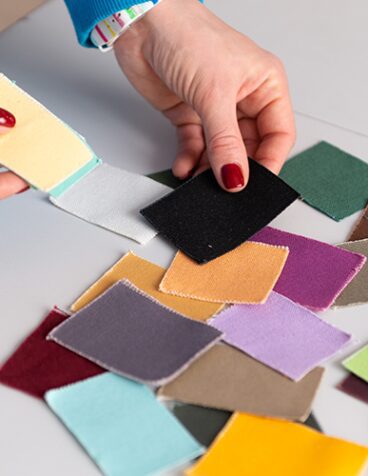
- Physical samples
- Inspiration materials
- Brand guidelines
Color Palette vs Color Scheme
A color palette is a collection of colors selected for a product, brand, or design project.
A color scheme describes how those colors work together to create contrast, harmony, hierarchy, or emotional impact.
For designers, successful color matching means preserving the original visual intent and ensuring the final product communicates the desired message.
Related reading: The Science Behind Color Perception
What Is a Good Color Match in Manufacturing?
In manufacturing, color matching becomes far more complex.
A visually acceptable match is no longer enough.
Industrial color matching requires colors to be:
- Quantifiable
- Repeatable
- Reproducible
- Consistent across locations
- Consistent across materials
- Consistent across production runs
This means manufacturers rely on objective color measurement rather than visual judgment alone.
A successful industrial color match is one that falls within predetermined color tolerances while also supporting business objectives such as:
| Objective |
Why It Matters |
| Cost efficiency |
Reduce expensive colorants and reformulations |
| Sustainability |
Minimize waste, water, and chemical usage |
| Raw material flexibility |
Adapt to changing pigment availability |
| Quality control |
Maintain product consistency |
| Brand protection |
Ensure recognizable colors across all products |
In many situations, the “best” color match is not necessarily the closest match mathematically. Instead, it is the match that delivers acceptable visual performance while balancing cost, sustainability, and manufacturing requirements.
Related reading: What Is Delta E and Why Does It Matter?
Why Color Matching Becomes Difficult During Production
Many companies discover that a color approved during design looks different during production.
This happens because color appearance depends on many factors beyond pigment selection.
Common variables include:
Material Differences
The same color formula can appear different on:
- Textiles
- Plastics
- Paint
- Leather
- Packaging materials
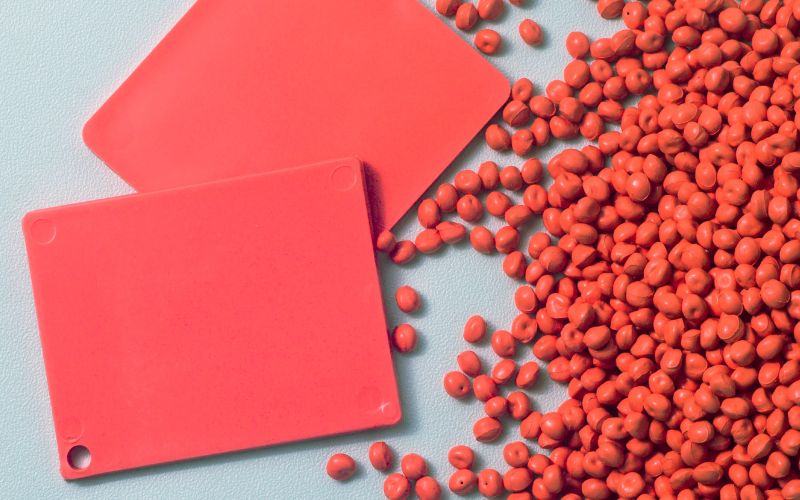
Surface texture, gloss, translucency, and absorption all influence final appearance.
Lighting Conditions
Colors that match under one light source may appear different under another.
This phenomenon is known as metamerism.
Related reading: Light Sources and Color: What You Need to Know
Human Color Perception
People do not see color identically.
Factors affecting color perception include:
- Age
- Fatigue
- Lighting adaptation
- Surrounding colors
- Individual biology
Related reading: Why We Can’t Agree on Color Perception
Bridging the Gap Between Design Intent and Manufacturing Reality
Design teams often begin with visual references such as:
- Physical swatches
- Material samples
- Yarn wraps
- Printed color standards
These references communicate design intent but often lack the precision required for manufacturing.
The solution is digital color communication.
Digital color standards transform subjective visual references into objective numerical data that can be shared across the entire supply chain.
Benefits include:
- Reduced approval cycles
- Faster color development
- Better supplier alignment
- Less physical sample shipping
- Greater color consistency
Without objective color data, every participant in the supply chain may interpret a color slightly differently.
Related reading: Digital Color Communication Explained
How Color Matching Works in Manufacturing
Successful industrial color matching relies on several connected processes.
1. Color Measurement
Color measurement is the foundation of color matching.
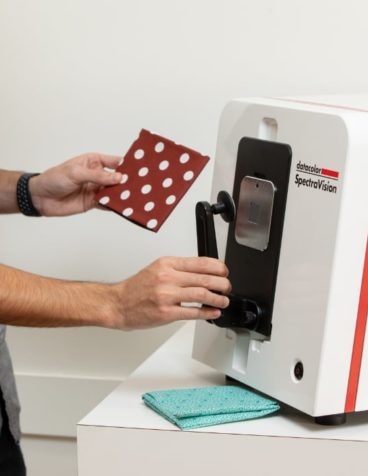
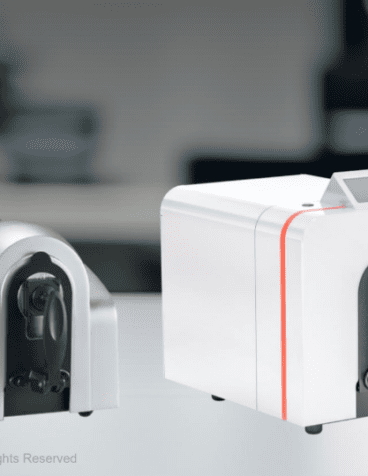
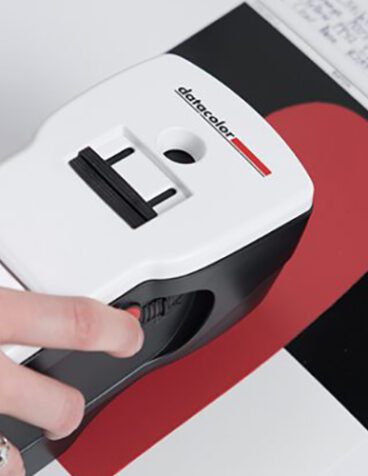
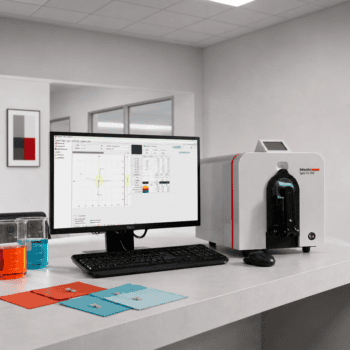
Using a spectrophotometer, manufacturers can objectively measure how a material reflects light and compare it to a target color.
Unlike human evaluation, spectrophotometers provide consistent numerical data regardless of location or operator.
Related reading: Using a Spectrophotometer for Color Measurement
2. Color Formulation
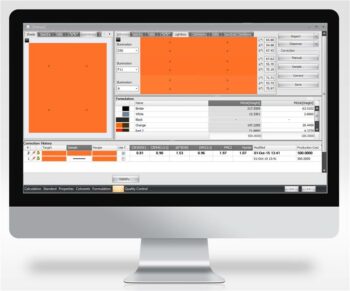
Once a target color has been defined, color formulation software predicts the optimal combination of pigments or dyes needed to reproduce it.
Modern color matching software can optimize formulations based on:
- Accuracy
- Cost
- Sustainability goals
- Regulatory requirements
- Available raw materials
Related reading: Color Formulation Software Explained
3. Color Quality Control
Color matching doesn’t stop once production begins.
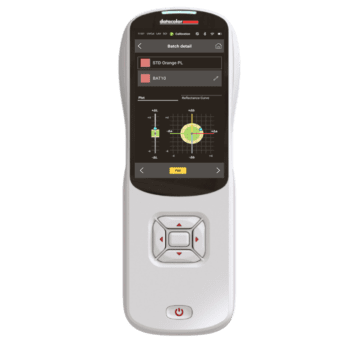
Quality control teams continuously compare production samples against approved standards.
This process helps identify:
- Batch-to-batch variation
- Supplier variation
- Process drift
- Material inconsistencies
When deviations occur, corrective actions can be implemented immediately.
Related reading: What Is Inter-Instrument Agreement and Why Does It Matter?
4. Controlled Visual Evaluation
Even with objective measurement, visual evaluation remains important.
Light booths provide standardized viewing environments that allow teams to evaluate colors consistently under different lighting conditions.
Benefits include:
- Reduced subjectivity
- Better communication
- More reliable approvals
- Improved supplier alignment
Related reading: Choosing the Right Light Booth Background
Why Color Matching Matters for Business Success
Color matching is not just a technical requirement.
It directly impacts business performance.
Effective color matching helps organizations:
- Protect brand identity
- Improve customer satisfaction
- Reduce production waste
- Accelerate time-to-market
- Lower operational costs
- Improve supplier collaboration
For global brands, even small color inconsistencies can weaken consumer trust and increase production costs.
Consistent color matching helps ensure products look exactly as customers expect—regardless of where they are produced.
The Future of Color Matching
As supply chains become more global and sustainability requirements become more demanding, digital color management is becoming increasingly important.
Organizations that adopt modern color matching tools gain:
- Faster approvals
- Better first-shot accuracy
- Less waste
- Greater production efficiency
- Stronger brand consistency
By combining spectrophotometers, color formulation software, digital standards, and controlled visual evaluation, manufacturers can transform color matching from a subjective challenge into a predictable and repeatable process.
From Design Intent to Production Consistency
A designer’s color palette may establish the vision, but achieving that vision consistently across products, materials, and suppliers requires objective color matching processes.
Successful organizations bridge the gap between design and manufacturing through digital color management, precise color measurement, and standardized workflows.
Whether you’re developing new products, managing production quality, or overseeing a global supply chain, understanding color matching is essential for delivering consistent, high-quality products that strengthen customer trust and brand value.
Want to improve your color matching process? Explore Datacolor’s color management solutions and discover how digital color control can help your organization achieve faster, more accurate color decisions.

 Want to Get Color Right?