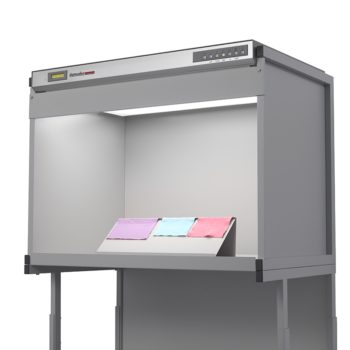
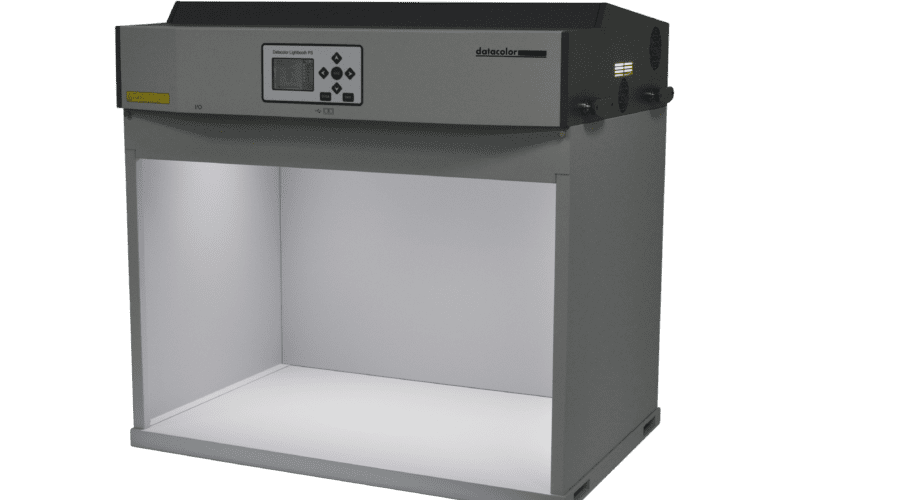
The background inside a light booth can significantly influence how colors are perceived during visual evaluation.
That is why industry standards often recommend neutral gray backgrounds when assessing color accuracy, approving production samples or comparing standards across global supply chains.
Two of the most common options are Munsell N5 and Munsell N7. While both are neutral grays, they differ in reflectance and can affect how light and dark colors appear during evaluation.
Choosing the right background helps improve visual consistency, reduce observer bias and support more reliable color approval decisions.
Why Light Booth Backgrounds Matter
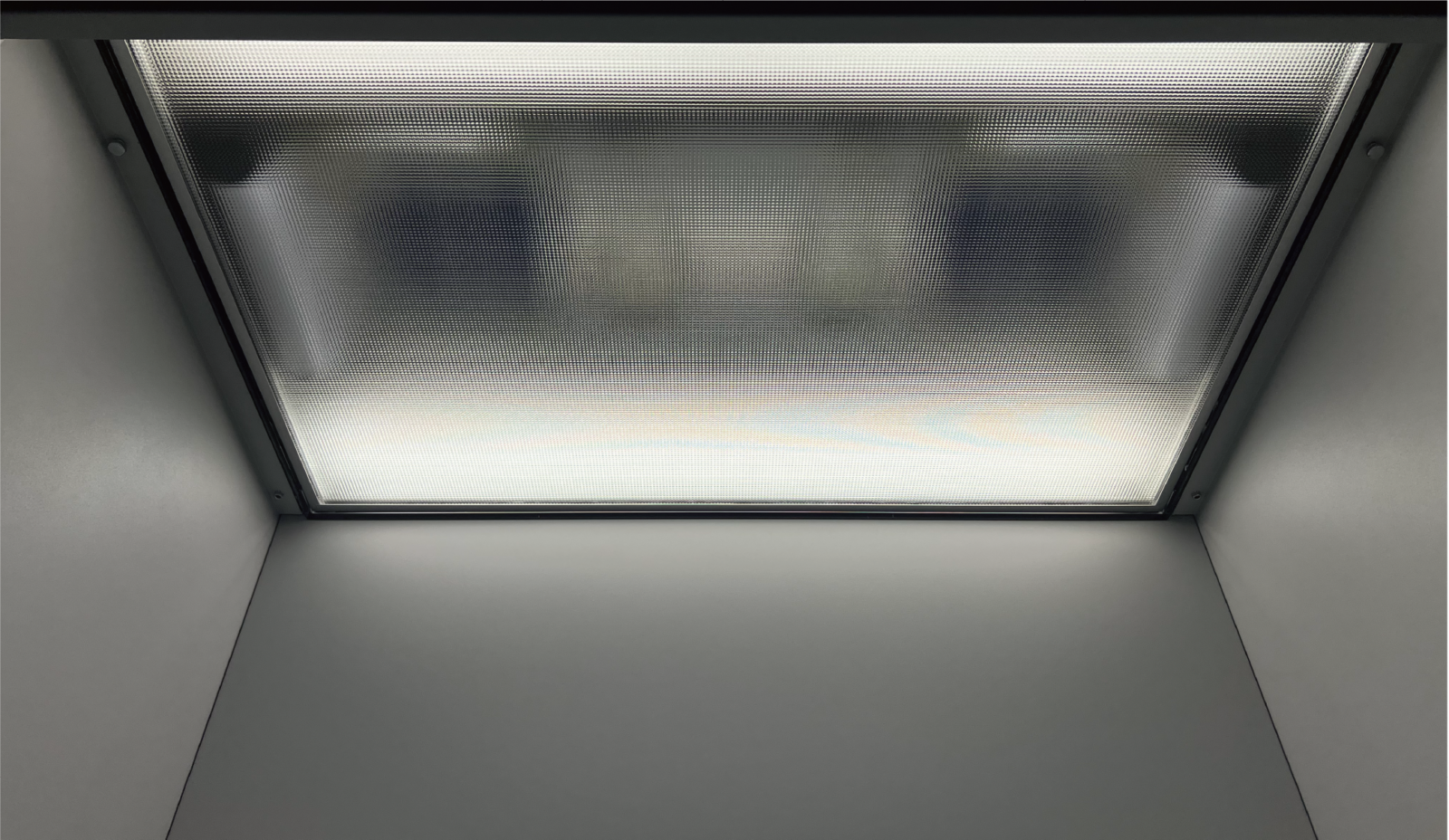
A light booth provides a controlled environment for visual color evaluation.
However, even with standardized light sources, the surrounding environment can influence color perception.
Background color affects:
- Visual adaptation of the observer
- Perceived contrast between the sample and its surroundings
- Detection of small color differences
- Color approval consistency
- Operator fatigue during long evaluation sessions
Using a standardized neutral gray background minimizes these influences and supports more objective visual assessments.
Related reading: what you need to know about light sources and color evaluation and light booth fundamentals.
What Is the Munsell Color System?
The Munsell Color System is one of the most widely recognized methods for describing and organizing color.
Developed by Albert H. Munsell in the early 1900s, it classifies colors using three dimensions:
| Attribute |
Description |
| Hue |
The color family, such as red, blue or green |
| Value |
The lightness or darkness of a color |
| Chroma |
The strength or saturation of a color |
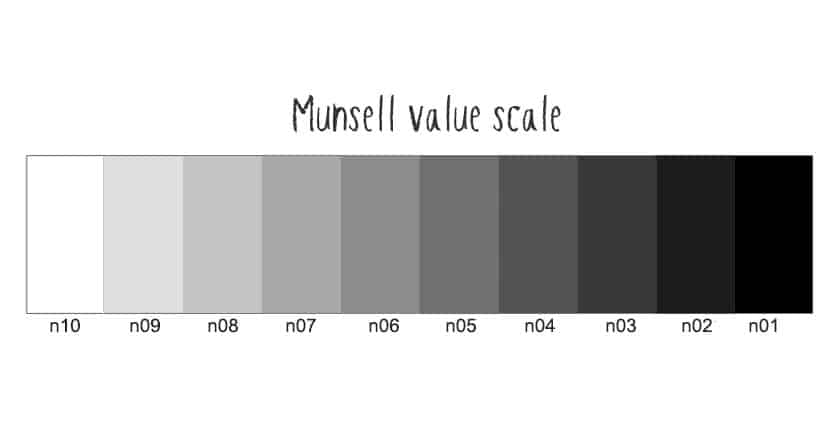
For visual evaluation environments, the most relevant component is the Munsell Value Scale.
This scale ranges from:
- 0 = pure black
- 10 = pure white
Between these extremes are neutral gray values commonly used in color viewing environments.
Among the most frequently specified are Munsell N5 and Munsell N7.
What Are Munsell N5 and Munsell N7?
Both Munsell N5 and Munsell N7 are achromatic grays, meaning they contain no color cast or hue bias.
This neutrality helps prevent background colors from influencing visual color assessments.
Munsell N5
Munsell N5 is considered a true mid-gray.
Characteristics include:
- Value = 5
- Approximately 50% reflectance
- Located at the center of the Munsell value scale
- Traditionally used for visual color evaluation
Because it sits at the midpoint between black and white, N5 has long been the standard choice for many color-critical applications.
Munsell N7
Munsell N7 is a lighter neutral gray.
Characteristics include:
- Value = 7
- Approximately 70% reflectance
- Creates a brighter viewing environment
- Provides higher contrast for darker samples
N7 is increasingly selected for applications where dark colors are evaluated frequently or where operator comfort is a priority.
Munsell N5 vs. Munsell N7: What’s the Difference?
The primary difference is reflectance.
| Background |
Munsell Value |
Approximate Reflectance |
| Munsell N5 |
5 |
50% |
| Munsell N7 |
7 |
70% |
Because N7 reflects more light, it creates a brighter visual field.
N5 provides a more balanced environment across a broad range of colors.
Practical Impact
The difference may seem small, but it can influence:
- Visibility of dark samples
- Observer adaptation
- Visual contrast
- Long-term viewing comfort
- Color approval consistency
For color-critical workflows, these factors can directly affect approval decisions and communication between laboratories, suppliers and customers.
Why Neutral Gray Is the Industry Standard
Visual color evaluation should focus on the sample itself—not on surrounding distractions.
Neutral gray backgrounds help achieve this by minimizing:
- Color contamination
- Simultaneous contrast effects
- Observer adaptation errors
- Background-induced perception shifts
This becomes particularly important when evaluating:
- Textile samples
- Paint drawdowns
- Plastic plaques
- Cosmetic products
- Automotive components
Without a standardized background, the same sample may appear different to different observers or in different locations.
Related reading: why we can’t agree on color perception and factors that impact color perception.
When Should You Use Munsell N5?
Munsell N5 is often the best choice when you need a balanced evaluation environment for both light and dark colors.
N5 Is Recommended When:
- Evaluating a wide range of colors
- Following traditional industry standards
- Working in established color approval workflows
- Maintaining consistency with existing procedures
Common Applications
- Textile color approvals
- Plastics manufacturing
- Automotive interiors
- Coatings development
- Supplier quality programs
Because N5 is centered on the Munsell scale, it remains one of the most widely specified backgrounds in color management standards.
When Should You Use Munsell N7?
Munsell N7 may be advantageous when evaluating darker colors or when operator comfort is a key consideration.
N7 Is Recommended When:
- Dark shades dominate evaluations
- Operators spend long periods performing visual assessments
- Additional visual contrast is beneficial
- Viewing environments have lower ambient light levels
Potential Benefits
- Better visibility of dark colors
- Reduced eye strain
- Improved operator comfort
- Easier identification of subtle dark-shade differences
Organizations evaluating deep blacks, dark blues, charcoals and other low-lightness colors may find N7 particularly useful.
How Light Booth Backgrounds Support Better Color Quality
Color evaluation is often the final decision point before production approval.
If visual assessments are inconsistent, the consequences can include:
- Rejected batches
- Approval delays
- Supplier disputes
- Increased rework
- Higher production costs
Using a standardized light booth environment with the appropriate neutral gray background helps support:
- Color accuracy
- Repeatability
- Reproducibility
- Auditability
- Supplier alignment
This is especially important for organizations operating global color approval workflows.
Related reading: keys to reliable digital color communication and why you should care about inter-instrument agreement.
Choosing the Right Background for Your Application
There is no universal “best” choice between Munsell N5 and Munsell N7.
The right selection depends on:
- The products being evaluated
- The colors being assessed
- Industry requirements
- Operator needs
- Existing evaluation standards
Quick Selection Guide
| If You Need To… |
Recommended Background |
| Evaluate both light and dark colors equally |
Munsell N5 |
| Follow traditional industry standards |
Munsell N5 |
| Improve visibility of dark shades |
Munsell N7 |
| Reduce visual fatigue during long sessions |
Munsell N7 |
| Maintain compatibility with existing workflows |
Munsell N5 |
For many organizations, consistency is ultimately more important than the specific gray value selected.
The key is ensuring all stakeholders evaluate color under the same conditions.
Optimize Your Visual Color Evaluation Process
Light booths remain an essential part of color management because visual evaluation continues to play a critical role in product approvals.
The right background, combined with standardized light sources and objective measurement tools, helps organizations make more reliable color decisions.
Datacolor light booths are designed to support consistent visual color evaluation across industries including textiles, plastics, paint and coatings, automotive and cosmetics.
For organizations looking to strengthen color approval workflows, reduce subjective evaluations and improve supplier alignment, selecting the appropriate light booth background is a small decision that can have a measurable impact.
Final Thoughts
Munsell N5 and Munsell N7 are both effective neutral gray backgrounds for visual color evaluation.
The difference comes down to reflectance:
- N5 provides a balanced mid-gray environment suitable for most applications.
- N7 offers a lighter background that can improve visibility for darker shades and reduce operator fatigue.
When combined with proper lighting, standardized evaluation procedures and objective color measurement, either option can help support more accurate and consistent color decisions.
Which Light Booth Background Is Right for You?
Still unsure which background is best for your workflow? Explore Datacolor Light Booth solutions or speak with a Datacolor color management specialist about your evaluation requirements.
Connect with a Datacolor Expert

 Want to Get Color Right?