Paint mistints are more than an inconvenience. They create unnecessary costs, consume labor, increase material waste, delay customer orders, and can negatively affect customer confidence in your color matching capabilities.
For paint retailers and manufacturers, reducing mistints is one of the fastest ways to improve operational efficiency and profitability.
The good news is that many mistints are preventable. By improving sample evaluation, maintaining equipment, and leveraging digital color management tools, retailers can significantly reduce correction cycles and improve first-shot match accuracy.
Here are five practical ways to reduce paint color mistints and improve paint matching consistency.
1. Ask the Right Questions Before Measuring the Sample
A paint match is only as accurate as the sample being measured.
Before scanning a customer sample, take a moment to understand its history. Small details can have a significant impact on color accuracy.
Questions worth asking include:
- How old is the sample?
- Has it been exposed to direct sunlight?
- Has it faded over time?
- Has it been cleaned, painted over, or repaired?
- Was it taken from an interior or exterior surface?
- Has the surface been exposed to moisture or weather?
Customers often assume the sample they provide accurately represents the original color. In reality, environmental exposure may have altered the appearance significantly.
Gathering this information early helps set realistic expectations and improves the likelihood of achieving an accurate match on the first attempt.
Why It Matters
Better sample information can help reduce:
- unnecessary corrections;
- rematches;
- customer dissatisfaction;
- wasted colorant and paint.
2. Keep Samples Clean Before Measurement
Contamination is one of the most common causes of inaccurate color measurements.
Samples collected from the following areas often contain dirt, dust, oils, and surface residue:
- baseboards;
- hallways;
- stairwells;
- corners;
- high-traffic areas.
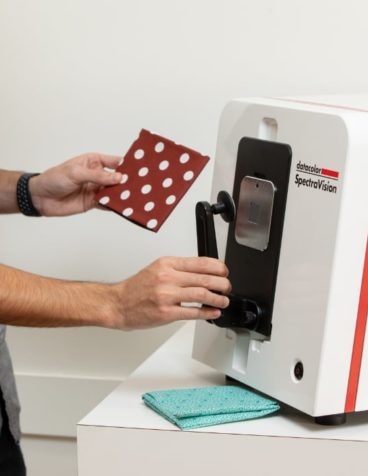
A spectrophotometer measures exactly what it sees. If the sample surface is contaminated, the resulting color formula will reflect that contamination.
Best Practice
Before measurement:
- Remove dust and debris.
- Clean the surface when appropriate.
- Select the cleanest available sample area.
- Avoid measuring damaged or heavily worn sections.
Small improvements in sample preparation can significantly improve first-shot color matching performance.
Related reading: best practices for measuring color samples.
3. Maintain Your Color Matching Equipment
Even the best color matching system depends on properly maintained equipment.
Routine maintenance helps ensure that both spectrophotometers and dispensers continue to perform accurately and consistently.
Spectrophotometer Maintenance
Regular calibration helps maintain:
- measurement accuracy;
- repeatability;
- color consistency.
Calibration standards should be:
- clean;
- undamaged;
- stored properly.
Related reading: how to store, use and clean spectrophotometer calibration tiles and using a spectrophotometer for color measurement.
Dispenser Maintenance
Colorant build-up can affect dispenser accuracy and introduce formulation errors.
Most manufacturers recommend routine purging and cleaning to:
- prevent clogging;
- maintain dispensing accuracy;
- improve repeatability.
A small investment in maintenance often prevents larger issues later.
4. Understand Delta E and Metamerism
Modern color matching systems provide valuable information beyond simply generating a formula.
Two important metrics are Delta E and metamerism.
Delta E
Delta E measures the visual difference between two colors.
In general:
- lower Delta E values indicate a closer match;
- higher Delta E values indicate a greater visible difference.
Delta E helps paint professionals objectively evaluate match quality instead of relying solely on visual judgment.
Learn more in best practices for Delta E tolerances and color systems: CIELAB and CIE2000.
Metamerism
Metamerism occurs when two colors appear to match under one light source but look different under another.
This can become a problem when paint is viewed under:
- daylight;
- LED lighting;
- fluorescent lighting;
- residential lighting;
- commercial lighting.
Understanding metamerism helps retailers avoid surprises after installation.
Related reading: what is metamerism? and what you need to know about light sources and color evaluation.
Why It Matters
Monitoring Delta E and metamerism can help:
- improve match quality;
- reduce customer complaints;
- minimize correction cycles;
- increase confidence in color approvals.
5. Use Barcode Scanning to Reduce Human Error
Not all mistints originate from color measurement.
Sometimes the issue is as simple as selecting the wrong paint base.
When employees process dozens—or even hundreds—of paint orders per day, mistakes can happen.
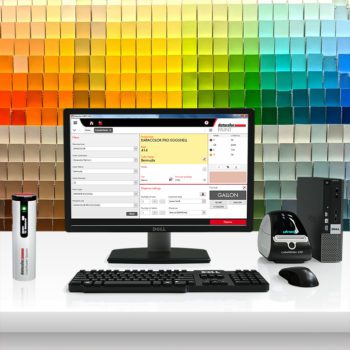
A barcode scanner adds an additional verification step to help ensure the correct base is selected every time.
Benefits of Barcode Verification
- Reduced operator error
- Improved process consistency
- Faster order fulfillment
- Greater confidence in dispensing accuracy
Even experienced paint professionals benefit from automated verification systems.
Removing avoidable manual errors helps improve overall paint matching performance.
What Happens When a Mistint Still Occurs?
Even with strong processes, occasional mistints are inevitable.
When they occur, color matching software can often help reduce the impact.
Instead of starting over completely, advanced color correction tools can generate revised formulas that move the color closer to the desired target while minimizing additional material usage.
Modern correction workflows help:
- reduce wasted paint;
- improve correction accuracy;
- shorten rework time;
- improve profitability.
Related reading: Master Mistints: 5 Ways to Curb Corrections and SmartMatch: Smarter Business.
Digital Color Management Helps Reduce Mistints
Many paint retailers still rely heavily on operator experience and visual evaluation.
While expertise remains important, digital color management adds consistency and objectivity to the process.
By combining:
- spectrophotometers;
- color matching software;
- dispenser integration;
- standardized workflows;
retailers can improve:
- first-shot match accuracy;
- operational efficiency;
- customer satisfaction;
- color consistency;
- profitability.
Learn more in the buyer’s guide to better paint color matching and how to manage color in a paint store.
Key Takeaway
Most paint mistints are not caused by a single major failure.
They result from small issues that accumulate throughout the color matching process.
By focusing on:
- Better sample evaluation
- Cleaner samples
- Routine equipment maintenance
- Proper interpretation of Delta E and metamerism
- Barcode-driven process control
paint retailers can significantly reduce mistints, improve first-shot match performance, and create a better customer experience.
Frequently Asked Questions About Paint Mistints
What is a paint mistint?
A paint mistint is a paint color that does not match the intended or approved target. It can result from sample contamination, inaccurate measurement, equipment issues, formulation errors, incorrect base selection, or differences in lighting conditions.
What causes most paint mistints?
Common causes include measuring dirty or faded samples, using poorly maintained equipment, selecting the wrong paint base, overlooking metamerism, and relying too heavily on visual evaluation without objective color data.
How can paint retailers reduce mistints?
Retailers can reduce mistints by improving sample preparation, asking customers about sample history, maintaining spectrophotometers and dispensers, monitoring Delta E and metamerism, and using barcode verification to prevent base-selection errors.
Can a mistinted paint formula be corrected?
In many cases, yes. Advanced color correction software can calculate a revised formula that moves the paint closer to the target while limiting additional colorant and material waste.
Why is Delta E important in paint matching?
Delta E provides an objective measure of the difference between two colors. Lower values generally indicate a closer match, helping paint professionals evaluate whether a formula meets the required tolerance.
How does metamerism affect paint color?
Metamerism can cause two colors to match under one light source but appear different under another. Evaluating matches under multiple relevant light sources helps reduce unexpected color differences after application.
Looking to improve paint color matching accuracy?
Explore Datacolor Paint solutions or connect with a retail paint expert to discuss your workflow challenges.
Connect with a Color Expert

 Want to Get Color Right?