Get on the Right Color Management Wavelength with Monthly Insights from 10,000+ Color Professionals Around the World.
Accurate color measurement depends on more than the spectrophotometer itself. Environmental conditions, calibration procedures, sample preparation, instrument maintenance and measurement technique all influence the quality of your color data.
Whether you work in textiles, apparel, plastics, paint and coatings, automotive, cosmetics or paper, following spectrophotometer best practices helps improve measurement accuracy, repeatability and reproducibility across laboratories, production facilities, suppliers and global supply chains.
Organizations that implement consistent color measurement procedures benefit from faster approvals, fewer color corrections, reduced rework, less waste and stronger supplier alignment.
What Are the Most Important Spectrophotometer Best Practices?
To achieve reliable color measurement results:
Maintain stable environmental conditions.
Protect and regularly clean calibration standards.
Calibrate frequently throughout the day.
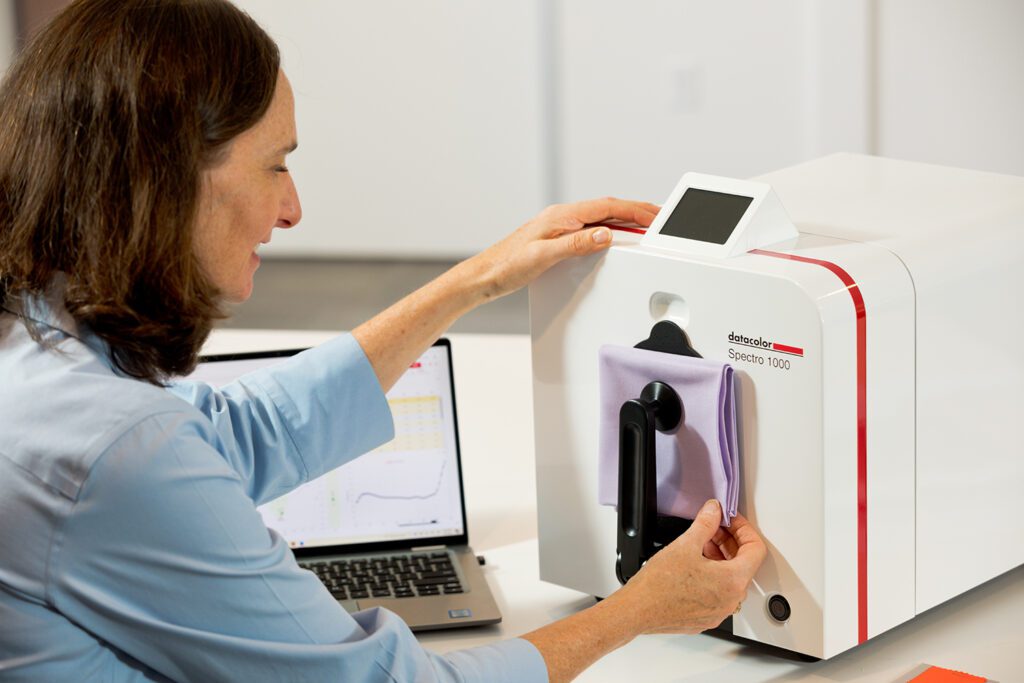
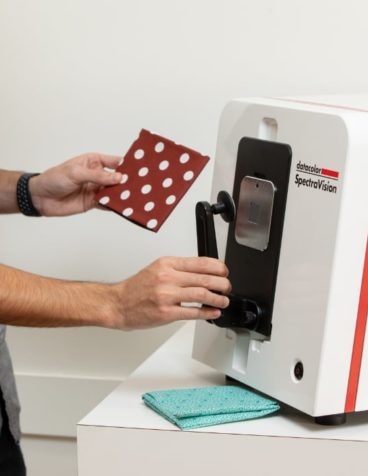
Prepare and position samples consistently.
Measure multiple times when samples are textured or non-uniform.
Verify inter-instrument agreement.
Perform routine maintenance and performance checks.
Standardize measurement procedures across locations and operators.
Together, these practices help improve color accuracy, quality control, auditability and digital color communication throughout the product lifecycle.
Control the Environment Around Your Spectrophotometer
The environment in which a spectrophotometer operates has a direct impact on measurement quality.
Even highly advanced instruments can produce inconsistent results when environmental conditions are not properly controlled.
Maintain Stable Temperature
Temperature stability is critical for reliable color measurement.
Direct sunlight, heating vents or rapidly changing room temperatures can affect instrument performance and contribute to measurement drift.
In addition to affecting the instrument itself, temperature can also affect the sample being measured.
Some pigments and dyes exhibit thermochromic behavior, meaning their appearance changes as temperature changes. When this occurs, measurement results may vary even though the sample itself has not changed chemically.
If sample temperature changes significantly, remeasure the standard before evaluating production samples.
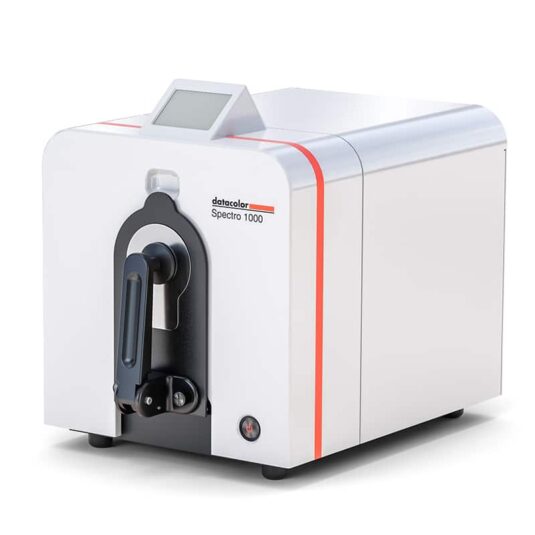
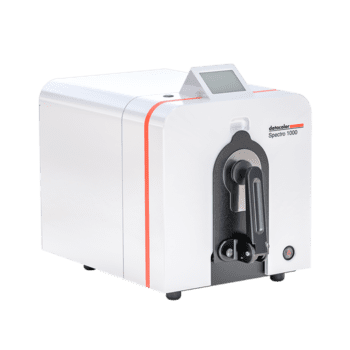
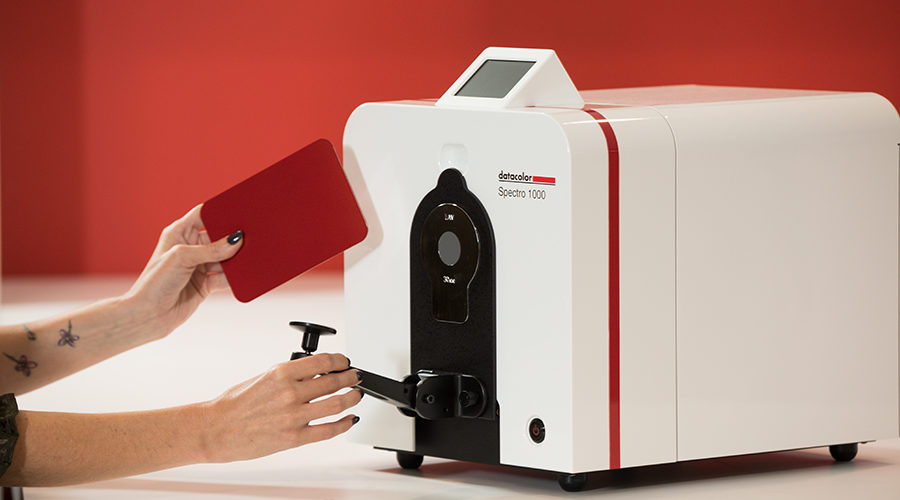
The latest Datacolor benchtop spectrophotometers, including the Spectro 1000 family, include sample temperature measurement capabilities to help monitor these effects.
Maintain a stable, non-condensing humidity level between 20% and 85%.
Excessively dry conditions can increase static electricity, while excessive humidity can affect both materials and instrument performance.
Consistent humidity contributes to more reliable and reproducible measurement results across different locations and seasons.
Protect Air Quality
Air quality is often overlooked but can significantly affect instrument longevity.
Contaminants such as:
Chemical vapors
Solvent fumes
Smoke
Airborne dust
Manufacturing residues
can gradually degrade the integrating sphere and optical components inside the instrument.
Over time, this may reduce measurement accuracy and increase maintenance requirements.
Maintain Consistent Power
Power interruptions can contribute to thermal instability.
Whenever possible, keep the instrument powered continuously.
Frequent shutdowns and restarts cause temperature fluctuations as the instrument warms up, which can increase the likelihood of drift-related measurement variation.
Calibration Best Practices
Calibration is one of the most important steps in achieving accurate color measurement.
Even the most advanced spectrophotometer can only perform accurately if its calibration standards are maintained correctly.
Protect Calibration Standards
The photometric scale of your spectrophotometer is calibrated against certified standards.
These calibration standards are precision components and should be treated accordingly.
Keep the following clean, protected and free from damage:
White calibration tile
Black trap
Green calibration standard
The white tile requires particularly careful handling. Scratches, contamination or improper cleaning can compromise measurement accuracy.
The black trap should be inspected regularly and cleaned using compressed air when necessary.
Modern supply chains rarely operate from a single location. Color standards may be created in one country, approved in another and manufactured somewhere else entirely.
For digital color workflows to succeed, measurement instruments throughout the supply chain must produce compatible results.
This is where inter-instrument agreement becomes critical.
High inter-instrument agreement allows:
Brands and suppliers to work from the same color data
Laboratories to share standards confidently
Manufacturing sites to make consistent pass/fail decisions
Tighter Delta E tolerances across locations
Datacolor spectrophotometers are designed to support strong inter-instrument agreement across global operations.
Routine Maintenance Keeps Measurement Data Reliable
Once the environment, calibration and sample preparation are under control, instrument maintenance becomes the next critical factor.
A spectrophotometer is a precision instrument. Over time, normal use, contamination, component wear or optical changes can affect performance. Without routine checks, small deviations may go unnoticed until they affect color decisions.
Regular maintenance helps prevent:
Measurement drift
Reduced repeatability between measurements
Lower reproducibility across locations or instruments
Inaccurate pass/fail decisions
Avoidable downtime
Routine service verifies that key components, including the integrating sphere and optical system, continue to meet required reflectance and performance specifications.
For quality teams, this is not only a technical requirement. It also supports auditability, process control and long-term confidence in color measurement data.
Spectrophotometer Best Practices Checklist
Before performing critical color measurements:
Verify temperature and humidity are stable.
Protect the instrument from direct sunlight.
Ensure calibration standards are clean and undamaged.
Recalibrate if environmental conditions have changed.
Confirm samples are properly conditioned.
Use consistent sample positioning.
Take multiple measurements for textured or non-uniform materials.
Verify inter-instrument agreement where applicable.
Follow standardized measurement procedures.
Confirm routine maintenance requirements have been completed.
Frequently Asked Questions
How often should a spectrophotometer be calibrated?
Most organizations calibrate daily, but recalibrating every two to four hours or before critical measurement activities can improve accuracy and reduce drift-related errors.
What environmental conditions affect spectrophotometer performance?
Temperature, humidity, direct sunlight, air quality and power stability can all influence measurement consistency.
Why is sample conditioning important?
Materials can respond to changes in temperature and humidity. Conditioning samples before measurement helps improve repeatability and reproducibility.
Inter-instrument agreement refers to the ability of different instruments to produce compatible measurement results. Strong agreement is essential for global color workflows and supplier alignment.
Why do color measurements vary between operators?
Differences in sample preparation, positioning, calibration practices and environmental conditions can all contribute to measurement variation.
Standardized procedures help minimize operator-to-operator differences.
Improve the Accuracy of Your Color Measurements
A spectrophotometer is one of the most powerful tools in a digital color management workflow—but only when it is supported by proper procedures.
Controlling environmental conditions, calibrating regularly, measuring samples consistently, maintaining strong inter-instrument agreement and performing routine maintenance all contribute to more reliable color data.
The result is better color quality control, faster approvals, improved supplier alignment, reduced waste and more consistent products.

 Want to Get Color Right?