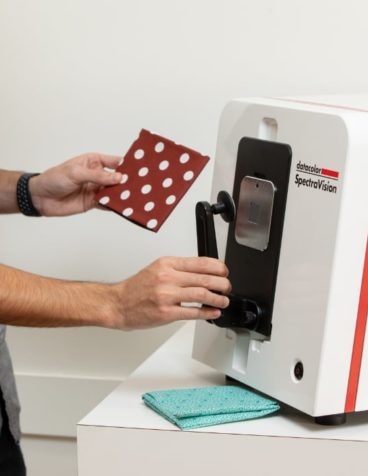
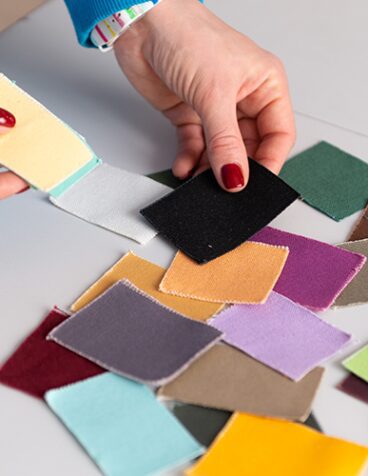
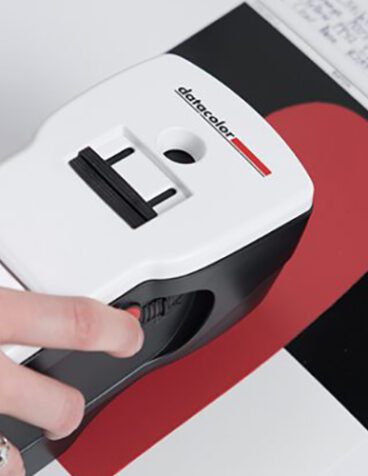
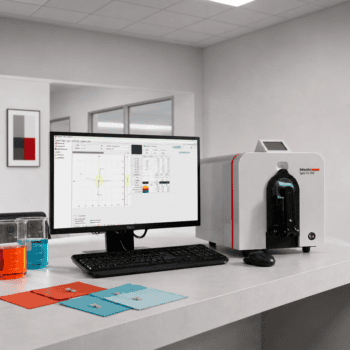
Consistent color starts with consistent measurement. No matter how sophisticated your color quality program is, unreliable sample measurement will introduce variability that can lead to incorrect pass/fail decisions, supplier disputes, rework and production delays.
For textile manufacturers, brands and testing laboratories, a spectrophotometer provides the most objective way to evaluate color. However, achieving accurate and repeatable results requires more than simply placing a sample on the instrument.
In this guide, we review best practices for measuring textile samples and explain how to improve repeatability, reproducibility and confidence in your color data.
Related reading: Using a Spectrophotometer for Color Measurement.
What Is a Textile Sample Measurement Technique?
A measurement technique defines exactly how a textile sample should be prepared, positioned and measured on a spectrophotometer.
A well-designed measurement technique ensures that a sample can be:
- Measured
- Removed from the instrument
- Repositioned
- Measured again
while producing nearly identical results.
As a general guideline, measurement variation should remain below 0.15 DE(CMC). Larger variations can reduce confidence in color quality decisions and introduce unnecessary risk into digital color communication programs.
Related reading: Sample Measurement Technique in Digital Color Communication.
Factors That Affect Textile Sample Measurement Repeatability
Several variables can influence the quality and repeatability of color measurements.
Sample Size
The sample must be large enough to completely cover the measurement aperture after folding.
Because most textile materials are measured using multiple layers, small samples can become difficult to position consistently.
As a general guideline:
- Samples larger than 3″ × 3″ (7.5 cm × 7.5 cm) are easier to measure repeatably.
- Larger samples allow the use of larger apertures, which often improves repeatability.
Related reading: Best Practices for Measuring Color Samples.
Sample Thickness and Opacity
One of the most common measurement errors occurs when a sample is not fully opaque.
If light passes through the material, it can reflect off the sample holder or backing material and distort the measurement.
For most woven and knitted fabrics:
- Two to four layers are sufficient.
- Four layers are often preferred for maximum consistency.
For lightweight or translucent materials, additional layers may create measurement issues. Instead, use a white ceramic backing tile similar to the instrument’s calibration tile.
Using the same backing for all measurements ensures that samples remain numerically comparable.
Related reading: Sample Conditioning for Digital Color Measurement.
Sample Positioning
Fabric construction, texture, yarn orientation and dye uniformity can all affect measurements.
One common mistake is simply rotating the sample between readings.
A more reliable technique is to:
- Remove the sample completely.
- Refold or reposition it.
- Rotate it if required.
- Repeat the measurement.
This approach better captures real-world sample variability and improves measurement repeatability.
When positioning samples, avoid areas containing:
- Dirt
- Fingerprints
- Creases
- Dye spots
- Surface contamination
Related reading: Sample Rotation Improves Color Measurement Accuracy.
Number of Measurements
The number of measurements taken can significantly influence repeatability.
Rather than relying on a fixed number of readings, organizations should determine the optimal number for their specific materials.
A practical validation process includes:
| Step |
Action |
| 1 |
Measure the sample eight times and save the average. |
| 2 |
Repeat the process using seven measurements. |
| 3 |
Continue reducing the number of readings to six, five, four, three and two measurements. |
| 4 |
Compare each result with the original eight-read average. |
| 5 |
Identify the point at which variation exceeds 0.15 DE(CMC). |
| 6 |
Confirm repeatability with multiple additional trials using the selected number of readings. |
This process establishes the minimum number of readings required to maintain measurement confidence.
Although it requires additional effort initially, it significantly improves long-term measurement consistency.
Best Practices by Textile Sample Type
Different materials require different measurement techniques.
Fabric Samples
Flat woven and knitted fabrics are generally the easiest textile materials to measure because of their relatively uniform construction.
For standard fabrics:
- Fold samples to ensure opacity.
- Use the largest practical aperture.
- Reposition the sample between measurements.
- Avoid contaminated areas.
For sheer fabrics:
- Use a white ceramic backing tile when necessary.
For bulky or pile fabrics:
- Measure behind a glass plate.
- Use specular excluded (SCE) mode when appropriate.
- Consider specialized sample holders that prevent fibers from protruding into the instrument sphere.
Related reading: What Are the Different Types of Color Measurement Instruments?
Loose Fiber
Loose fibers present unique measurement challenges because individual fibers can protrude into the measurement area.
To improve repeatability:
- Use a glass compression cell or glass plate.
- Apply consistent pressure during measurement.
- Measure a fixed mass of fiber each time.
This reduces variability caused by gaps between fibers and improves reproducibility across operators and locations.
Yarn
Yarn measurement requires careful preparation.
A common approach is winding yarn around a card or tab before measurement.
To improve consistency:
- Maintain constant yarn tension.
- Align yarn strands uniformly.
- Avoid gaps that create shadows.
- Ensure sufficient thickness to prevent light transmission.
Specialized yarn holders can further improve repeatability.
Knitted Sleeves
Knitted sleeves are commonly used in package dyeing quality control programs.
Benefits include:
- Uniform sample construction
- Consistent sample dimensions
- Easy use of large measurement apertures
- Improved repeatability
Whenever possible, standard and production samples should be knitted using the same equipment and conditions to minimize variation.
Sample Measurement Tables
The following tables show typical measurement variability for different textile sample types. The first compares knitted and woven fabrics measured with two common instrument apertures. The second shows bulky and pile fabrics measured with and without glass.
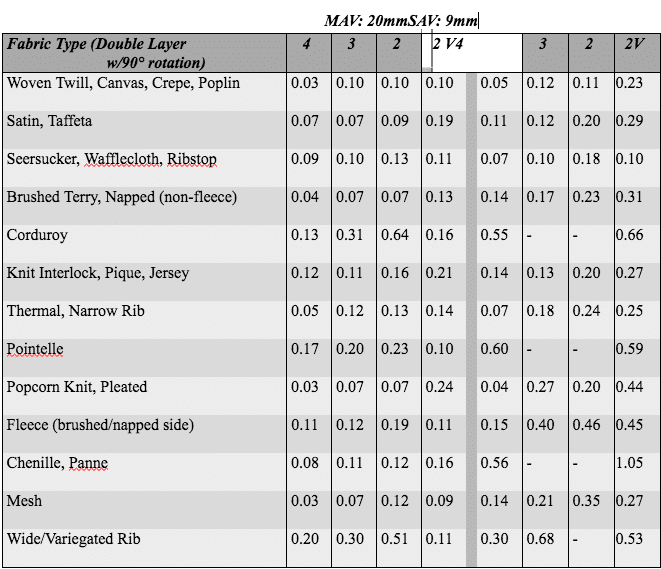
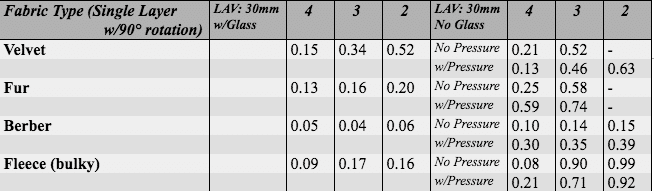
While these tables are useful guides, each company should evaluate its own materials using the techniques described here.
Organizations should fully test and confirm the repeatability of their procedures to ensure that poor measurement technique does not introduce errors into instrumental quality control programs.
Why Repeatability Matters in Textile Color Quality Control
Poor measurement technique creates hidden variability that can affect every downstream color decision.
Even small measurement inconsistencies can lead to:
- Supplier disputes
- Delayed approvals
- Increased laboratory workload
- Additional sample submissions
- Rework and waste
- Reduced confidence in digital color communication
A repeatable measurement process supports:
- Better quality control
- Faster approvals
- Improved supplier alignment
- Stronger auditability
- More reliable color data
Related reading: Keys to Reliable Digital Color Communication.
Creating a Repeatable Textile Measurement Process
Successful digital color management depends on controlling every variable that influences measurement results.
That includes:
- Sample size
- Sample opacity
- Positioning technique
- Number of measurements
- Instrument settings
- Environmental conditions
- Operator training
By establishing documented measurement procedures and validating repeatability across materials, organizations can significantly improve color consistency throughout the supply chain.
Related reading: Color Management in Textiles: How to Deliver Accuracy and Speed.
Consistent Color Starts with Consistent Measurement
A spectrophotometer can only deliver reliable data when samples are prepared and measured correctly.
Investing time in developing repeatable textile measurement techniques improves accuracy, reduces uncertainty and creates a stronger foundation for digital color communication.
The result is better color decisions, fewer production issues, faster approvals and greater confidence throughout the textile supply chain.
Interested in improving your textile color management process? Explore Datacolor solutions for textile and apparel manufacturers or download our color management resources to learn more.
Download Our Color Management eBook!


 Want to Get Color Right?