What Is Inter-Instrument Agreement and Why Does It Matter?
Color measurement instruments
Share
Want to Get Color Right?
Get on the Right Color Management Wavelength with Monthly Insights from 10,000+ Color Professionals Around the World.
When color decisions are made across multiple facilities, suppliers or countries, consistency becomes critical. A color measured in one location should produce the same result when measured elsewhere.
This is where inter-instrument agreement (IIA) becomes essential.
Without strong inter-instrument agreement, organizations often struggle with inconsistent color evaluations, delayed approvals, unnecessary sample shipments and costly production errors.
What Is Inter-Instrument Agreement?
Inter-instrument agreement (IIA) describes how closely two or more color measurement instruments produce the same result when measuring the same sample.
The tighter the inter-instrument agreement, the closer the measurement results will be across all instruments in the workflow.
For companies operating only one spectrophotometer in a single location, IIA may not seem important. However, organizations that rely on multiple instruments throughout a global supply chain need strong inter-instrument agreement to ensure consistent color decisions.
Color data is only valuable when everyone involved trusts the measurement.
When instruments do not agree, organizations often compensate by relying on physical samples and visual evaluations.
This can create significant challenges:
Physical samples must be shipped between locations for approval.
Product development cycles become longer.
Production errors are discovered late.
Material waste increases.
Quality control costs rise.
Color approval processes become more subjective.
For brands managing multiple suppliers around the world, even small measurement differences can lead to costly delays.
Inter-Instrument Agreement Is Only One Part of the Process
Excellent inter-instrument agreement creates the foundation for accurate digital color communication, but it must be supported by standardized processes.
Companies invest heavily in brand colors and product consistency.
Whether manufacturing textiles, plastics, paint, coatings, automotive components or consumer products, customers expect colors to remain consistent from batch to batch and from location to location.
Achieving that consistency depends on two key elements:
1. Precise Color Measurement
High-performance spectrophotometers provide objective color measurements rather than relying on visual evaluation.
2. Defined Color Tolerances
Organizations establish acceptable color variation limits using Delta E tolerances.
Together, these allow suppliers, manufacturers and brands to make consistent decisions based on shared data.
How Datacolor Approaches Inter-Instrument Agreement
A major differentiator of Datacolor instruments is how inter-instrument agreement is managed.
Many spectrophotometer manufacturers establish agreement at the individual product level. Datacolor instead calibrates instruments against a master instrument based on measurement geometry.
For example:
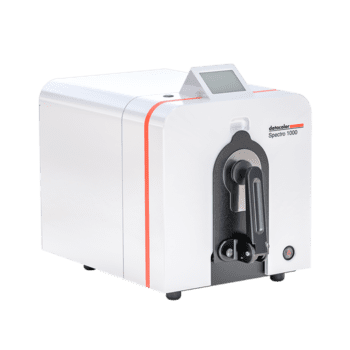
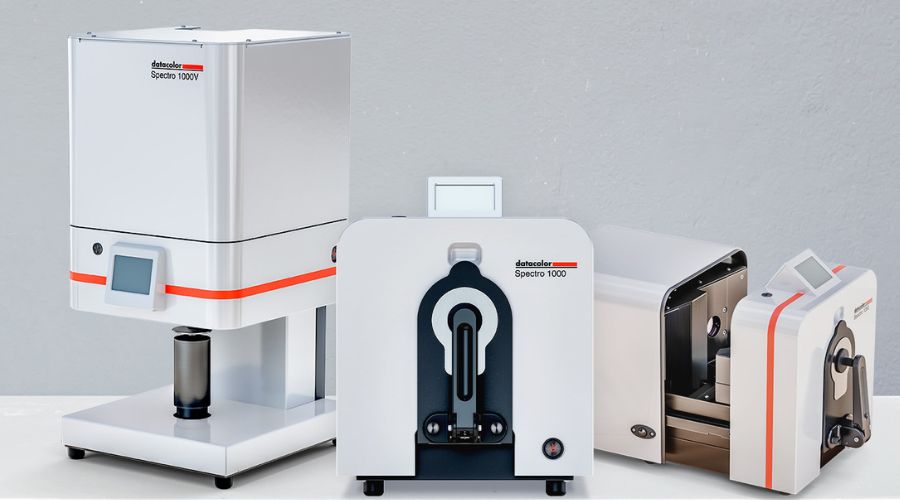
Datacolor 1000
Datacolor 700
Spectro P300
All d/8 geometry instruments are correlated back to the same master instrument.
This approach improves agreement between facilities that use different Datacolor models throughout the supply chain.
The result is stronger consistency between:
Brand headquarters
Laboratories
Production facilities
Suppliers
Quality control teams
Even when different instruments are used, color data remains more comparable across the organization.
How Inter-Instrument Agreement Supports Digital Color Communication
Digital color communication depends on trust in measurement data.
A typical workflow might look like this:
Step 1: Measure the Standard
A laboratory in the United States measures the approved color standard using a spectrophotometer.
Step 2: Share Digital Data
Reflectance data is transmitted electronically to manufacturing partners in Asia, Europe or elsewhere.
Step 3: Produce the Color
Suppliers formulate and manufacture the color using the digital standard.
Step 4: Verify and Approve
Measurement data is sent back electronically for approval.
When all parties use instruments with excellent inter-instrument agreement, physical sample shipments can often be reduced or eliminated.
A close-tolerance spectrophotometer is designed to achieve exceptionally low measurement variation relative to a master instrument.
These instruments:
Meet strict manufacturing standards
Deliver excellent repeatability
Provide superior inter-instrument agreement
Support highly accurate color communication
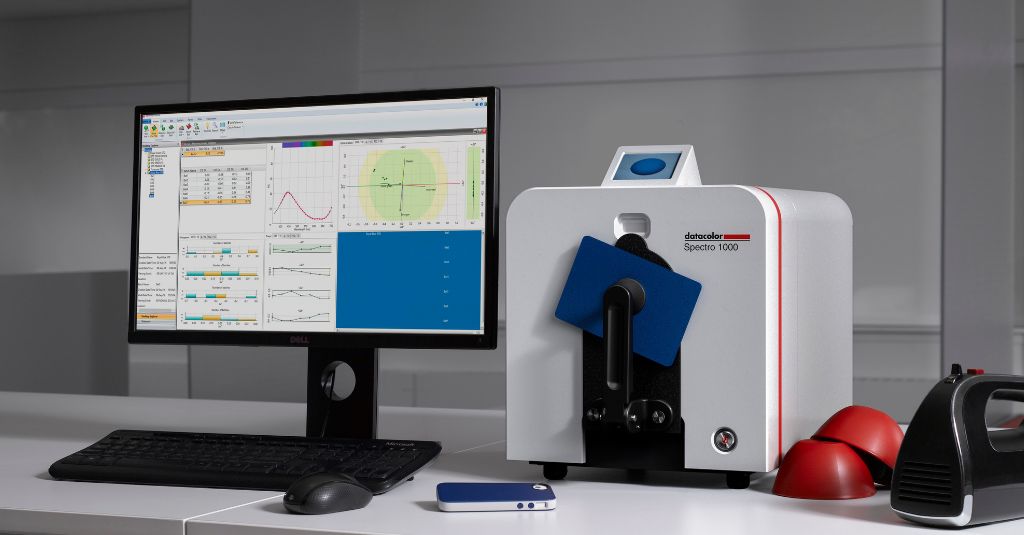
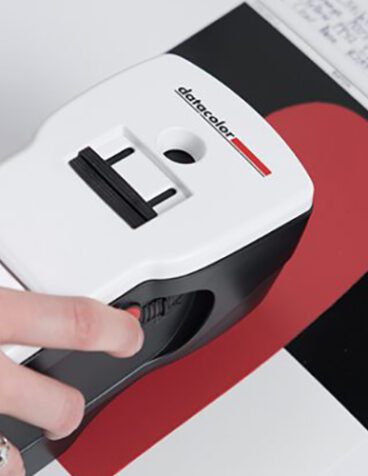
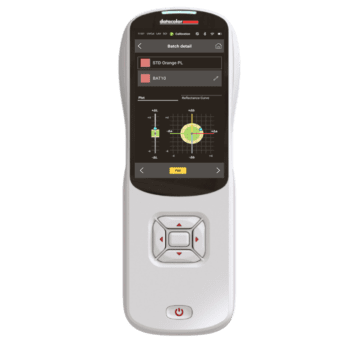
The Datacolor 1000 family is designed to meet the requirements of a true close-tolerance spectrophotometer, enabling organizations to share colorimetric data confidently across facilities and supply chains.
Does Inter-Instrument Agreement Change Over Time?
Inter-instrument agreement can remain highly stable over many years when instruments are properly maintained.
However, environmental factors, contamination, aging components and inadequate maintenance can gradually affect performance.
To maintain optimal agreement:
Calibrate Regularly
Calibrate instruments at the beginning of each shift and before critical measurements.
Consistent measurement techniques and scheduled maintenance help preserve long-term instrument performance.
When Should You Upgrade Older Instruments?
With proper care, spectrophotometers can remain reliable for many years.
However, newer instruments may offer advantages such as:
Improved measurement speed
Enhanced ease of use
Better connectivity
Updated software integration
Stronger support options
Improved workflow automation
Organizations should evaluate upgrades not only for measurement performance but also for productivity and operational efficiency.
How Companies Benefit from Strong Inter-Instrument Agreement
Organizations that implement highly consistent measurement systems gain significant advantages:
Faster color approvals
Reduced sample shipping
Better supplier collaboration
More consistent product quality
Lower development costs
Greater confidence in digital color communication
As American Colors explains:
“We are able to focus on more technical aspects of color matching and development without having to worry if our instruments give us consistent readings.”
That confidence is exactly what strong inter-instrument agreement is designed to provide.
Consistent Color Starts with Consistent Measurement
Inter-instrument agreement is one of the most important foundations of modern color management.
When color data can be trusted across laboratories, suppliers, manufacturing facilities and quality teams, organizations can move faster, reduce waste and make better color decisions.
Combined with proper calibration, maintenance, environmental control and standardized measurement procedures, strong inter-instrument agreement enables reliable digital color communication throughout the entire supply chain.
Still Have Questions About Inter-Instrument Agreement?
Datacolor can help you evaluate instrument consistency, measurement workflows and digital color communication across your facilities and supply chain.

 Want to Get Color Right?