Get on the Right Color Management Wavelength with Monthly Insights from 10,000+ Color Professionals Around the World.
Color is not a physical property that exists within an object. It is a sensory experience created by the interaction of light, an object and an observer.
This means color perception is inherently subjective. Two people can look at the same object and perceive its color slightly differently due to variations in biology, environment and visual processing.
Fortunately, industries that depend on accurate color do not have to rely on human perception alone. The science of colorimetry provides objective methods for measuring, communicating and controlling color across products, suppliers and global supply chains.
Understanding how color perception works is fundamental for anyone involved in color management, quality control, product development or manufacturing.
What Is Color Perception?
Color perception is the process by which the human visual system interprets light reflected from an object.
Three elements are required:
A light source
An object
An observer
Without any one of these components, color cannot exist.
This relationship forms the foundation of color science and colorimetry—the discipline used to quantify and describe color objectively.
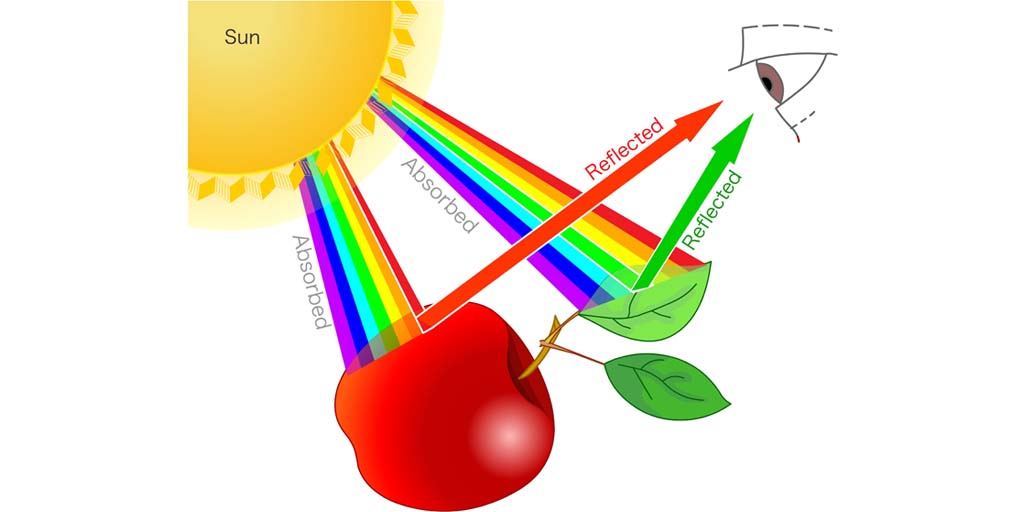
When light strikes an object, some wavelengths are absorbed while others are reflected. The reflected wavelengths travel to the eye, where they are detected and processed by the visual system.
The wavelengths that reach our eyes determine the color we perceive.
For example, a red apple appears red because it reflects more long wavelengths associated with red light and absorbs more of the wavelengths associated with blue and green light.
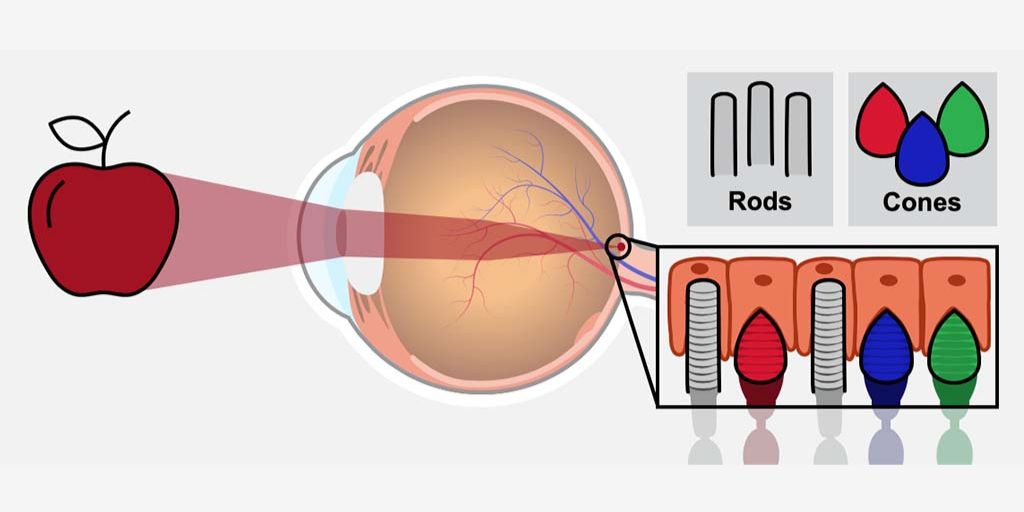
The reflected light stimulates photoreceptors in the retina, which send signals to the brain. The brain then interprets those signals as color.
This process happens continuously and almost instantaneously.
One of the most important principles in color science is that an object can only reflect wavelengths that are present in the light source illuminating it.
Returning to the apple example, the apple appears red because the light source contains red wavelengths that can be reflected back to the observer.
If those wavelengths are missing, the apple will not appear red.
This is why the same product can look different under:
Daylight
Fluorescent lighting
LED lighting
Retail lighting
Warehouse lighting
Changes in the spectral power distribution, or SPD, of a light source can dramatically influence color perception.
For organizations evaluating color, controlling lighting conditions is critical.
Color perception depends on the interaction of three elements:
✓ A light source
✓ An object
✓ An observer
Human perception is influenced by biology, environment and experience, making color inherently subjective.
For organizations that depend on accurate color, objective measurement tools and standardized workflows are essential for achieving consistent quality, reliable approvals and effective color communication.
Want a deeper understanding of color science, color measurement and color management? Download the Fundamentals of Colorimetry eBook to continue your learning journey.
Explore the Fundamentals of Colorimetry
Learn more about color perception, color measurement and the principles that support reliable digital color management.


 Want to Get Color Right?