An effective color quality control program helps manufacturers maintain consistent color, reduce waste, meet customer specifications and make faster, more reliable approval decisions. It combines clear standards, documented procedures, accurate measurement tools, real-time monitoring and continuous improvement.
In color-critical industries, visual judgment alone is not enough. Product color can shift because of raw material variation, production conditions, supplier differences, instrument setup, lighting, sample preparation or unclear tolerances. A structured digital color quality control program gives teams a repeatable way to measure, evaluate, document and communicate color decisions.
The goal is not only better color accuracy. A strong program also supports production efficiency, supplier alignment, auditability, fewer corrections and stronger customer confidence. For a broader foundation, see digital color management and color management solutions.
Step 1: Define Your Color Quality Objectives and Requirements
A color quality control program should start with clear business and technical objectives.
Before selecting instruments or software, define what the program must achieve. Common goals include improving product consistency, reducing waste, meeting customer specifications, shortening approval cycles, reducing rework, supporting supplier alignment or improving audit readiness.
Your objectives should answer questions such as:
- Which products or materials require color control?
- What level of color variation is acceptable?
- Which customers or applications require tighter tolerances?
- Where are color decisions made: lab, production, supplier site or customer approval?
- Which teams need access to color standards and measurement data?
- What business problems should the program reduce: rejects, rework, delays, waste or complaints?
Clear objectives help connect color quality control to business outcomes. They also prevent teams from applying one generic tolerance or measurement process across products that have different risks and requirements.
For a deeper framework on tolerance decisions, see best practices for Delta E tolerance standards.
Define Physical and Digital Color Standards
Color standards are the reference points for your quality control program.
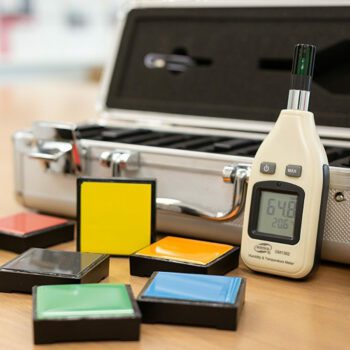
A standard may be physical, digital or both. Physical standards are useful for visual comparison, but they must be stored, handled and replaced carefully. Exposure to light, heat, humidity, dirt, handling or aging can change the standard over time. In some workflows, master standards may be stored in dark, dry or temperature-controlled conditions to help preserve color integrity.
Digital standards support faster communication, easier sharing and stronger consistency across sites. They also reduce dependence on shipping physical samples for every approval decision. However, digital standards only work well when measurement conditions, instruments and procedures are properly controlled.
A strong standard should include:
- Approved color data
- Physical master sample details, if used
- Material and finish requirements
- Measurement method
- Illuminant and observer settings
- Tolerance limits
- Visual evaluation conditions
- Customer-specific requirements
- Version control and approval history
For more on the role of measurable standards and digital communication, see digital color communication with color measurement instruments and keys to reliable digital color communication.
Step 2: Establish Standard Operating Procedures
Standard operating procedures are the backbone of a color quality control program.
SOPs define how color is measured, evaluated, reported and approved. Without documented procedures, different operators, sites or suppliers may prepare samples differently, measure under different conditions or interpret tolerances inconsistently.
A color quality control SOP should document:
- How raw materials are evaluated
- How samples are prepared and conditioned
- Which instrument is used
- Which aperture, geometry and settings are required
- How instruments are calibrated
- How many measurements are taken
- Where and how the sample is measured
- Which tolerances apply
- How visual evaluation is performed
- How data is recorded
- What happens when a sample fails
- Who can approve exceptions
The more complex the material or surface, the more important the SOP becomes. Textiles, plastics, coatings, cosmetics, paper, powders, translucent materials, textured samples and glossy surfaces can all require specific preparation and measurement rules.
For practical support, see sample measurement technique for digital color communication, best practices for measuring color samples and sample conditioning for digital color measurement.
Train Teams on Procedures, Not Just Tools
Training should cover both the measurement tools and the reasoning behind the procedure.
Operators need to understand how small changes in sample handling, lighting, calibration, measurement location or backing can affect results. Quality teams should also understand how instrumental measurement connects to visual approval and customer requirements.
Training should include:
- Instrument use and calibration
- Sample preparation
- Measurement repeatability
- Visual assessment conditions
- Tolerance interpretation
- Software reporting
- Corrective action workflows
- Supplier communication
- Documentation requirements
SOPs should also be reviewed regularly. When materials, products, instruments, customers, suppliers or software change, the procedure may need to be updated.
For controlled visual review, see light booths for color assessment and what you need to know about light sources and color evaluation.
Step 3: Select the Right Tools and Technology
The right tools make color quality control more accurate, repeatable and scalable.
Color measurement instruments should be selected based on the product, material, tolerance requirement, measurement environment and workflow. A lab that creates standards may need different equipment than a production team performing routine checks.
Common color quality control tools include:
| Tool |
Primary Application |
| Spectrophotometers |
Objective and repeatable color measurement |
| Colorimeters |
Simpler color comparison workflows |
| Gloss meters |
Measuring surface gloss when it forms part of the specification |
| Light booths |
Controlled visual color assessment under standardized lighting |
| Quality control software |
Tolerance management, reporting and approval tracking |
| Formulation software |
Developing recipes and calculating color corrections |
| Digital communication tools |
Sharing color data across suppliers, teams and production sites |
For an overview of instrument options, see different types of color measurement instruments and using a spectrophotometer for color measurement.
Match the Technology to the Application
No single tool fits every color quality control workflow.
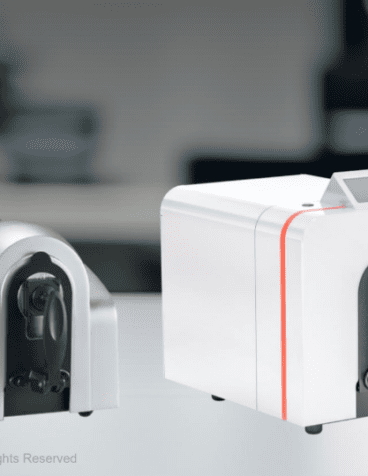
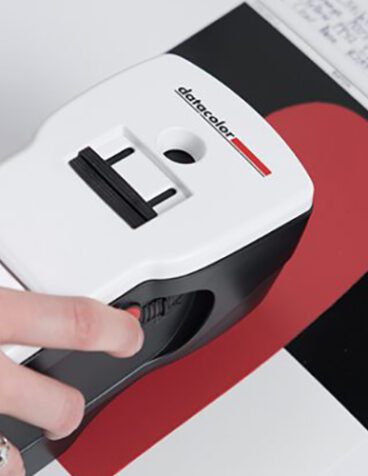
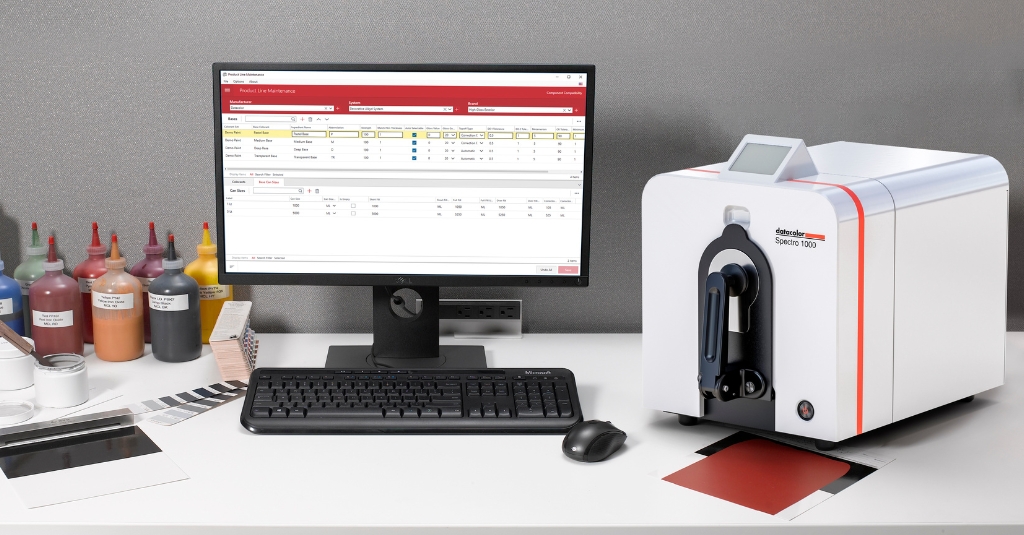
Benchtop spectrophotometers are often used in labs where high precision, repeatability and controlled conditions are required. Portable spectrophotometers support production, field or supplier environments where samples cannot always be moved to a lab. Light booths help standardize visual evaluation. Software helps teams manage standards, tolerances, reports and approval history.
Application-specific needs also matter. A textile lab may need controlled sample conditioning and formulation tools. A plastics manufacturer may need strong inter-instrument agreement across sites. A coatings team may need to evaluate color together with gloss or surface finish. A paper manufacturer may need brightness, whiteness and opacity measurement.
For relevant Datacolor options, explore benchtop spectrophotometers, portable spectrophotometers, visual evaluation and lab tools and color management software.
Step 4: Implement Monitoring and Reporting
Ongoing monitoring helps teams detect color variation before it becomes a production or customer issue.
A color quality control program should include measurement checkpoints at the right stages of production. This may include raw material inspection, lab samples, first production runs, in-process checks, final batch approval and supplier submissions.
Monitoring should help teams answer:
- Is the batch within tolerance?
- Is color drifting over time?
- Are raw materials changing?
- Are certain suppliers producing more variation?
- Are specific colors or materials causing repeated corrections?
- Are approval cycles taking too long?
- Are customer complaints linked to measurable variation?
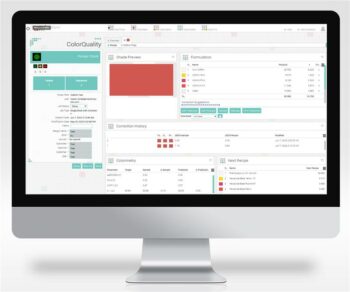
Digital quality control software can automate reporting, centralize data and make trends easier to see. This gives production, lab and quality teams the information they need to act quickly.
For software-supported workflows, see Datacolor Tools and Colibri ColorQuality.
Use Reporting to Improve Decisions
Reporting should not only document pass/fail results. It should help teams improve the process.
Useful color quality reports may include:
- Delta E results
- Lightness, chroma and hue differences
- Pass/fail history
- Supplier performance
- Batch-to-batch variation
- Repeatability checks
- Rework and correction trends
- Customer-specific compliance data
- Audit records
This information helps teams identify root causes and prioritize improvements. For example, repeated failures may point to unclear standards, unstable raw materials, poor sample preparation, instrument drift or a tolerance that does not reflect practical production capability.
For deeper guidance on color tolerances and color systems, see CIELAB and CIE2000 color systems and best practices for Delta E tolerance standards.
Step 5: Conduct Audits and Drive Continuous Improvement
Regular audits help keep the color quality control program reliable over time.
Even a well-designed program can weaken if procedures are not followed, instruments are not maintained or standards are not updated. Audits confirm whether teams are measuring, evaluating and reporting color according to the defined process.
A color quality audit should review:
- SOP compliance
- Instrument calibration and maintenance
- Physical standard condition
- Digital standard version control
- Measurement settings
- Sample preparation consistency
- Visual evaluation environment
- Tolerance usage
- Supplier compliance
- Reporting accuracy
- Corrective action history
Audits should not be treated as a one-time compliance task. They should feed continuous improvement by identifying where the program needs adjustment.
For instrument care, see how to store, use and clean spectrophotometer calibration tiles and why inter-instrument agreement matters.
Build Feedback Loops with Customers, Suppliers and Internal Teams
Continuous improvement depends on feedback from the people who use the color quality system.
Customer complaints, supplier delays, internal rework, production rejects and approval bottlenecks can all reveal where the program needs improvement. Feedback should be reviewed alongside measurement data so teams can distinguish between perception issues, process problems and true color variation.
Feedback loops should include:
- Customer quality feedback
- Supplier performance reviews
- Production team input
- Lab correction trends
- Audit findings
- Warranty or complaint data
- Approval cycle time analysis
- Sustainability and waste metrics
This helps the color quality program stay aligned with real business needs instead of becoming a static technical document.
For supply chain workflows, see what you need to know about vendor empowerment and supply chain certification: the key to a strong brand.
How Digital Color Quality Control Supports Sustainability
A strong color quality control program can reduce waste by preventing avoidable color errors.
When teams catch variation early, they can reduce off-spec production, repeated corrections, unnecessary sample shipments and rejected batches. Digital workflows also make it easier to reuse approved standards, communicate with suppliers and reduce dependence on physical trial-and-error.
Color quality control can support sustainability by helping teams:
- Reduce rework
- Reduce off-color materials
- Minimize repeated sampling
- Use raw materials more efficiently
- Avoid unnecessary production waste
- Improve first-time approval rates
- Document progress and process improvements
For more on this connection, see sustainability in manufacturing color consistency, how digital color management supports sustainability and how to reduce waste from off-color materials.
How Datacolor Supports Color Quality Control Programs
Datacolor supports color quality control programs with measurement instruments, software, visual evaluation tools, formulation solutions and workflow expertise for color-critical industries.
Depending on the application, teams may use:
- Spectrophotometers for objective color measurement
- Quality control software for standards, tolerances and reporting
- Formulation software for recipe development and corrections
- Light booths for controlled visual evaluation
- Portable instruments for production and field checks
- Assessment services to evaluate current workflows
Relevant Datacolor solutions include Datacolor Tools, Colibri ColorQuality, Datacolor Match Pigment, Datacolor Match Textile, Datacolor Lightbooth and assessment services.
With a structured digital color quality control program, manufacturers can improve product consistency, reduce waste, support faster approvals and make color decisions easier to document, repeat and defend.
FAQ: Color Quality Control Programs
What is a color quality control program?
A color quality control program is a structured process for defining, measuring, evaluating, documenting and improving color consistency across products, suppliers and production stages.
Why is color quality control important?
It helps manufacturers meet customer specifications, reduce rework, avoid off-color production, maintain brand consistency and improve confidence in approval decisions.
What should a color quality control SOP include?
A color quality control SOP should include sample preparation, measurement conditions, instrument settings, calibration procedures, tolerances, visual evaluation requirements, data recording and corrective action steps.
What tools are used in color quality control?
Common tools include spectrophotometers, colorimeters, light booths, gloss meters, quality control software, formulation software and digital communication platforms.
How do tolerances fit into color quality control?
Tolerances define how much color variation is acceptable between a standard and a sample. They help teams decide whether a sample passes, fails or needs further review.
Why is sample preparation important?
Inconsistent sample preparation can create measurement variation. Factors such as thickness, texture, backing, conditioning, surface condition and measurement location can affect results.
How often should color quality audits be performed?
Audit frequency depends on product risk, customer requirements, production volume and supplier complexity. Audits should be regular enough to confirm SOP compliance and identify improvement opportunities.
Can color quality control reduce waste?
Yes. By detecting color issues earlier and improving first-time approval rates, color quality control can reduce rework, rejected batches, repeated sampling and off-color materials.
Ready to Strengthen Your Color Quality Control Program?
If your team is dealing with inconsistent color approvals, unclear standards, rework, supplier disputes or limited auditability, Datacolor can help you build a more reliable digital color quality control workflow.
Connect with Our Color Experts!


 Want to Get Color Right?